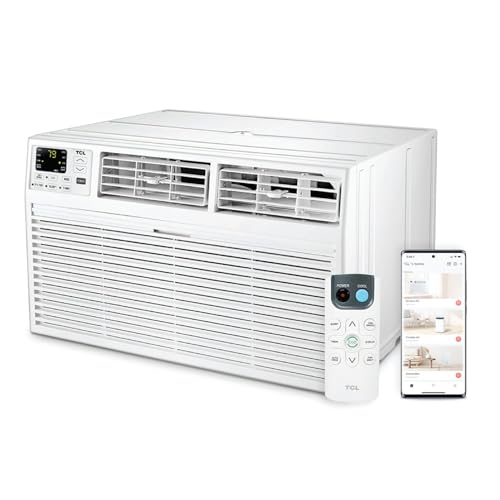
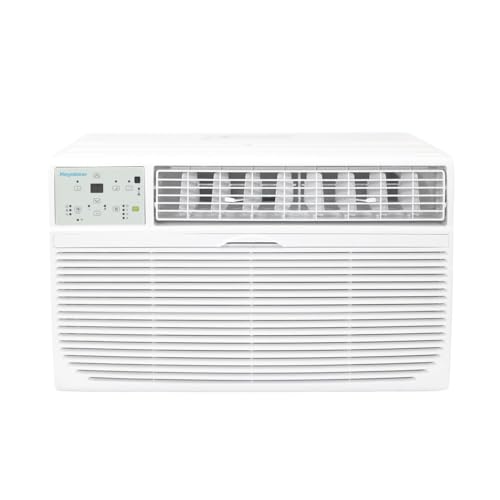
Through the Wall 14000 BTU Air Conditioner: Complete Guide
Everything you need to know before choosing a 14,000 BTU through the wall air conditioner — room sizing, sleeve fitment, electrical requirements, efficiency ratings, and the features that matter most for large-room comfort.
What Is a Through the Wall 14000 BTU Air Conditioner?
A through the wall 14000 BTU air conditioner is a self-contained cooling unit permanently installed into an exterior wall, usually inside a metal sleeve. Unlike a window unit that sits in a window frame, a through the wall model frees the window for natural light and delivers a cleaner, more built-in appearance. The 14,000 BTU capacity places it in the large-room segment, making it a practical choice for living rooms, open-plan spaces, master bedrooms, and converted garages.
This category sits between smaller wall units and central systems. If you have compared capacities, you may already know that a through the wall air conditioner 10000 BTU model covers medium rooms, while a through the wall air conditioner 18000 BTU unit pushes into whole-floor territory. The 14,000 BTU size is the sweet spot for spaces that are too large for a 10,000 BTU unit but do not justify the electrical and structural commitment of an 18,000 BTU system.
Because the unit is fixed in a wall, it is also a long-term decision. Buyers in this segment are typically beyond the browsing stage: they know they want a wall-mounted solution, and they need clarity on fitment, power, and efficiency before committing. That is exactly what this guide provides.
Quick Profile: 14000 BTU Through the Wall AC
- Typical room coverage: 550–700 sq ft (adjust for climate and insulation)
- Common voltage: 230/240V dedicated circuit (some 115V options exist)
- Best for: Living rooms, open-plan areas, master suites, home offices, converted spaces
- Installation type: Permanent wall sleeve, exterior wall required
- Efficiency range: Entry-level to high-end tier depending on SEER/EER and inverter technology
Room Sizing: Does 14000 BTU Fit Your Space?
BTU capacity is not a one-number decision. The standard rule of thumb assigns roughly 20 BTU per square foot for average conditions, which puts 14,000 BTU in the 550–700 sq ft range. However, real rooms deviate from averages. Use the factors below to decide whether 14,000 BTU is correct for your space.
| Room Condition | Effect on Capacity Need | Recommendation |
|---|---|---|
| Standard ceiling (8 ft), good insulation, moderate sun | Baseline | 14000 BTU fits 550–700 sq ft |
| High ceiling (10 ft+) or vaulted | Increases volume significantly | Lean toward the smaller end of the range or step up |
| Large windows, west/south-facing sun | Adds solar heat gain | Reduce coverage estimate by 10–20% |
| Kitchen or open-plan with appliances | Adds internal heat load | Consider 14000 BTU for 500–600 sq ft |
| Poor insulation or older construction | Higher heat infiltration | Size conservatively; avoid undersizing |
| Multiple occupants or frequent entertaining | Adds body heat | Choose a model with strong airflow (CFM) |
Oversizing is as problematic as undersizing. A unit that is too large cools the air quickly, cycles off before removing humidity, and leaves the room feeling clammy. A unit that is too small runs continuously, struggles on peak days, and wears out faster. If your room sits right at the boundary between two capacities, compare the 10,000 BTU option against the 14,000 BTU class and weigh insulation quality, sun exposure, and ceiling height before deciding.
For a deeper walkthrough of the sizing formula and load factors, see our guide on through the wall AC systems, which covers the broader category and how wall units compare with other formats.
Sleeve Dimensions and Wall Installation
The single most common mistake in this category is buying a unit that does not fit the existing sleeve. Through the wall air conditioners are built around standardized sleeve sizes, but standards are not universal across brands. Before ordering, measure the interior width, height, and depth of the sleeve, and confirm the product's minimum and maximum fitment specifications.
Common Sleeve Sizes to Check
- 26 x 16 inches: A frequent sleeve size; verify depth clearance for the chassis.
- 26 x 17 inches: Slightly taller opening; often paired with higher-capacity chassis.
- 26 x 18 inches: Larger opening used by several premium wall units.
- 27 x 17 inches: A wider variant that requires exact brand matching.
- 19 x 14 inches: Compact sleeve, generally not suitable for 14,000 BTU chassis.
If you are replacing an old unit, our through the wall air conditioner replacement guide covers how to match a new chassis to an existing sleeve without structural work. If you are installing into a new wall opening, the sleeve must be framed, flashed, and sealed correctly to prevent water intrusion and air leakage — this is not a project to improvise.
Installation Considerations
- Exterior wall only: The rear of the unit must vent outdoors; interior walls are not viable.
- Structural framing: The wall opening needs proper headers and support for the sleeve and unit weight.
- Condensate drainage: Ensure a slight outward slope or a functioning drain path so water exits the sleeve.
- Sealing: Foam gaskets, caulk, and flashing prevent drafts, moisture, and pest entry.
- Professional help: For new openings or complex retrofits, consult through the wall air conditioner installers to avoid costly errors.
Electrical Requirements and Breaker Sizing
Most 14,000 BTU through the wall air conditioners operate on 230/240V and require a dedicated circuit. Running a high-capacity unit on a shared circuit invites tripped breakers and, worse, overheating. Some 115V models exist in this capacity class, but they draw high amperage and should only be used where the circuit is confirmed adequate.
| Voltage | Typical Circuit | Notes |
|---|---|---|
| 230/240V | 20-amp dedicated breaker | Most common configuration for 14,000 BTU wall units; verify nameplate amperage |
| 115V | 15–20-amp dedicated breaker | Less common at this capacity; confirm the circuit can handle continuous load |
Always check the unit's nameplate for rated amps and the manufacturer's minimum circuit ampacity. If your home lacks a suitable circuit near the installation wall, budget for an electrician to run a dedicated line. Our guide on through the wall air conditioner 240 volt models explains the wiring side in more detail, and the 110 volt variant guide covers lower-voltage options for homes with limited panel capacity.
Efficiency Ratings Explained
Efficiency determines how much cooling you get per unit of electricity. For through the wall units, the two ratings that matter most are EER (Energy Efficiency Ratio) and SEER (Seasonal Energy Efficiency Ratio). EER measures efficiency at a single test condition and is especially relevant for room air conditioners that run in hot weather. SEER estimates seasonal performance.
Federal minimum efficiency standards have tightened over time, and the current generation of wall units is meaningfully more efficient than older models. When comparing products, look for:
- Higher EER: Better for steady-state hot-weather performance.
- ENERGY STAR qualification: Indicates the unit meets efficiency thresholds above the federal minimum.
- Inverter compressors: Typically deliver better part-load efficiency and steadier temperatures than fixed-speed compressors.
If long-term operating efficiency is your priority, review our overview of through the wall inverter air conditioner technology. Inverter models modulate compressor speed instead of cycling on and off, which usually means quieter operation and more consistent comfort — a meaningful upgrade if the unit will run for many hours per day.
For a broader explanation of how the ratings are calculated and compared, see the through the wall air conditioning units category overview.
Features Worth Prioritizing
At the 14,000 BTU level, the feature set separates a basic cooling appliance from a genuinely comfortable climate solution. Prioritize these based on how you will use the room:
Cooling and Comfort
- Inverter compressor: Smoother temperature control, quieter cycling, better part-load efficiency.
- Adjustable fan speeds: Multiple speeds let you balance airflow and noise.
- Sleep mode and programmable timer: Useful for bedrooms and evening use.
- Auto-restart: Resumes settings after a power interruption.
Air Quality and Humidity
- Dehumidification mode: Helps in humid climates; see through the wall air conditioner with dehumidifier models.
- Washable or replaceable filter: Essential for maintenance and indoor air quality.
- Fresh air intake or vent control: Allows limited outdoor air exchange when desired.
Heating and Smart Control
- Heat pump function: Adds efficient heating for shoulder seasons; see through the wall air conditioner with heat pump and heater combo options.
- Wi-Fi and app control: Scheduling and remote control; see through the wall air conditioner with WiFi.
- Thermostat compatibility: Some models support remote thermostat control; compare options in our thermostat for window AC unit guide if you plan to integrate control.
Market Tiers Compared
Through the wall 14,000 BTU air conditioners fall into recognizable market tiers. The tiers below use universal quality descriptors rather than numeric figures, so they remain useful as the market evolves.
| Tier | Typical Characteristics | Best For |
|---|---|---|
| Entry-level | Fixed-speed compressor, basic mechanical or simple digital controls, standard filter, essential cooling modes | Casual-use rooms, rentals, spaces where cooling is the only requirement |
| Mid-range | Digital controls, multiple fan speeds, programmable timer, dehumidify mode, improved filter access | Living rooms and bedrooms used daily; buyers who want convenience without premium complexity |
| Premium | Inverter compressor, quieter operation, higher efficiency ratings, heat pump function, better build quality | Primary living spaces, long daily run times, buyers prioritizing comfort and efficiency |
| High-end tier | Wi-Fi control, advanced scheduling, premium materials, top-tier efficiency, refined airflow design | Smart-home integration, master suites, buyers who want the best available comfort and control |
Mid-range models usually offer the most balanced feature set for typical homes, while premium and high-end tier units make sense when the room is used heavily or when quiet operation is critical. Entry-level models remain a solid choice for secondary spaces where the unit runs only occasionally.
If you are weighing a wall unit against a freestanding option, our comparison of through the wall air conditioner formats versus portable and window designs can help clarify the trade-offs.
Maintenance and Longevity
A through the wall unit is a permanent installation, so maintenance discipline directly affects how many years of service you get. The essentials are straightforward:
- Clean the filter every four to six weeks during peak cooling season. A clogged filter reduces airflow, strains the compressor, and degrades air quality.
- Inspect the exterior grille for leaves, debris, and insect nests. Blocked airflow forces the unit to work harder.
- Check the sleeve seal annually for gaps, moisture, or rust. Reseal as needed to keep drafts and water out.
- Clean the coils periodically; a soft brush and coil cleaner restore heat transfer efficiency.
- Schedule professional service once a year to check refrigerant charge, electrical connections, and overall performance.
For step-by-step cleaning guidance, see our through the wall AC resource hub. If the unit is no longer cooling effectively despite maintenance, our troubleshooting air conditioning guide covers common fault patterns before you call a technician.
When repair no longer makes sense, the replacement guide explains how to transition to a new unit with minimal disruption.
Buying Checklist for a 14000 BTU Through the Wall AC
Before you commit, run through this checklist. Each item prevents a common and avoidable problem.
- Measure the room: Confirm square footage, ceiling height, sun exposure, and insulation quality.
- Measure the sleeve: Record interior width, height, and depth; compare against product fitment specs.
- Verify voltage and breaker: Confirm a dedicated circuit is available or plan for an electrician.
- Check efficiency ratings: Compare EER and SEER; prefer ENERGY STAR qualification where possible.
- Decide on inverter vs fixed-speed: Inverter for comfort and long run times; fixed-speed for occasional use.
- Confirm heating needs: Choose a heat pump or heater combo if the room needs shoulder-season warmth.
- Review control options: Consider Wi-Fi, remote thermostat compatibility, and programmable scheduling.
- Plan installation: Confirm whether the sleeve exists or a new opening is required, and engage qualified installers.
For a shortlist of well-regarded models, our top rated through the wall air conditioner roundup is a useful starting point. If your room is smaller than expected, the through the wall 5000 BTU air conditioner page covers compact alternatives.
Ready to Compare Your Options?
Use the sizing, fitment, and efficiency criteria above to narrow the field, then review the recommended models below to find the unit that matches your room and installation setup.
Frequently Asked Questions
What size room does a 14000 BTU through the wall air conditioner cool?
Typically 550–700 square feet under average conditions. Reduce the estimate for high ceilings, strong sun exposure, poor insulation, or heavy occupancy, and consider stepping up capacity if multiple factors apply.
Does a 14000 BTU through the wall AC require a dedicated circuit?
Most models run on 230/240V and require a dedicated circuit, commonly a 20-amp breaker. Confirm the nameplate amperage and the manufacturer's minimum circuit requirements before installation.
Can a through the wall 14000 BTU air conditioner be installed in an existing sleeve?
Yes, provided the sleeve dimensions match the unit's fitment specification. Sleeve sizes vary by brand, so measure the interior dimensions precisely before purchase.
Is an inverter through the wall 14000 BTU AC better than a fixed-speed model?
For daily, long-duration use, an inverter model generally delivers steadier temperatures, quieter operation, and better part-load efficiency. Fixed-speed models are simpler and remain suitable for occasional use.
How do I maintain a through the wall 14000 BTU air conditioner?
Clean or replace the filter every four to six weeks in season, inspect the exterior grille for debris, check the sleeve seal annually, clean the coils periodically, and schedule professional service once a year.