Window AC Installation Kit for Sliding Windows: Complete Guide
Everything you need to seal, support, and secure a window air conditioner in a horizontal sliding window — from kit components and measurement to step-by-step setup and troubleshooting.
Explore the GuideQuick summary: A window AC installation kit for sliding windows is not the same as a standard kit for double-hung windows. It replaces the short accordion side panels with a longer fill panel, adds top and bottom filler strips, and includes a sash lock that keeps the moving glass tight against the unit. Choosing the right kit depends on the opening width, the height of the glass, and the weight of the air conditioner cabinet.
Why Sliding Windows Need a Dedicated Kit
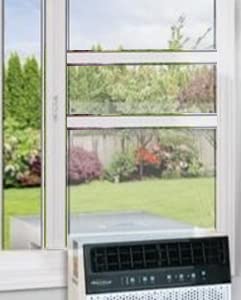
Horizontal sliding windows move side to side rather than up and down. That single difference changes how a window air conditioner has to be mounted. In a double-hung window the lower sash closes down onto the top of the unit, which creates a natural seal. In a slider, the open glass sits on the side of the cabinet, so the gap runs vertically along the full height of the opening. A standard kit simply does not have a long enough panel to cover that vertical gap.
A dedicated kit solves three separate problems at once:
- Sealing the vertical gap. An extended accordion or rigid panel bridges the distance between the cabinet and the stationary sash.
- Locking the sash. A sash lock or clamp prevents the glass from being pushed open from outside, which is a real security concern with sliders.
- Supporting the unit. Many kits ship with or recommend a bracket that carries the cabinet weight so the window frame is not stressed.
If you are still deciding whether a sliding window is a workable host for a window unit at all, our guide to window air conditioners for sliding windows covers the constraints in more depth before you buy hardware.
What Is Inside a Sliding Window AC Kit
Kits vary by brand, but most contain a common set of parts. Understanding each one helps you judge whether a kit is complete or whether you will need to source extras separately.
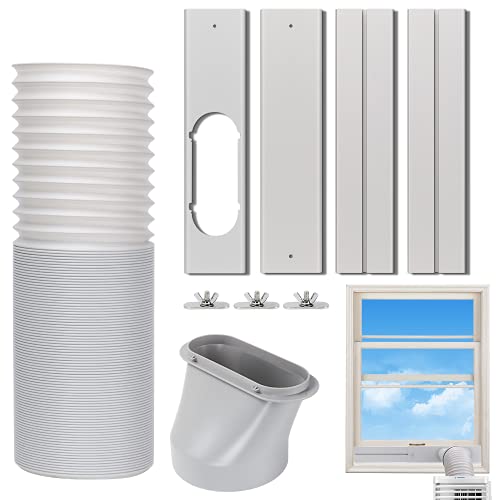
| Component | Function | What to Check |
|---|---|---|
| Extended accordion panel | Bridges the vertical gap between the cabinet and the stationary sash | Must be tall enough for the full glass height, not just the cabinet height |
| Top and bottom filler strips | Close the small gaps above and below the panel that let air and insects through | Foam or rigid strips; rigid strips seal better in windy locations |
| Sash lock or clamp | Holds the sliding glass tight against the unit and blocks forced entry | Confirm it fits your sash thickness and does not require drilling the glass |
| Weather seal tape | Seals the frame-to-panel and panel-to-cabinet joints | Closed-cell foam resists moisture better than open-cell foam |
| Support bracket | Carries the cabinet load and keeps the unit level | Should be rated for the weight of your specific unit |
| Mounting hardware | Screws, bolts, and sometimes tension rods for no-drill setups | Stainless or coated hardware lasts longer outdoors |
Some kits are sold as a complete package, while others are add-on panels meant to supplement the parts already in the box with the air conditioner. If your unit came with a short panel, you may only need the extension piece and the sash lock. Our overview of the general window AC installation kit category explains how the standard and sliding variants differ in practice.
Measuring Your Window Before You Choose a Kit
Measurement mistakes are the most common reason a kit does not fit. Take all four numbers below before you shop, and write them down so you can compare against kit specifications.
- Opening height. Measure the full height of the glass opening from the sill to the top frame. This is the dimension the extended panel must cover, and it is usually larger than the height of the AC cabinet.
- Opening width. Measure the width of the open section where the unit will sit. The cabinet plus the panel must equal this width, with a small overlap for sealing.
- Sill depth. Measure from the interior edge of the sill to the exterior edge. The unit must sit level with enough of the cabinet outside for proper heat rejection.
- Cabinet dimensions. Record the width, height, and depth of the air conditioner itself, plus its weight. Weight determines which bracket you need.
If your opening is unusually narrow or short, the sizing guides for window air conditioners for small windows and window air conditioner for small window opening cover the compact options that pair well with slim kits.
Types of Sliding Window Kits and How They Compare
Kits fall into a few broad categories. The right choice depends on whether you rent, whether the wall is masonry, and how heavy the unit is.
Accordion panel kits
These use a folding panel that expands to fill the gap. They are the most common type and are easy to fit without cutting. The trade-off is that the folds can collect dust and may not seal as tightly as a rigid panel in exposed, windy locations. Entry-level accordion kits are fine for sheltered windows; mid-range versions use denser foam and thicker frames.
Rigid filler panel kits
These use a solid panel, often plastic or aluminum, trimmed to the opening. They seal better and resist wind-driven rain, which makes them a better match for coastal or upper-floor installations. They require more careful measurement because trimming is usually permanent.
No-drill and tension kits
These rely on tension rods and clamps instead of screws. They are popular with renters and on masonry walls where drilling is undesirable. The limitation is load capacity: a no-drill kit is best paired with a lighter cabinet, and a heavier unit should use a proper bracket. Our guide to the window air conditioner bracket with no drilling explains the load ratings to look for.
Combined kit and bracket packages
Some packages bundle the seal kit with an exterior bracket. These are convenient because the bracket and panel are designed together, which reduces the risk of a mismatch between the panel depth and the bracket offset.
Step-by-Step Installation
The sequence below assumes a horizontal slider and a kit with an accordion or rigid panel plus a support bracket. Work with two people for any unit above a light cabinet weight.
Before you start
- Confirm the electrical circuit matches the unit rating and that the outlet is within cord reach.
- Check the window frame for rot or loose hardware.
- Have a level, tape measure, utility knife, and weather seal tape on hand.
- Verify the bracket is rated for the cabinet weight.
- Mount the support bracket first. Attach the bracket to the exterior wall or sill according to its instructions, then set the air conditioner on it. The unit should tilt slightly downward toward the outside so condensation drains away from the room.
- Slide the unit into the opening. Position the cabinet so the indoor face sits flush with or slightly inside the interior frame, and the outdoor portion has enough clearance for airflow.
- Fit the extended panel. Extend the accordion or trim the rigid panel to close the gap between the cabinet side and the stationary sash. The panel should run the full height of the opening.
- Add the top and bottom filler strips. Press them into the small gaps above and below the panel. These strips are easy to overlook, but they are where most drafts enter.
- Seal the joints. Run weather seal tape along the panel-to-frame and panel-to-cabinet edges. Use closed-cell foam in areas exposed to moisture.
- Lock the sash. Install the sash lock or clamp so the sliding glass cannot be pushed open. Test it from both sides.
- Check level and drainage. Confirm the slight outward tilt, then run the unit and watch for water pooling indoors. If water appears inside, revisit the tilt and the drain path.
If the unit runs but does not cool after installation, the cause is often airflow or sealing rather than the kit itself. The checklist in window air conditioner not cooling properly walks through the common causes in order of likelihood.
Common Problems and Fixes
The panel does not reach the sash
This almost always means the kit was sized for a double-hung opening. Measure the full glass height and switch to an extended panel. Do not bridge the gap with tape alone; it will fail in wind and rain.
The sash can still be opened from outside
A sash lock is the fix. Some kits include one; if yours did not, add a clamp that fits your sash thickness. This is a security issue as much as a sealing one.
Water drips inside the room
Check the outward tilt first, then the drain holes at the back of the cabinet. A kit that seals too tightly around the outdoor side can trap water if the drain path is blocked. Our article on a window air conditioner leaking water inside the house covers the full diagnosis.
The unit vibrates or sags
This points to an undersized bracket or a kit that is carrying weight it was not designed to carry. A kit seals; a bracket supports. Add or upgrade the bracket rather than tightening the panel.
Drafts around the panel
Re-seal with closed-cell foam and check the top and bottom filler strips. Rigid panels generally seal better than accordion panels in windy locations, so consider switching if drafts persist.
Kit Alone vs a Unit Designed for Sliding Windows
Some air conditioners are built specifically for horizontal sliders, with the control panel oriented for a side opening and a cabinet shaped to sit against the sash. If you have not bought the unit yet, comparing those models against a standard unit plus an aftermarket kit is worth the time.
A unit designed for sliders usually needs fewer add-on parts and seals more predictably. A standard unit plus a good kit can work well and may offer more capacity choices. The trade-off is that the kit quality becomes the weak link, so a mid-range or high-end kit pays off in sealing and hardware durability. Our guide to window air conditioner for a sliding window compares the two approaches side by side.
If your window opens sideways rather than sliding horizontally, the hardware is different again. The guides for window air conditioner for side opening window and window air conditioner for crank out windows cover those casement-style openings.
Related Guides
Frequently Asked Questions
Can a standard window AC kit be used on a sliding window?
A standard kit is designed for double-hung windows and usually lacks the parts needed to close the gap on a horizontal slider. A kit made for sliding windows includes a longer accordion panel, a top and bottom filler strip, and a locking bracket that holds the sash against the unit.
How do I measure my sliding window for an AC kit?
Measure the width of the open sash area, the height of the window opening, and the depth of the sill. Also record the width of the AC unit cabinet. The kit must cover the gap between the cabinet side and the window frame across the full height of the opening.
Do I still need a support bracket with a sliding window kit?
Yes in most cases. A kit seals the opening, but it does not carry the weight of the unit. A bracket or support frame transfers the load to the wall or sill and keeps the cabinet level, which protects the compressor and reduces vibration.
Is a sliding window AC kit enough to stop rain and drafts?
A well-fitted kit with closed-cell foam, a rigid filler panel, and a tight sash lock blocks most drafts and wind-driven rain. For exposed locations, add exterior weather sealing and confirm the unit has a slight downward tilt so condensation drains outside.
Can I install a sliding window AC kit without drilling?
Some kits use tension rods and clamp-style brackets that need no drilling. They suit renters and masonry walls, but they must be rated for the weight of the unit. Check the load rating before relying on a no-drill setup for a heavier cabinet.