Air Conditioning Splits: The Complete Ductless Guide
Everything you need to know about split air conditioning systems — how they work, how to size them, efficiency ratings, installation considerations, and how to choose the right ductless system for your home.
START LEARNINGAC Units Guide Philosophy: A split air conditioning system is one of the most efficient ways to cool (and heat) a home without ductwork. This guide walks you through the fundamentals so you can make an informed decision before you purchase.
What Are Air Conditioning Splits?
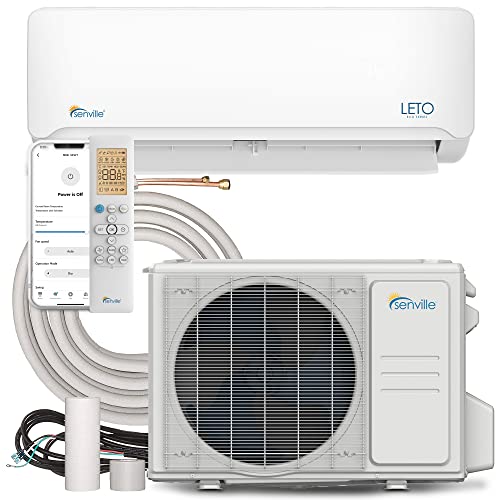
Air conditioning splits — commonly called ductless mini-split systems — are two-component cooling systems made up of an outdoor condenser unit and one or more indoor air-handling units. Instead of pushing cooled air through a network of ducts, a split system delivers conditioned air directly into the room where the indoor unit is mounted. This design eliminates duct losses and gives homeowners room-by-room control over temperature.
Unlike traditional central systems that rely on a single thermostat for the entire house, air conditioning splits let you set different temperatures in different zones. A single outdoor unit can support multiple indoor heads, making splits a flexible solution for additions, converted attics, garages, older homes without ductwork, and multi-zone living spaces.
If you are still deciding between system architectures, our overview of air conditioning systems explains how splits compare with central, window, and portable units.
How Split Air Conditioning Systems Work
A split system operates on the same refrigeration cycle as any air conditioner. Refrigerant travels between the indoor and outdoor units through a small set of copper lines and a condensate drain, all bundled inside a slim conduit that passes through a hole in the wall (typically 2.5 to 3 inches in diameter).
- Indoor unit: Draws warm room air across a cold evaporator coil, absorbs heat, and blows cooled air back into the room.
- Outdoor unit: Releases the absorbed heat into the outdoor air through the condenser coil and compressor.
- Refrigerant lines: Carry refrigerant back and forth in a closed loop — no ductwork required.
Most modern air conditioning splits use inverter-driven compressors, which vary their speed to match the cooling load rather than cycling on and off. This delivers steadier room temperatures and better energy performance. For a deeper look at compressor technology, see our guide to inverter AC systems.
Key Advantages of Ductless Splits
No Ductwork Needed
Ideal for older homes, additions, and spaces where installing ducts would be disruptive or impractical.
Zone-by-Zone Control
Set different temperatures in each room with individual indoor heads connected to one outdoor unit.
High Efficiency
No duct losses means more of the cooling energy reaches the room. Many models qualify for ENERGY STAR recognition.
Quiet Operation
Indoor units run quietly — typically in the low-to-mid 20s dB range on low fan speeds.
Heating Capability
Heat pump models reverse the refrigerant cycle to provide efficient heating in colder months.
Compact Footprint
Wall-mounted indoor heads are slim and unobtrusive, preserving floor space and window views.
How to Size an Air Conditioning Split
Proper sizing is the single most important factor in split system performance. An undersized unit will struggle to cool the space on hot days; an oversized unit will cycle too quickly, leaving the room humid and uncomfortable. Capacity is measured in BTU (British Thermal Units) per hour.
A rough starting point is 20 BTU per square foot of floor area, then adjust upward for sun exposure, ceiling height, occupancy, and appliances. For a more precise calculation, use our BTU calculator by room size or read the full AC sizing guide.
| Room Size | Approximate Capacity | Typical Use Case |
|---|---|---|
| Up to 150 sq ft | 5,000 – 6,000 BTU | Bedroom, small office |
| 150 – 250 sq ft | 8,000 – 10,000 BTU | Medium bedroom, living area |
| 250 – 400 sq ft | 12,000 – 14,000 BTU | Large bedroom, open living room |
| 400 – 700 sq ft | 18,000 – 24,000 BTU | Studio, open-plan space |
| 700 – 1,200 sq ft | 30,000 – 36,000 BTU | Multi-zone or large open area |
For capacity-specific buying guides, see our pages on 5,000 BTU units, 8,000 BTU units, 10,000 BTU units, and 18,000 BTU units.
Understanding Efficiency Ratings
Split systems are typically rated on SEER2 (cooling efficiency) and HSPF2 (heating efficiency for heat pump models). Higher ratings mean more cooling or heating delivered per unit of electricity consumed. Current DOE minimums vary by region, but many premium splits reach SEER2 ratings well into the 20s and beyond.
- SEER2: Seasonal Energy Efficiency Ratio — the higher the number, the more efficient the cooling.
- HSPF2: Heating Seasonal Performance Factor — relevant for heat pump splits.
- ENERGY STAR: Certification that the unit meets federal efficiency thresholds.
Our explainer on SEER ratings and the SEER vs SEER2 comparison go deeper into what these numbers mean in practice. If you want the most efficient options, browse our roundup of the most energy efficient AC units.
Split System Tiers at a Glance
Air conditioning splits are commonly grouped into three broad market tiers. The descriptors below reflect relative positioning, not specific numbers.
| Tier | Typical Characteristics | Best For |
|---|---|---|
| Entry-level | Single-zone, basic inverter or fixed-speed compressor, essential features, solid build quality. | Single rooms, renters, seasonal use. |
| Mid-range | Inverter compressor, better SEER2 ratings, Wi-Fi control, quieter operation, multi-zone support. | Whole-home zones, primary living areas, long-term use. |
| Premium | High-efficiency inverter, advanced filtration, very low noise, multi-zone flexibility, robust warranty. | Primary residences, energy-conscious households, luxury retrofits. |
Mid-range models typically offer smoother compressor modulation than entry-level units, while premium models add refined controls and higher seasonal efficiency for homeowners prioritizing long-term performance.
Installation Considerations
Split system installation is more involved than plugging in a window unit but far less disruptive than installing ductwork. A typical single-zone install involves mounting the indoor head, positioning the outdoor condenser, running the line set through a wall penetration, and commissioning the system. Professional installation is strongly recommended to ensure proper refrigerant charge, drainage, and electrical work.
- Placement: Indoor heads should be mounted high on an exterior wall for even air distribution; outdoor units need clearance for airflow.
- Electrical: Most split systems require a dedicated circuit. Check your panel capacity before installation.
- Permits: Many jurisdictions require a permit for HVAC installation — verify local requirements.
- Line set length: Longer runs reduce efficiency; keep the outdoor unit reasonably close to the indoor head.
For cost expectations and planning, review our guide to AC installation cost. When selecting a contractor, our tips on choosing air conditioning specialists and repair companies can help you vet professionals.
Wall-Mounted vs. Other Indoor Unit Styles
Wall-mounted indoor heads are the most common configuration for air conditioning splits, but they are not the only option. Ceiling cassettes, floor-mounted consoles, and ducted mini-splits each suit different room layouts.
- Wall-mounted: The default choice for bedrooms and living rooms — slim, quiet, and easy to service. See our guide to wall-mounted split units.
- Floor-mounted: Useful where wall space is limited or where airflow is better directed from low. Browse standing air conditioning units.
- Ceiling cassette: Delivers four-way airflow for open-plan spaces — see ceiling cassette AC.
- Ducted mini-split: Concealed in ceiling or crawlspace for a minimalist look — see ducted mini-split systems.
For rooms without a suitable exterior wall, explore AC options for rooms without windows and systems that do not require an external unit.
Multi-Zone and Whole-Home Splits
A single outdoor unit can support multiple indoor heads, creating a multi-zone system. This is especially useful in homes where different areas have different schedules or comfort preferences. Multi-zone splits are also a strong retrofit option for houses that lack ductwork but want whole-home coverage.
For sizing whole-home systems, see our guides on systems for a 1,400 sq ft house and systems for a 3,000 sq ft house. If you are comparing approaches for a full home, our ductless vs ducted comparison is a useful reference.
Maintenance for Split Systems
Split systems are relatively low-maintenance, but regular care keeps efficiency high and extends system life. The most important routine task is cleaning the indoor filters every few weeks during heavy-use seasons.
- Filter cleaning: Rinse or vacuum indoor filters monthly during peak use. See our guide to cleaning AC filters.
- Coil care: Keep outdoor condenser coils free of debris — see condenser coil cleaning.
- Seasonal service: An annual tune-up by a technician catches refrigerant issues and electrical wear early. Learn what a tune-up includes.
- Professional servicing: For deeper work, schedule professional servicing or service and maintenance.
If your split stops cooling, our troubleshooting resource on systems not cooling and units not blowing cold air can help you diagnose the issue before calling a professional.
Frequently Asked Questions
Are air conditioning splits the same as mini-splits?
Yes. "Split" describes the two-component architecture (indoor + outdoor unit), while "mini-split" specifically refers to ductless splits with small indoor heads. In common usage, the terms are interchangeable.
Can a split system heat as well as cool?
Many air conditioning splits are heat pump models that can reverse the refrigerant cycle to provide heating. Heat pump splits are highly efficient in mild-to-moderate climates and are an excellent alternative to baseboard or space heating.
How many indoor heads can one outdoor unit support?
Multi-zone outdoor units typically support between two and five indoor heads, depending on the model and total capacity. Each indoor head is controlled independently, allowing zone-specific comfort settings.
Do splits require a window?
No. Unlike window units, splits only require a small wall penetration for the refrigerant lines and drain. This makes them suitable for rooms without windows, and they preserve window views and access. For alternatives, see AC units that do not need a window.
How long do split systems last?
With proper maintenance, a quality split system typically lasts 15–20 years. Regular filter cleaning, annual professional service, and keeping the outdoor coil clean are the key factors that extend system life.
Are splits suitable for apartments and small homes?
Absolutely. Ductless splits are popular for apartments and small homes because they avoid ductwork and offer zoned control. Our guides on AC for small apartments and AC for one room cover sizing and configuration options.
Ready to Choose Your Split System?
Browse our curated recommendations for air conditioning splits below, or explore our sizing and efficiency guides to confirm the right capacity for your space.
VIEW RECOMMENDATIONS