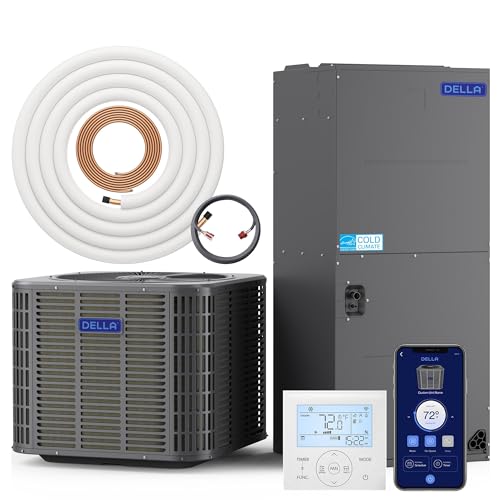
Central Heat and Air Units for a 1500 Square Foot Home
Everything you need to know before choosing a central heating and cooling system for your 1,500 sq ft home — sizing, efficiency ratings, system types, installation considerations, and how to make a confident, well-informed decision.
Start With SizingWhy this guide matters: A 1,500 square foot home is one of the most common residential footprints in the United States. Getting the central heat and air unit right for this size — not too large, not too small — directly affects comfort, humidity control, energy use, and the lifespan of your equipment. This guide walks you through every decision point so you can choose with confidence.
If you are still exploring broader system options, our central heat and air units overview is a good starting point before diving into the specifics for your home size.
What Size Central System Does a 1500 Sq Ft Home Need?
The most important decision you will make is system capacity. For a 1,500 square foot home, the typical capacity range falls between 2.5 and 3.5 tons (30,000 to 42,000 BTU/h), depending on climate zone, insulation quality, window area, ceiling height, and occupancy. A common starting estimate is 3 tons (36,000 BTU), but this is only a rough midpoint — a proper load calculation is essential.
Sizing is not about guessing. An undersized system will run continuously and struggle to maintain comfort on peak days. An oversized system will cool the air quickly but cycle on and off too frequently, leaving humidity high and causing uneven temperatures. Both scenarios reduce efficiency and shorten equipment life.
Warm Climate (Hot Summers)
Homes in hotter regions often lean toward the upper end of the range — around 3 to 3.5 tons — to handle peak cooling demand. Proper attic insulation and window shading can reduce the required capacity.
Moderate Climate
In mixed climates, a 2.5 to 3 ton system is often sufficient, especially when the home is well sealed and has quality insulation. A heat pump may be an efficient all-in-one choice.
Cold Climate (Heating Priority)
If heating is the dominant load, the system must be sized for winter performance. A central heat pump with cold-climate capability or a gas furnace paired with AC should be evaluated with a full load calculation.
For a more detailed breakdown by square footage, you can also review our guide on central air units for a 1500 sq ft home, which complements the heating and cooling perspective covered here. If your home is slightly larger or smaller, the same methodology applies: 1,000 sq ft and 2,000 sq ft guides show how capacity scales.
BTU Requirements and Load Calculation
BTU (British Thermal Unit) is the standard measure of cooling and heating capacity. For a 1,500 square foot home, the rough BTU range is 30,000 to 42,000 BTU. However, the only reliable way to determine the right number is a Manual J load calculation, which accounts for:
- Climate zone and design temperatures — how hot and cold it gets in your area
- Insulation levels in walls, attic, and floors
- Window count, size, and glazing type — solar gain matters greatly
- Air infiltration and duct leakage
- Occupancy and internal heat gains from appliances and lighting
- Ceiling height and layout — open floor plans behave differently
A qualified HVAC contractor should perform this calculation before recommending a system. If a contractor simply asks for your square footage and quotes a size without a load calculation, that is a red flag. You can learn more about proper sizing in our how to size an air conditioner guide (available in the main navigation).
Types of Central Heat and Air Systems for 1500 Sq Ft
There are several system configurations that suit a 1,500 square foot home. Each has trade-offs in efficiency, installation complexity, and climate suitability.
| System Type | Best For | Key Considerations |
|---|---|---|
| Split System (AC + Furnace) | Most climates, homes with existing ductwork | Reliable, widely supported, separate heating and cooling components. Gas furnace paired with central AC is a common mid-range choice. |
| Central Heat Pump | Moderate to mild climates, all-electric homes | Heats and cools in one unit. Modern cold-climate models perform well in lower temperatures. Efficient in the long run. |
| Ductless Mini-Split | Homes without ducts, additions, or zoned comfort | No ductwork required, high efficiency, flexible zoning. Multiple indoor heads can serve a 1,500 sq ft layout. |
| Packaged Unit | Smaller homes, limited indoor space | All components in one outdoor cabinet. Common in certain regions and mobile homes; ductwork still required. |
If you want to explore heating and cooling in a single package, our central heating and air page covers the integrated approach. For homes that need both systems combined, combination heating and air conditioning units are worth reviewing. Homes with existing ductwork may also benefit from a central air with furnace setup, which is a proven, well-understood configuration.
Efficiency Ratings: SEER, SEER2, and HSPF
Efficiency ratings tell you how much cooling or heating you get per unit of electricity. Higher ratings mean lower operating energy use over the life of the system. Since 2023, the U.S. Department of Energy uses SEER2 and HSPF2 metrics, which are more representative of real-world conditions.
SEER2 (Cooling Efficiency)
For a 1,500 sq ft home, an entry-level system may meet minimum standards, while mid-range and high-end tier systems offer progressively better seasonal efficiency. Higher SEER2 generally means more comfort and lower energy use during summer.
HSPF2 (Heating Efficiency)
Relevant for heat pumps. A higher HSPF2 indicates better heating performance in cooler months. If you rely on a heat pump for winter warmth, this rating matters as much as SEER2.
ENERGY STAR
ENERGY STAR certified systems exceed minimum efficiency requirements. Choosing a certified model is a straightforward way to ensure your system is well-specified for the category.
Understanding these ratings in depth helps you compare quotes fairly. Our education section covers SEER ratings and HSPF ratings in more detail (available through the main navigation).
Ductwork and Installation Considerations
A central system is only as good as its ductwork. For a 1,500 square foot home, duct design, sealing, and insulation have a major impact on delivered comfort and efficiency. Leaky ducts can waste a significant portion of conditioned air before it reaches your rooms.
- Duct sizing: Undersized ducts restrict airflow; oversized ducts can lead to poor distribution. A proper design considers static pressure and room-by-room airflow.
- Sealing: Sealing joints and connections in attics, crawlspaces, and garages prevents conditioned air loss. Learn more in how to seal air ducts (main navigation).
- Insulation: Ducts running through unconditioned spaces should be insulated to prevent heat gain or loss.
- Return air path: Adequate return air is essential for balanced pressure and quiet operation.
Before installation, verify your home's electrical capacity. Our check home electrical panel guide explains what to look for. Installation quality matters as much as equipment quality — review common AC installation mistakes to know what to watch for. For a broader view of what installation involves, see central air unit installation (available in the main navigation).
Heat Pump vs. AC + Furnace: Which Fits Your 1500 Sq Ft Home?
For a 1,500 square foot home, both a central heat pump and a split system with furnace are viable. The right choice depends on your climate, energy source, and long-term goals.
- Central heat pump: One unit handles both heating and cooling. Modern cold-climate heat pumps operate efficiently in lower temperatures. Ideal for moderate climates and all-electric homes. Explore central heat pumps for a deeper look.
- AC + gas furnace: A proven combination with strong heating performance in cold climates. Separate systems mean separate service lifecycles and maintenance needs. If you already have a furnace in good condition, pairing it with a new central AC may be the practical path.
- Combination systems: Some homes use packaged or combination units that integrate both functions. Review combination heating and cooling for options.
If your home is in a region with significant heating demand, a heat pump with a cold-climate rating or a furnace pairing deserves careful comparison. Our central heating and cooling overview can help frame the decision.
Features That Matter for a 1500 Sq Ft Home
Beyond capacity and efficiency, certain features improve comfort and usability. Here is what to prioritize when comparing systems:
| Feature | Why It Matters | Recommended Tier |
|---|---|---|
| Variable-speed compressor | Provides smoother temperature control, quieter operation, and better humidity management than single-stage systems. | Mid-range to high-end tier |
| Two-stage or modulating furnace | Improves heating comfort and reduces temperature swings during winter. | Mid-tier and above |
| Smart thermostat compatibility | Enables scheduling, remote control, and energy-aware operation. Learn about central air thermostats. | Essential tier and above |
| Enhanced filtration | Better indoor air quality, especially important in homes with allergies. | Balanced tier and above |
| Zoning capability | Allows different temperatures in different areas — useful in multi-level or open-plan 1,500 sq ft layouts. | High-end tier |
A variable-speed system in the mid-range tier often delivers a noticeable comfort improvement over an entry-level single-stage unit, particularly in humid climates where humidity control matters. For homes with specific needs, features like wireless thermostats or wireless heating thermostats can add convenience.
Common Central System Problems and Prevention
Knowing what can go wrong helps you maintain your system and catch issues early. Here are the most frequent problems reported by 1,500 sq ft homeowners:
- Not cooling properly: Often caused by dirty filters, low refrigerant, or a failing compressor. See central air turns on but doesn't cool and central air unit is running but not cooling.
- Leaking water: A clogged condensate drain line is a common culprit. Review central air unit leaking water in basement and clogged condensate drain line.
- Thermostat issues: A thermostat that does not respond or reads incorrectly can mimic system failure. See central air thermostat not working.
- Fan running but no cooling: This can indicate a compressor or refrigerant issue. See central air unit fan spinning but not cooling.
- Stopped blowing cold air: Could be a tripped breaker, failed capacitor, or refrigerant leak. See central air unit stopped blowing cold air.
Regular maintenance — filter changes, coil cleaning, and annual professional inspections — prevents many of these issues. If you notice persistent problems, a certified HVAC technician should diagnose the system. Our common AC problems guide covers more scenarios in detail.
Maintenance Tips for Long-Term Performance
A central heat and air system is a long-term investment. Consistent maintenance protects that investment and keeps efficiency high.
- Change or clean filters regularly — every 1 to 3 months depending on usage and household conditions. A clogged filter strains the blower and reduces airflow.
- Clean outdoor condenser coils — dirt and debris reduce heat transfer. Learn how in cleaning outside air conditioning unit.
- Clean evaporator coils — indoor coil cleaning maintains cooling efficiency. See clean AC evaporator coils and cleaning coils on central air conditioner.
- Flush the condensate drain — prevents water backups. See clean air conditioner drain line.
- Schedule professional service — an annual tune-up catches small issues before they become major repairs. A certified HVAC professional can inspect refrigerant levels, electrical connections, and moving parts.
If your system is older or needs significant repair, compare the options in central air units. In some cases, replacement is more sensible than repeated repairs. Our guide on replace vs repair (main navigation) helps frame that decision. For homes with existing ductwork that needs attention, cleaning air conditioner drain and cleaning air conditioner condenser coils are practical maintenance references.
Buying Checklist for a 1500 Sq Ft Central System
Use this checklist to organize your decision process and compare quotes confidently.
- Get a Manual J load calculation — do not accept a size based on square footage alone.
- Confirm duct condition — have ducts inspected for leaks, sizing, and insulation.
- Choose your system type — split system, heat pump, or packaged unit based on climate and home layout.
- Compare efficiency ratings — SEER2 and HSPF2 values should align with your climate and usage.
- Evaluate features — variable-speed operation, zoning, filtration, and smart thermostat compatibility.
- Verify installer credentials — licensing, insurance, and manufacturer authorization matter. Review how to choose HVAC contractor (main navigation).
- Ask about warranty — understand parts and labor coverage, and register the product promptly.
- Plan for maintenance — budget time and resources for regular filter changes and annual service.
If you are also considering broader HVAC system types, centralised HVAC system and centralized air provide additional context. For homes with specific layout challenges, our central heat and air for mobile homes guide may be relevant if your 1,500 sq ft home is a manufactured home.
Ready to Compare Your Options?
You now have the framework to evaluate central heat and air systems for your 1,500 square foot home. Use the checklist above, insist on a load calculation, and compare systems on efficiency, features, and installation quality — not just capacity.
Explore Recommended SystemsFrequently Asked Questions
What size central air unit do I need for a 1500 square foot home?
Most 1,500 square foot homes need a system in the 2.5 to 3.5 ton range (30,000 to 42,000 BTU), with 3 tons being a common starting estimate. However, the exact size depends on climate, insulation, windows, and layout — a Manual J load calculation is the only reliable method.
Is a heat pump better than an AC and furnace for a 1500 sq ft home?
It depends on your climate and energy goals. A heat pump is efficient and handles both heating and cooling in moderate climates. In colder regions, a cold-climate heat pump or a furnace pairing may be more appropriate. Both are valid choices when sized and installed correctly.
How long does a central heat and air system last?
With proper maintenance, a central system typically lasts 15 to 20 years. Regular filter changes, annual professional service, and prompt repairs extend equipment life. Ductwork can last longer but should be inspected for leaks and insulation degradation.
Can I replace just the AC and keep my existing furnace?
Yes, if the furnace is in good condition and compatible with the new AC. A contractor should inspect the furnace, check its age and efficiency, and confirm the blower and duct system can handle the new cooling capacity. If the furnace is aging, replacing both together may be more practical.
What SEER2 rating should I look for?
SEER2 requirements vary by region. In general, higher SEER2 ratings indicate better cooling efficiency. For a 1,500 square foot home, choosing a system that meets or exceeds ENERGY STAR requirements is a solid baseline. Mid-range and high-end tier systems offer progressively better seasonal efficiency and comfort features.
Do I need new ductwork when replacing my central system?
Not always. If existing ducts are properly sized, sealed, and insulated, they may be reused. A contractor should inspect the duct system for leaks, obstructions, and sizing issues. In older homes, duct sealing or partial replacement may improve performance noticeably.