
Portable Air Conditioner Without a Window Vent: Realistic Solutions
Rooms without a usable window create one of the hardest cooling problems in a home. This guide explains why compressor units need venting, what genuinely works when no window vent is available, and how to choose a practical solution for basements, interior rooms, and rentals.
Explore Your OptionsThe core truth: A compressor-based portable air conditioner must exhaust hot air somewhere. Without a vent, the unit recirculates its own exhaust and cannot cool effectively. That does not mean you are out of options — it means you need to choose the right category of solution for your space, whether that is an evaporative cooler, a fan-based approach, or a venting workaround through a door or ceiling.
Why Compressor ACs Need a Vent
An air conditioner works by moving heat, not by destroying it. The compressor and condenser coils inside a portable unit release the heat it removes from the room. In a window AC or mini-split, that heat goes outdoors. In a portable AC, the exhaust hose carries it out through a window or other opening.
If the hose has nowhere to go, three things happen: the room gradually warms back up, the unit works harder and draws more power, and condensate management becomes unreliable. The appliance itself is not broken — it simply cannot complete the heat-removal cycle without an exhaust path.
No Vent = No Effective Cooling
A compressor unit without an exhaust path cannot remove heat from the room. It recirculates warm air instead.
Evaporative Units Are Different
Evaporative coolers cool by adding moisture to the air, not by compressing refrigerant. They genuinely do not need an exhaust hose.
Fans Move Air, Not Heat
A fan improves comfort by moving air across your skin. It does not lower the room's air temperature by itself.
If you are still exploring the broader portable category, the overview of portable AC units explains how vented and ventless categories differ in practice.
The Realistic Options for a Room Without a Window Vent
There is no magic device that cools a sealed room as effectively as a vented compressor unit. Instead, there are several approaches that work to different degrees depending on climate, room size, and how much effort you are willing to invest in a venting workaround.
| Solution | How It Works | Best For |
|---|---|---|
| Evaporative cooler | Adds moisture to airflow through a wet pad | Dry climates, garages, patios |
| High-velocity portable fan | Moves air across the skin for perceived cooling | Small rooms, personal comfort |
| Door-vented compressor AC | Hose routed through a slightly open doorway | Rooms adjacent to a ventable space |
| Ceiling-vented compressor AC | Hose routed into a drop ceiling or attic | Rooms with accessible ceiling cavities |
| Portable spot cooler | Focused cool-air delivery to a small zone | Desks, workstations, single occupants |
Option 1: Evaporative coolers
An evaporative cooler — sometimes called a swamp cooler — pulls air through a water-saturated pad and blows it into the room. It requires no exhaust vent because it does not compress refrigerant. In dry climates, it can meaningfully lower air temperature near the unit. In humid climates, its performance drops sharply. For the technical detail, see portable air conditioners with evaporative technology and portable evaporative air coolers.
Option 2: Portable fans and cooling fans
A high-velocity fan does not cool the air, but it dramatically improves how cool you feel by accelerating evaporation from your skin. Combined with a slightly open door to a cooler space, a fan can move cool air into a sealed room effectively. If your priority is comfort without venting, a portable cooling fan is often the most honest solution.
Option 3: Door-vented compressor AC
If the room without a window vent is adjacent to a space that does have one, you can route the exhaust hose through a slightly open door. The door gap must be sealed around the hose to prevent hot air from returning. This approach works best when the adjacent space is a hallway, large living area, or another room with a window you can crack open.
Option 4: Ceiling-vented compressor AC
In rooms with a drop ceiling or accessible attic above, the hose can be routed upward through a small opening. The attic must be able to vent the warm air outdoors. This is more involved and may require a contractor, but it can deliver genuine compressor cooling to a room that otherwise cannot support it.
For a broader look at approaches that avoid window venting entirely, read portable AC units that don't require venting and portable air conditioners with no venting required.
What About "Ventless" Portable ACs?
Products advertised as ventless portable air conditioners are almost always evaporative coolers. The term is used loosely in marketing, and buyers frequently purchase one expecting compressor-grade cooling, only to discover it performs very differently.
Before buying any product described as ventless, confirm two things: whether it uses a compressor or an evaporative pad, and whether it requires a water tank to operate. A compressor unit without a vent is a broken cooling cycle; an evaporative unit without a vent is the intended design.
If your goal is to cool a space that genuinely cannot be vented, review the realistic options in portable AC unit for a room without windows and portable air conditioners without window access.
Matching a Solution to Your Room and Climate
The right approach depends on two factors: how large the space is, and how humid the climate is. A dry-climate basement with a damp problem responds differently than a humid interior bedroom.
Dry climates
Evaporative cooling is genuinely effective when relative humidity is low. The drier the air, the more cooling the evaporation process delivers. For a room without a window vent in a dry climate, an evaporative cooler is often the best first choice.
Humid climates
In humid climates, evaporative cooling adds moisture that the air cannot absorb, which makes the room feel worse rather than better. For humid spaces without a window vent, the practical options narrow to fans, door venting, and addressing the underlying humidity separately with a dehumidifier. The guides on portable air conditioners for humid climates and portable air conditioners for high humidity explain why compressor-based dehumidification matters in these conditions.
Small vs. large rooms
- Small rooms (under 150 sq ft): A high-velocity fan or a small evaporative unit can provide meaningful relief. See portable air conditioners for small rooms.
- Medium rooms (150–400 sq ft): Requires a stronger airflow solution. Evaporative units with a larger tank or a door-vented compressor unit is the realistic path.
- Large spaces (400+ sq ft): Without genuine venting, cooling a large room effectively becomes very difficult. Consider whether an adjacent space can accept the exhaust.
Venting Workarounds That Actually Work
If the room has no window but does connect to another space, a workaround may be possible. The key question is whether the destination can safely accept warm, moist exhaust air without creating a new problem.
Venting workaround checklist
- Identify an adjacent space that can absorb warm exhaust — a hallway, a larger room with a window, or a drop ceiling.
- Confirm the hose reaches from the unit to the opening without sharp bends.
- Seal the gap around the hose so exhaust does not return into the cooled room.
- Check that the destination space has its own ventilation, or the warm air will accumulate there.
- Verify local building codes before making any permanent ceiling or wall modification.
For rooms with a sliding door instead of a window, a sliding door kit may be a viable path. See portable air conditioner sliding window kits and portable air conditioners for side-opening windows for the relevant hardware. If the only window is small, the guide on portable air conditioners for small windows covers the constraints.
Recommended Portable Cooling Units Without Window Venting
⚠️ AFFILIATE DISCLOSURE: This website contains affiliate links. As an Amazon Associate, we earn from qualifying purchases. If you make a purchase through these links, we may receive a small commission at no additional cost to you. Read our full affiliate policy.

Windowless Portable Air Conditioners Fan, Swamp Cooler 3 Modes & 3 Speeds, 16FT Remote,12H Timer for Smart Auto-off, No Hose Needed,2-Gal Tank for 20H Cooling 36db Evaporative Air Cooler
Check price on Amazon
BLACK+DECKER Portable Air Conditioner, 9,000 BTU, BPACT08WT, White | 5,300 BTU SACC for Rooms up to 400 Sq. Ft., 3-in-1 Portable AC, Fan and Dehum with Follow Me Remote Control
Check price on Amazon
BLACK+DECKER Portable Air Conditioner, 10,000 BTU, BPACT10WT, White | 5,500 BTU SACC for Rooms up to 450 Sq. Ft., 3-in-1 Portable AC, Fan and Dehum with Follow Me Remote Control
Check price on Amazon
HYUIO Portable Air Conditioner No Window Needed, Wireless Remote Control, 3 Speed Settings, Long Air Outlet for Cooling Room, Bedroom, Office
Check price on Amazon
Portable Air Conditioners Fan, Windowless Evaporative Air Cooler 2 Modes & 6 Speeds, 12H Timer for Smart Auto-off, 3-Gals Tank for 20H Cooling,16FT Remote,No Hose Needed,38db Swamp Cooler
Check price on Amazon
14,000 BTU Portable Air Conditioner Cools Up to 700 Sq.Ft, 3-IN-1 Energy Efficient Portable AC Unit with Remote Control & Installation Kits for Large Room, Office, Temporary Space
Check price on Amazon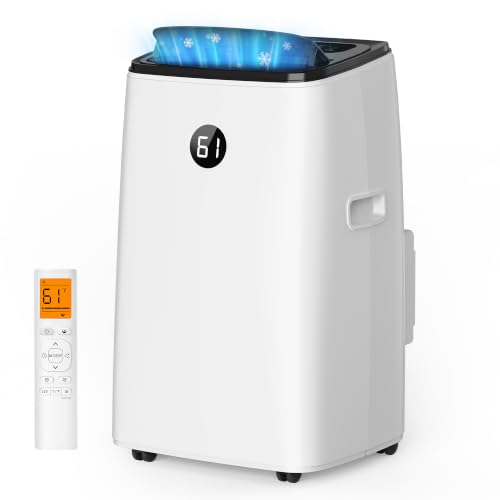
AGTANA 14000 BTU Portable Air Conditioner for Large Room up to 700 Sq. Ft, 3-in-1 Self-Evaporating AC with Fan & Dehumidifier, Floor Standing Portable AC Unit with Remote Control, Auto Swing, White
Check price on Amazon
AC Infinity Smart Portable Air Conditioner 5-in-1, All-Season Cool & Heat | Auto-Switch Cool and Heat, Drainage-Free, Fan & Dehumidifier, WiFi App, Smart Home, Wireless Remote, 16,000 BTU, 800 sq. ft.
Check price on AmazonSpecial Case: Basements Without Window Vents
Basements are the most common room without a usable window vent. They are often cooler than the rest of the house but also damper, which changes the calculus. An evaporative cooler can make a basement feel worse by adding moisture, while a dehumidifier paired with a fan may be more effective than a cooling device.
If the basement has a small basement window, even a limited vent path may be enough. See portable air conditioners for basement windows for the practical detail. For a basement with no window at all, portable air conditioners for rooms with no window covers what is and is not achievable.
When to Consider a Different Cooling Approach Entirely
Sometimes the right answer is not a portable AC at all. If the room genuinely cannot be vented and evaporative cooling is not suitable, consider whether a different approach fits better.
- Address the heat source: Reducing heat gain through shade, insulation, and closing off hot appliances often does more than a small cooling device.
- Move cool air from elsewhere: A ducted approach from a central system or a fan-driven air transfer can be more effective than a ventless cooler.
- Improve ventilation with the building: If the room has any opening to the exterior — even a small vent — a small window solution may work.
- Consider a ductless mini-split if permanent: A portable ductless mini-split air conditioner still requires an outdoor unit, so it does not solve the no-vent problem — but it is worth understanding the alternative.
- Personal cooling: A personal wearable portable air conditioner or a portable cooling fan delivers comfort without solving the room-cooling problem.
Frequently Asked Questions
Can a portable air conditioner work without a window vent?
A compressor-based portable air conditioner cannot run effectively without venting because it must exhaust hot air somewhere. The realistic alternatives are evaporative coolers, portable fans, or compressor units vented through a door, drop ceiling, or wall opening. Understand the trade-offs before choosing a solution.
What is the best option for a room with no window?
For a sealed room with no window, an evaporative cooler or a high-velocity portable fan is often the most practical choice. Evaporative cooling works best in dry climates. In humid climates, a fan combined with airflow management from an adjacent conditioned space is usually more effective than a ventless cooling device.
Can I vent a portable AC through a door or ceiling?
Yes, in some cases. A hose can be routed through a slightly open door to an adjacent space, or through a drop ceiling into an attic, provided the destination can safely accept warm exhaust air. Any permanent modification should follow building codes and, in some jurisdictions, require a permit.
Do ventless portable air conditioners really exist?
Products marketed as ventless portable air conditioners are almost always evaporative coolers rather than compressor units. They cool by evaporating water, not by compressing refrigerant. They do not require an exhaust hose, but they perform differently and are ineffective in high-humidity conditions.
Will a portable AC without venting cool a whole room?
No. Without venting, a compressor unit recirculates its own hot exhaust and loses cooling effectiveness. Evaporative coolers provide localized relief near the airflow but do not deliver the room-wide temperature drop a properly vented compressor unit provides.
Compare ventless and venting-ready cooling options
The recommended units above are grouped by category so you can match a device to your room type, climate, and venting constraints.
Explore Options