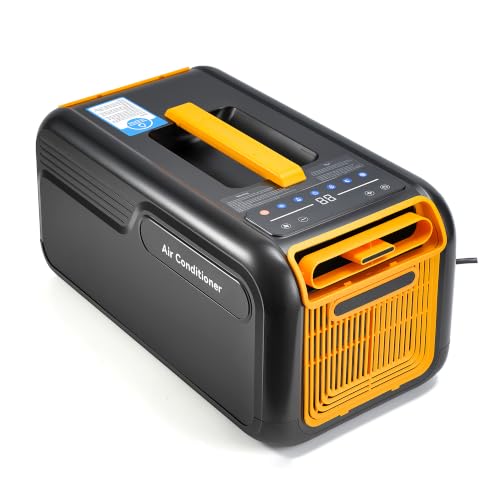
Portable Air Conditioner Without Outdoor Unit: Complete Guide
How self-contained portable cooling works, what "no outdoor unit" really means, which venting options exist, and how to choose a model for rooms without exterior space.
EXPLORE OPTIONS Educational guide — learn first, then chooseQuick summary: Every compressor-based portable air conditioner is already a "no outdoor unit" design. The compressor, condenser, and evaporator sit in one cabinet inside the room. The unit still needs a way to exhaust hot air — usually through a hose connected to a window, wall, or sliding door. True ventless cooling exists only in evaporative coolers, which work differently and suit dry climates.
If you are new to portable cooling, start with the portable air conditioner overview and then return here to understand the venting options for spaces without an outdoor condenser.
What "Without Outdoor Unit" Actually Means
Split-system air conditioners, whether central or mini-split, place the noisy condenser and compressor outdoors. A portable air conditioner does the opposite: everything stays in one cabinet inside the room. There is no external condenser, no refrigerant lines running through a wall, and no outdoor equipment to install or service.
That single-cabinet design is why portable ACs are described as "no outdoor unit" systems. The trade-off is that the heat removed from the room must still leave somehow. Instead of being rejected outdoors through a condenser coil connected by refrigerant lines, the heat is carried out through an exhaust hose.
In other words, "no outdoor unit" does not mean "no exhaust." It means the heat rejection equipment is inside the cabinet, and the exhaust path is a hose rather than a refrigerant line. If your goal is a unit with no exterior hardware at all, that is possible, but it requires a venting path that is not a window. Our guide on a portable AC without a window vent covers those alternatives.
How a Self-Contained Portable AC Works
Inside the cabinet, a compressor circulates refrigerant through an evaporator coil and a condenser coil. Room air passes over the evaporator, gives up heat, and is blown back into the room as cool air. The absorbed heat is transferred to the condenser coil, where a fan pushes it out through the exhaust hose.
Because the condenser is inside the room, the exhaust hose is not optional. Without it, the heat rejected by the condenser simply returns to the room, and the unit becomes a net heater. This is the single most important thing to understand about any portable AC, including models marketed as "no outdoor unit."
Two hose configurations exist. A single-hose unit pulls conditioned room air through the condenser and pushes it outside, which creates negative pressure and draws warm outdoor air back in through gaps. A dual-hose unit pulls outdoor air in for the condenser and rejects it back outside, which avoids that penalty. Our overview of a single-hose portable AC and the intake and exhaust guide explain the airflow in detail.
Portable AC vs Mini-Split vs Evaporative Cooler
The table below compares the three most common ways to cool a room without installing a traditional outdoor condenser. Tier descriptors replace numeric comparisons, since suitability depends on climate and room conditions.
| System | Outdoor Equipment | Venting Required | Best For |
|---|---|---|---|
| Portable AC (compressor) | None | Exhaust hose to a window, wall, or door | Renters, temporary rooms, spaces without outdoor condenser access |
| Ductless mini-split | Yes — outdoor condenser | Small wall penetration for refrigerant lines | Long-term installations where efficiency and quiet operation matter most |
| Evaporative cooler | None | None, but requires ventilation and dry air | Dry climates and open or semi-open spaces |
The mini-split is the more efficient long-term choice if you can install outdoor equipment, but it requires a permanent installation. Our overview of a portable ductless mini-split covers the middle ground: a mini-split that can be moved between rooms. The evaporative cooler is a different category entirely. The portable evaporative air cooler guide explains why it only works in dry air.
Venting Options When You Have No Outdoor Unit
Since a portable AC must still exhaust hot air, the real decision is not "outdoor unit or not" but "where does the hose go." These are the practical options:
Window Venting
Sliding, casement, and double-hung windows all have dedicated kits. See the sliding window kit guide and the casement window kit guide for fit details.
Through-the-Wall Exhaust
A permanent wall port allows the hose to exit without a window. This suits basement rooms and home offices where the window is not usable.
Sliding Glass Door Venting
Tall sliding door kits are available for living rooms and open-plan spaces. They are wider and taller than standard window kits.
Ceiling or Ducted Venting
Some installations route the exhaust into an existing duct. This is more involved and requires professional assessment.
Casement and Crank-Out Windows
These windows need dedicated kits. See the crank window kit guide and the side-opening window guide.
Evaporative Cooling
The only true no-vent cooling option. It adds humidity rather than removing it, so it is not suitable for humid climates. See the evaporative technology overview.
Rooms Without Usable Windows
A room with no window is the most common reason buyers search for a "no outdoor unit" solution. The honest answer is that a compressor-based portable AC still needs an exhaust path, but several workarounds exist:
- Vent through a wall. A small wall penetration with a weatherproof hood is the cleanest permanent solution. The hose runs from the unit to the wall port.
- Vent through a ceiling or roof. This requires professional assessment but is sometimes possible in attic rooms.
- Vent through a shared door gap. If the room connects to a space with a window, the hose can be routed through the doorway with a sealing panel.
- Use a portable AC with a longer hose. Longer hoses add heat gain and reduce efficiency, so this is a compromise rather than a solution.
For a detailed walkthrough of windowless setups, see the portable AC for room with no window guide and the portable AC unit for room without windows overview. The portable AC without window access guide covers the trade-offs in more depth.
Performance Expectations for Self-Contained Units
Without an outdoor condenser, the compressor and condenser fan sit in the same cabinet as the evaporator. That has real consequences for performance:
- Noise. The compressor is inside the room, so portable ACs are louder than mini-splits and central systems. Inverter models reduce cycling noise but not fan noise.
- Heat gain. The cabinet itself becomes warm during operation, and the exhaust hose radiates heat back into the room. Insulating the hose and keeping it short helps. See the insulated exhaust hose overview.
- Efficiency. A portable AC is less efficient than a mini-split of comparable capacity, largely because of the single-hose penalty and the heat gain from having all components indoors. An inverter compressor improves steady-state behavior; see the inverter portable AC guide.
- Condensate. Water removed from the air collects in a tank or is evaporated and exhausted. In humid conditions, the tank fills and must be drained. The self-evaporating system overview explains how this works.
These trade-offs are the price of convenience. A portable AC installs in minutes, moves between rooms, and requires no exterior hardware beyond a venting path. For renters and temporary setups, that convenience often outweighs the efficiency gap.
Sizing a Portable AC for a Room Without Outdoor Space
Sizing follows the same principles as any air conditioner: match capacity to the room's heat load, not to the size of the unit's cabinet. Room area, ceiling height, sun exposure, insulation, and the number of occupants all matter. An undersized unit runs continuously and never reaches the set point; an oversized unit cycles and struggles to remove humidity.
For a standard bedroom, a compact unit is often sufficient. Our guide on a portable AC for a very small room covers the smallest categories, and the portable AC unit for bedroom overview explains placement and noise considerations. For larger spaces, the portable AC for a 500 sq ft room and portable AC for 1,000 square feet guides cover capacity expectations.
If you are cooling a basement room with a small window, the basement window guide explains how to make the most of a limited venting opening.
Buying Checklist for a No-Outdoor-Unit Portable AC
Use this checklist to compare options without relying on numeric comparisons that change between listings:
- Confirm the compressor type. A compressor-based unit is a true air conditioner. Evaporative coolers are not. The product description should state which technology is used.
- Identify the venting path. Window, wall, sliding door, or ceiling. The kit must match the opening. A sliding window kit will not seal a casement window.
- Check the hose configuration. Dual-hose units reduce negative pressure and are a better match for steady inverter operation. Single-hose units are more common but have a structural penalty.
- Match capacity to the room. Use a sizing guide rather than guessing. The portable air conditioners for small rooms overview covers compact scenarios.
- Review condensate handling. Self-evaporating systems reduce manual draining. If the unit will run for long sessions in humid conditions, this matters more than it does for short use. See the no drain required overview.
- Check noise specifications. All portable ACs are audible. Inverter models reduce cycling noise; fan noise and duct noise remain. Placement on a solid surface helps.
- Confirm the electrical rating. Check that the unit's draw is compatible with the circuit you plan to use, especially in older homes or shared rooms.
- Plan for hose insulation. An uninsulated hose adds heat back into the room. See the insulation sleeve guide for options.
Common Problems and Fixes
The unit runs but the room does not cool
Check the exhaust path first. A hose that is disconnected, kinked, or venting into the same room will not remove heat. Then check the window or wall seal. A loose seal lets hot outdoor air back in. Our guide on portable AC not cooling enough walks through the diagnostic order.
The unit is louder than expected
Compressor noise is unavoidable in a self-contained cabinet. Vibration on a hard floor can amplify it. Place the unit on a solid, level surface and keep the hose as straight as possible. Fan noise is separate and can often be reduced by lowering the fan speed.
The water tank fills quickly
High humidity means more condensate. Self-evaporating systems reduce the frequency of draining but do not eliminate it in very humid conditions. See the portable AC for humid climates and portable AC for high humidity guides.
The unit will not fit the window
Window style matters more than window size. Casement, crank-out, and sliding windows each need dedicated kits. The casement window guide, crank-out window guide, and side-opening window guide cover the fit rules.
Maintenance for Self-Contained Portable Units
A no-outdoor-unit design simplifies installation but concentrates all maintenance inside the room. Keep these habits:
- Clean or replace the filter regularly. A clogged filter forces the compressor to work harder and reduces cooling output.
- Drain the condensate tank. Even self-evaporating systems need occasional draining in humid weather.
- Inspect the exhaust hose and collar. Cracks or loose collars leak hot air back into the room.
- Keep the window or wall seal tight. Replace worn weather strips at the start of each cooling season.
- Store the unit upright. Tilting a portable AC can move oil into the refrigerant circuit. Let it stand upright for several hours before running after transport.
For seasonal routines, the maintenance section covers filter cleaning and end-of-season storage in more detail. If the unit will sit unused for months, drain the tank and cover the cabinet to keep dust out of the coils.
Ready to Compare No-Outdoor-Unit Portable AC Options?
Review the recommended products below to compare compressor type, hose configuration, venting compatibility, and condensate handling. Every listing is selected for the no-outdoor-unit portable AC category.
View Recommended UnitsFrequently Asked Questions
Does a portable air conditioner need an outdoor unit?
No. A portable air conditioner is a self-contained unit that houses the compressor, condenser, and evaporator inside a single cabinet. It does not have a separate outdoor condenser like a split system. It does, however, need a path to exhaust hot air, usually through a hose connected to a window.
Can a portable air conditioner run without any venting?
A true compressor-based portable AC must vent hot exhaust air, otherwise it will not cool and can overheat the room. Ventless options exist in the form of evaporative coolers, which work by adding moisture to the air and only suit dry climates. They are not equivalent to a compressor air conditioner.
What is the difference between a portable AC and a mini-split?
A mini-split uses an indoor air handler connected to an outdoor condenser by refrigerant lines. A portable AC keeps every component indoors and uses an exhaust hose to remove heat. The mini-split is more efficient and quieter; the portable AC is easier to install and can move from room to room.
Can I put a portable AC in a room with no window?
You can, but the exhaust hose still needs a destination. Options include venting through a wall, a ceiling, a sliding door, or a dedicated vent port. Evaporative coolers are the only true no-vent cooling option, and they work only in dry climates.
Where does the water go in a portable AC without an outdoor unit?
Condensate collects in an internal tank or is evaporated by the unit's self-evaporating system and expelled with the exhaust air. In humid conditions, the tank still fills and must be drained manually or via a drain hose.
Related Guides
Choosing by Tier, Not by Guesswork
No-outdoor-unit portable ACs sit across several tiers. Use these descriptors to orient yourself before comparing listings:
Basic Self-Contained Portable AC
Single-hose compressor unit with a standard window kit. Best for small bedrooms and occasional use in rooms with an available window.
Dual-Hose Portable AC
Separates intake and exhaust to reduce negative pressure. A solid choice for rooms where the cooling advantage should not be undermined by a single-hose design.
Feature-Rich Inverter Portable AC
Adds variable-speed compressor, multi-speed fans, self-evaporating condensate handling, and broader kit compatibility. A worthwhile investment for long-term, frequent use.
If your setup involves a non-standard window or a wall vent, the kit matters as much as the compressor type. The sliding window kit guide and the casement window kit guide cover the most common fit scenarios. For commercial or larger spaces, the portable AC for commercial use and portable commercial air conditioning units overviews cover higher-capacity options.