
Air Conditioning Units for Homes: The Complete Homeowner Guide
Everything you need to know before choosing a residential cooling system — system types, sizing, efficiency, installation considerations, and long-term maintenance for a comfortable home.
Explore System TypesWhy this guide matters: Choosing the right air conditioning unit for your home is one of the most impactful comfort decisions you will make. A well-matched system keeps every room comfortable, runs efficiently, and serves your household for many years. A mismatched system can leave rooms uneven, strain your electrical setup, and require more frequent service. This guide walks you through each decision so you can buy with confidence.
Understanding Air Conditioning Units for Homes
Residential air conditioning has evolved far beyond a single window box. Today's homeowners can choose from whole-home central air conditioning systems, ductless split systems, wall-mounted units, and portable options. Each category serves a different layout, budget tier, and installation scenario. The key is matching the system to your home's structure, your climate, and how you actually use each room.
A home cooling system works by removing heat and humidity from indoor air and releasing it outdoors. The efficiency of that process depends on the compressor technology, the refrigerant, the ductwork (if present), and how well the unit is sized for the space. Understanding these fundamentals helps you ask the right questions when comparing models and speaking with installers.
Types of Air Conditioning Units for Homes
The table below summarizes the main residential categories so you can quickly see how they differ in installation, coverage, and market positioning. Each type is described in more detail further down.
| System Type | Best For | Installation Complexity | Market Tier |
|---|---|---|---|
| Central Air Conditioning | Whole-home cooling with existing ductwork | High — requires ductwork and professional install | Premium / high-end tier |
| Ductless Mini-Split | Homes without ducts, room-by-room zoning | Moderate — wall penetration and line set | Mid-range to premium |
| Window AC Unit | Single rooms with a suitable window | Low — DIY-friendly for many models | Entry-level / essential tier |
| Portable AC | Renters, temporary cooling, rooms without windows | Very low — plug and vent | Entry-level to mid-range |
| Through-the-Wall AC | Rooms where window space is limited | Moderate — wall sleeve required | Mid-range |
| Wall-Mounted Split | Bedrooms and living rooms with clean wall space | Moderate — professional refrigerant work | Mid-range to premium |
Central Air Conditioning
A whole-home system that cools air at a central unit and distributes it through ductwork. Ideal for houses already equipped with ducts and for families who want consistent temperatures across every room. Modern central systems pair well with programmable thermostats and zoning controls.
Premium tierDuctless Mini-Split
An outdoor compressor connects to one or more indoor air handlers via a small line set. No ductwork is needed, making mini-splits a strong fit for older homes, additions, and room-by-room comfort. Many models support multiple zones from a single outdoor unit.
Mid-range to premiumWindow Air Conditioner
A self-contained unit that sits in a window frame and cools a single room. Straightforward to install and a solid choice for bedrooms, home offices, and apartments. Look for models with adjustable louvers and washable filters for easier upkeep.
Entry-level tierPortable Air Conditioner
A freestanding unit on casters that vents warm air through a hose to a window or opening. Useful for renters and spaces where permanent installation is not possible. Consider units that do not require a window for flexible placement.
Entry-level to mid-rangeThrough-the-Wall AC
Installed into a sleeve built into an exterior wall. It frees up window space and can be a practical solution for rooms where windows are small or obstructed. Professional installation is recommended for proper sealing and drainage.
Mid-rangeWall-Mounted Split Unit
An indoor wall unit paired with an outdoor condenser. Popular for bedrooms and living rooms thanks to quiet operation and unobtrusive placement. Professional refrigerant handling is required during installation.
Mid-range to premiumHow to Size an AC Unit for Your Home
Sizing is the single most important technical decision in home cooling. An undersized unit runs continuously and never quite reaches the set temperature. An oversized unit cools quickly but cycles on and off frequently, which leaves humidity high and wears components faster. The goal is a unit whose capacity matches the heat load of the space.
Capacity is measured in BTU (British Thermal Units). As a starting reference, a room of roughly 150 square feet typically needs around 5,000 to 6,000 BTU. A 250-square-foot room generally calls for 8,000 to 10,000 BTU, and a 400-square-foot space often needs 12,000 to 14,000 BTU. These are starting points — ceiling height, sun exposure, insulation, window count, and occupancy all shift the final number.
- Use a room-by-room BTU estimate for single-room units like 5,000 BTU models or 10,000 BTU models.
- For larger homes, consider a 18,000 BTU system or a multi-zone configuration.
- Whole-home sizing should follow a professional load calculation rather than a rule of thumb.
- Homes around 1,400 square feet and 3,000 square feet have distinct requirements — see the dedicated guides for 1,400 sq ft homes and 3,000 sq ft homes.
Efficiency Ratings Explained
Efficiency ratings tell you how much cooling a unit delivers per unit of electricity. Higher ratings generally mean lower operating energy use over the system's life. The main ratings homeowners encounter are SEER, SEER2, EER, and HSPF for heat-pump-capable systems.
- SEER / SEER2 — Seasonal efficiency across a typical cooling season. SEER2 reflects updated DOE testing standards.
- EER — Efficiency at a single peak-temperature condition, useful for hot-climate comparisons.
- HSPF — Heating efficiency for systems that also provide heat pump operation.
Inverter-driven compressors modulate speed instead of switching fully on and off, which typically improves efficiency and temperature stability. If you are weighing compressor technologies, the comparison between inverter and non-inverter systems is worth reviewing before you commit.
Compressor Technology: Inverter vs Non-Inverter
The compressor is the heart of any air conditioning unit. Traditional non-inverter compressors run at a fixed speed and cycle on and off. Inverter compressors vary their speed continuously, which usually results in steadier temperatures, quieter operation, and better energy performance in the long run. For homes where the AC runs for many hours a day, inverter models are often the more efficient long-term investment.
Non-inverter units remain a solid choice for rooms used intermittently, such as guest rooms or occasional home offices. They are simpler in construction and competitive within their class for short-run use.
Matching Units to Specific Rooms and Spaces
Different rooms present different challenges. Bedrooms need quiet operation and stable overnight temperatures. Living rooms have larger heat loads from people, windows, and electronics. Apartments and small spaces benefit from compact, flexible units that do not require structural changes.
- For bedrooms, a wall-mounted bedroom unit keeps noise low and saves floor space.
- For living areas, an AC unit for the living room should account for higher occupancy and solar gain.
- For compact homes, explore units for small apartments and units for small spaces.
- For single-room cooling, see air conditioning units for one room.
- If your room lacks a standard window, review units for rooms without a window and units for casement windows.
- Manufactured homes have specific constraints — see units for manufactured homes.
Installation Considerations
Installation quality affects performance as much as the equipment itself. Poor sealing, incorrect refrigerant charge, or undersized electrical circuits can undermine even a premium unit. Before installation, confirm your electrical panel can support the new load, plan the indoor and outdoor placement carefully, and verify whether a permit is required in your area.
For central and split systems, refrigerant lines must be properly sized, evacuated, and charged. For window and portable units, correct mounting and venting prevent vibration, water intrusion, and efficiency loss. If you are not confident with electrical or refrigerant work, hiring a qualified air conditioning technician or an AC specialist is the safer route.
Keeping Your Home AC Unit Running Well
Regular maintenance extends the life of any system and helps it hold its rated efficiency. The most important habit is cleaning or replacing the air filter on schedule — a clogged filter restricts airflow and forces the system to work harder. Coil cleaning, condensate drain checks, and seasonal tune-ups round out a solid maintenance routine.
- Schedule a professional AC tune-up before each cooling season.
- Learn the basics of AC unit cleaning so you can handle simple tasks between service visits.
- For ongoing care, consider a recurring service and maintenance plan.
- If something seems off, see the troubleshooting guides for units not cooling properly and systems not cooling.
Common Problems and When to Call a Professional
Even well-maintained systems occasionally develop issues. Water leaking, warm air from the vents, unusual noises, and weak airflow are the most frequent complaints. Some problems, like a dirty filter or a tripped breaker, are easy to resolve. Others — refrigerant leaks, compressor faults, or electrical issues — should be handled by a qualified professional.
- AC unit leaking water — often a blocked condensate drain.
- AC unit blowing hot air — could be a compressor, refrigerant, or thermostat issue.
- Refrigerant leaks — require certified handling and repair.
- Unit not cooling the house — check sizing, airflow, and system health.
When repairs become frequent or the system is well past its expected service life, replacement may be the wiser path. A replacement service can help you transition to a more efficient system with modern controls.
Finding Local Help for Your Home Cooling System
Whether you need a seasonal check, a repair, or a full installation, working with a reputable local provider makes the process smoother. Look for licensed and insured technicians with experience on the type of system you own. Reading reviews and requesting written estimates helps you compare options fairly.
- Search for repair companies close to me when you need fast local support.
- Compare local repair providers before committing to a service call.
- For scheduled work, explore AC service near my location.
- For new equipment, browse air conditioning sales from established dealers.
Home AC Buying Checklist
Use this checklist to organize your decision before you purchase:
- Measure the space. Note square footage, ceiling height, and window area for each room you plan to cool.
- Identify your layout. Confirm whether your home has ductwork, suitable windows, or wall space for a split system.
- Choose a system type. Match central, mini-split, window, portable, or through-the-wall to your structure and usage.
- Confirm capacity. Use BTU guidance and, for whole-home systems, a professional load calculation.
- Compare efficiency. Review SEER2, EER, and HSPF where applicable for your climate.
- Plan installation. Check electrical capacity, placement, permits, and whether professional help is required.
- Plan maintenance. Budget time for filter changes and schedule seasonal tune-ups.
Frequently Asked Questions
What is the best type of air conditioning unit for a home?
There is no single best type — it depends on your home's structure and your cooling goals. Central air is ideal for homes with existing ductwork that need whole-house comfort. Ductless mini-splits suit homes without ducts and room-by-room zoning. Window and portable units work well for single rooms, apartments, and temporary needs.
How do I know what size AC unit my home needs?
Start with square footage and a BTU reference table, then adjust for ceiling height, sun exposure, insulation, and occupancy. For whole-home systems, a professional load calculation is the most reliable method. Oversizing and undersizing both reduce comfort and efficiency.
Is an inverter AC worth it for a home?
For homes where the AC runs many hours per day, inverter systems usually deliver steadier temperatures, quieter operation, and better long-term energy performance. For rooms used only occasionally, a non-inverter unit can still be a practical choice within its class.
How often should a home AC unit be serviced?
Professional servicing once per year, ideally before the cooling season, is a common recommendation. Filters should be checked monthly during heavy use and cleaned or replaced as needed. Coil cleaning and drain checks are typically part of an annual tune-up.
Can I install an air conditioning unit myself?
Window and portable units are often DIY-friendly. Central systems and split units involve refrigerant handling, electrical connections, and sometimes permits — these are best left to licensed professionals to ensure safety and warranty compliance.
What should I do if my AC unit is not cooling properly?
Check the air filter, thermostat settings, and outdoor unit for obstructions first. If the issue persists, review common causes or contact a qualified technician. Persistent warm air or unusual noises often point to refrigerant or compressor issues that require professional diagnosis.
Top-Rated Air Conditioning Units for Homes
⚠️ AFFILIATE DISCLOSURE: This website contains affiliate links. As an Amazon Associate, we earn from qualifying purchases. If you make a purchase through these links, we may receive a small commission at no additional cost to you. Read our full affiliate policy.

Midea 8,000 BTU Smart Inverter Air Conditioner Window Unit with Heat and Dehumidifier – Cools up to 350 Sq. Ft., Energy Star Rated, Quiet Operation, Electronic Controls, Remote Control, White
Check price on Amazon
Midea 6,000 BTU Window Air Conditioner, Electronic Control, 250 Sq Ft, New | 3-In-1 Cool/Fan/Dehumidifier Modes, Easy-To-Use Controls, Remote Control, And Cooling For Bedrooms, Studies and Home Offices
Check price on Amazon
ACiQ 2.5 Ton 14.3 SEER2 Central Air Conditioner Unit - R32 AC Condenser | 230V Single Stage, Energy Efficient Air Conditioning, Outdoor Central HVAC Unit for Ducted AC Split Systems
Check price on Amazon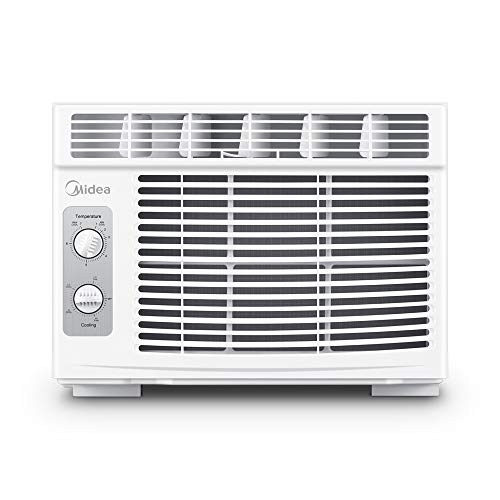
Midea 5,000 BTU EasyCool Small Window Air Conditioner - Cool up to 150 Sq. Ft. with Easy-to-Use Mechanical Controls and Reusable Filter, Perfect for Small Bedroom, Living Room, Home Office
Check price on Amazon
Frigidaire 5,000 BTU Window-Mounted Air Conditioner, Cools Up to 150 Sq. Ft., Quiet Operation, Effortless Temperature Control, 2 Fan Speeds, Auto Restart, White
Check price on Amazon
GE 6,000 BTU Electronic Window Air Conditioner, Cools Rooms up to 250 sq ft, Digital Controls with Remote, Energy Saver Mode, 24Hr Timer, Easy Install Kit Included, White
Check price on AmazonReady to Choose Your Home AC Unit?
You now have the framework to compare system types, confirm sizing, evaluate efficiency, and plan installation and maintenance. Use the recommended units above as a starting point, and match your final choice to your home's specific layout and cooling needs.
View Recommended Units