
Multi Zone Mini Split Heating and Cooling
A complete buyer's guide to zoned ductless comfort: how multi zone systems work, how to plan zones, and how to pick the right configuration for your home.
EXPLORE THE GUIDEWhy this guide matters: A multi zone mini split heating and cooling system lets you condition several rooms independently from a single outdoor unit. That flexibility is powerful, but only when the system is planned correctly. This guide walks you through the technology, zoning decisions, sizing logic, and installation expectations so you can buy with confidence.
How Multi Zone Mini Split Systems Work
A multi zone mini split heating and cooling system pairs one outdoor condenser with two or more indoor air handlers, often called heads. Each head is connected to the condenser by its own refrigerant line set, and each room gets its own remote or wall thermostat. Because every zone can run independently, one bedroom can be cooled while another is heated, or an unused room can simply be switched off.
Unlike central air, there is no ductwork distributing air from a single source. Instead, refrigerant travels between the outdoor unit and each indoor head, and each head blows conditioned air directly into the room it serves. This is why these systems are also called ductless multi zone systems, and why they are especially popular in homes where adding ducts would be disruptive or impossible.
Modern systems are usually inverter-driven heat pumps, meaning the same hardware provides both heating and cooling. In cooling mode, the outdoor unit rejects heat; in heating mode, the refrigerant cycle reverses and the system extracts heat from outdoor air and moves it indoors. That dual function is the reason many homeowners consider a mini split heat pump for 1000 square feet or larger homes as a single solution for year-round comfort.
Key concept: A multi zone system is not simply several single zone systems bundled together. The outdoor unit must be matched to the combined load of all connected zones, and manufacturers publish specific zone combinations that are approved for each condenser. Buying mismatched components can reduce efficiency and may void the warranty.
Planning Zones for Heating and Cooling
Zoning is the single most important decision in a multi zone project. A zone should group spaces that share a similar comfort schedule, similar heat gain and loss characteristics, and similar occupancy patterns. Good zoning keeps the system efficient; poor zoning forces the outdoor unit to work harder than necessary and can leave some rooms uncomfortable.
Here is a practical way to think about common zone groupings:
- Bedrooms: Usually grouped per floor or per wing. Night-time comfort schedules make bedrooms a natural zone.
- Living and dining areas: Often a single large zone because they share open space and daytime use.
- Home office: Frequently its own zone because of concentrated heat from equipment and long daytime occupancy.
- Basement or attic conversions: Separate zones due to very different load profiles from the rest of the house.
- Additions and sunrooms: Best isolated as their own zone because glass-heavy walls and weak insulation change the load dramatically.
If you are conditioning a smaller footprint, it may be easier to start with a mini split heat pump for 500 sq ft or a mini split heat pump for 400 sq ft and expand later. For larger homes, a dedicated multi zone mini split system keeps each area independent without sacrificing whole-home coverage.
Two practical rules help avoid common mistakes. First, avoid mixing rooms with very different loads into one zone, such as a shaded interior bedroom and a west-facing sunroom. Second, avoid creating zones that are so small that the head short-cycles, which wastes energy and shortens equipment life. A professional load calculation will confirm whether your planned zones are viable.
Multi Zone vs Single Zone vs Central Air
Choosing between a multi zone system, a single zone system, and central air comes down to how many spaces you need to condition, how independent those spaces need to be, and whether ductwork already exists. The table below summarizes the practical differences.
| System Type | Best For | Zoning Control | Installation Complexity |
|---|---|---|---|
| Single zone mini split | One room or a small open plan area | One zone only | Straightforward |
| Multi zone mini split | Several rooms needing independent comfort | Two to five zones per condenser | Moderate, requires careful line routing |
| Central air | Whole home with existing ductwork | Zoned only with dampers and extra controls | High, requires ducts and major work |
| Multi zone ductless with cassette heads | Larger open spaces and high ceilings | Independent per zone | Moderate to high |
For homes without ducts, a multi zone ductless AC configuration is often the most practical path. It avoids the expense and disruption of duct installation while still delivering room-by-room control. If you are comparing ductless options more broadly, the multi zone ductless heating and cooling systems overview explains how the components fit together.
Single zone systems remain excellent for a garage, an addition, or a single problem room. But once you need three or more independently controlled spaces, a multi zone configuration usually becomes the more coherent choice than installing several separate condensers.
Sizing Each Zone Correctly
Multi zone sizing has two layers. First, each indoor head must be matched to its room's load. Second, the outdoor condenser must be matched to the total connected load, with manufacturers specifying allowable combinations. Oversizing any part of the system leads to short cycling, poor humidity removal, and unnecessary energy use.
Several factors drive the load of each zone:
- Floor area and ceiling height of the room
- Window area, orientation, and glazing type
- Insulation quality of walls, roof, and floor
- Local climate design temperatures for both summer and winter
- Occupant count and heat-producing appliances
As a general orientation, a small bedroom might fall in the 6,000 to 9,000 BTU range, a typical living room in the 12,000 to 18,000 BTU range, and a large open plan space higher still. These are rough starting points only. The reliable approach is a room-by-room load calculation, and the sizing discussion in the multi zone mini split guide explains why connected-load rules matter so much.
One frequent mistake is adding a fifth or sixth zone to a condenser that was designed for fewer heads. Even if the pipe connections physically fit, the system may not deliver rated performance. Always check the manufacturer's combination tables and let a qualified installer confirm the design.
Indoor Head Styles and Placement
Multi zone systems can mix head styles, which is one of their practical advantages. A bedroom might use a quiet wall-mounted unit, while a living room with high ceilings could use a ceiling cassette that distributes air in four directions. Choosing the right head for each room improves comfort and keeps the installation visually tidy.
| Head Style | Best Room Type | Placement Note |
|---|---|---|
| Wall-mounted high wall | Bedrooms, offices, standard rooms | High on an exterior wall, clear of furniture |
| Ceiling cassette | Living rooms, open plans, high ceilings | Centered for even four-way airflow |
| Floor-mounted console | Rooms with limited wall space | Low placement, good for heating comfort |
| Ducted mini split | Hidden installations, multiple adjacent rooms | Requires short duct runs and ceiling space |
If a single room needs more capacity than one head can deliver, a multi head mini split configuration can place two smaller heads in that space rather than one oversized unit. This often improves airflow and reduces noise. Cassette-style installations are covered in more detail in the mini split cassettes guide, and ceiling cassette options specifically are explained in the mini split heat pump with ceiling cassette overview.
Efficiency and Inverter Technology
Most modern multi zone systems use inverter compressors, which vary their speed instead of switching fully on and off. That modulation is what allows a system to hold a steady temperature and use less energy during partial-load conditions, which is most of the time in a well-insulated home. The practical benefit is quieter operation, steadier comfort, and better humidity control.
Efficiency ratings for mini splits are expressed through SEER2 for cooling and HSPF2 for heating. Higher ratings generally indicate better performance, but the installed efficiency also depends on how well the zones are designed. A high-rated system with poorly planned zones will underperform a mid-range system with well-matched zones. If you want to compare specific equipment, the most energy efficient mini split air conditioner roundup covers highly rated models, while the mini split with inverter explainer covers how inverter modulation works in practice.
Smart controls also matter. Many current systems support scheduling, geofencing, and remote adjustment through an app. If you plan to control zones from a central point, a mini split remote thermostat or a mini split wall thermostat can simplify daily operation across multiple heads.
Installation and Long-Term Upkeep
Multi zone installation is more involved than single zone work because each head needs its own refrigerant line set, drain route, and electrical connection. Line routing is the part that most affects the final appearance of the installation, so plan the paths early. Condensate management deserves equal attention, since a poorly sloped drain line is one of the most common sources of callbacks.
Outdoor unit placement also matters. The condenser needs adequate clearance for airflow, a stable base, and reasonable proximity to the indoor heads to keep line lengths within manufacturer limits. A mini split pad or a mini split wall bracket is typically used depending on whether the unit sits at ground level or is mounted on a wall, and a mounting bracket for mini split condensing unit is the standard choice for elevated installations.
If you are evaluating professional help, the mini split installation services overview explains what a proper installation includes, and the mini split installers in my area guide helps you vet local contractors. For homeowners considering a hands-on approach, the mini split DIY guide covers what is realistic and where licensed work is required.
Long-term upkeep is straightforward but not optional. Filters need regular cleaning, coils should be rinsed seasonally, and the outdoor unit should be kept clear of debris. The mini split heating and cooling installation reference includes commissioning checks that should be completed before the system is handed over.
Market Tiers and What Each Tier Offers
Multi zone systems are available across a wide range of market positions. The descriptors below are relative and describe what each tier typically emphasizes, rather than absolute performance.
| Tier | Typical Characteristics | Best For |
|---|---|---|
| Entry-level | Essential features, basic controls, straightforward build | Secondary spaces and straightforward retrofit projects |
| Mid-range | Inverter modulation, quieter operation, app control on many models | Primary living spaces and whole-home zoning |
| Premium | Higher efficiency ratings, refined airflow, advanced filtration options | Homes prioritizing long-term efficiency and quiet comfort |
| High-end tier | Top efficiency bands, premium materials, advanced zone controls | Large homes and projects where performance is the priority |
Mid-range systems usually offer the most balanced combination of features and long-term efficiency for typical residential projects. Entry-level systems can be a solid choice for a garage or a rarely used guest room, while premium and high-end tier systems make more sense when the system will run heavily year-round.
Buying Checklist Before You Commit
Before finalizing a multi zone purchase, run through the following checklist. It captures the decisions that most often cause regret after installation.
- Confirm the number of zones and the head style for each room.
- Obtain a room-by-room load calculation rather than estimating from floor area alone.
- Verify that the condenser and head combination is approved by the manufacturer.
- Plan line set routes and drain slopes before work begins.
- Confirm electrical requirements and panel capacity with a licensed electrician.
- Check warranty terms for both equipment and labor.
- Ask about smart controls and whether a central thermostat is supported.
- Review the maintenance schedule and filter accessibility for each head.
If you are still deciding between a full multi zone build and a simpler starting point, the mini split heating and cooling systems overview and the mini split heating and air conditioning systems guide both help frame the trade-offs. For homes that already have central air, a mini split to supplement central air conditioning setup is a practical way to add zone control without replacing the existing system.
Recommended Multi Zone Mini Split Heating and Cooling Systems
⚠️ AFFILIATE DISCLOSURE: This website contains affiliate links. As an Amazon Associate, we earn from qualifying purchases. If you make a purchase through these links, we may receive a small commission at no additional cost to you. Read our full affiliate policy.

Albott 3 Zone Mini Split AC/Heating System, 9K+9K+12K BTU, 22 SEER2 | Ductless Inverter Heat Pump with 28,000 BTU Outdoor Unit, WiFi Control, Pre-Charged Condenser & 16.4 Ft. Line Sets, 208-230V
Check price on Amazon
MrCool DIY Multi Zone Mini Split | 18k BTU 3 Zone 6K x3 25ft Line Sets Included
Check price on Amazon
COSTWAY 20K Dual 2 Zone Mini Split AC/Heating System, 23 SEER2 12k+12k BTU | WiFi Enabled Split AC w/Heat Pump & Pre-Charged, Line Set Included, 208/230V (Blast Pro Series)
Check price on Amazon
COSTWAY 28K Tri 3 Zone Mini Split AC/Heating System, 20 SEER2 12K WiFi Enabled Split AC w/Heat Pump & Pre-Charged, Line Set Included, 208/230V (Blast Pro Series)
Check price on Amazon
ROVSUN 28000BTU Tri Zone Mini Split AC/Heating System, 20 SEER2 3 Zone (9K/9K/9K) BTU Ductless Split Air Conditioner with Pre-Charged Condenser, Heat Pump & 25Ft Line Set, 208-230V
Check price on Amazon
COSTWAY 20K Dual 2 Zone Mini Split AC/Heating System, 23 SEER2 9k + 12k BTU | WiFi Enabled Split AC w/Heat Pump & Pre-Charged, Line Set Included, 208/230V (Blast Pro Series)
Check price on Amazon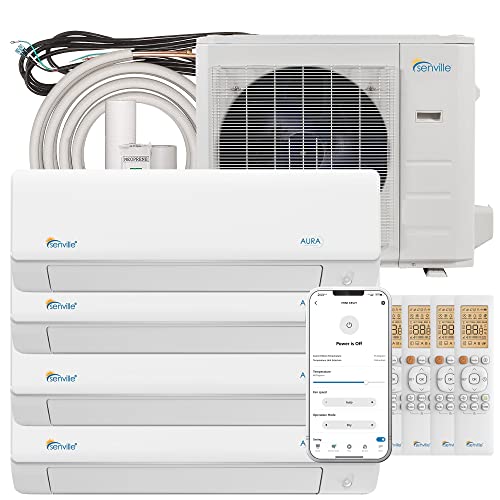
Senville AURA Mini Split AC/Heating System, 4 Zone, White, 36000 BTU | Energy Star Certified, Works with Alexa, Ductless Inverter, 3 Ton, AHRI Certified
Check price on Amazon
COSTWAY 28K Dual 2 Zone Mini Split AC/Heating System, 23 SEER2 18000 BTU+ 18000 BTU WiFi Enabled Split AC w/Heat Pump & Pre-Charged, Line Set Included, 208/230V (Blast Pro Series)
Check price on AmazonFrequently Asked Questions
How many zones can one multi zone condenser support?
Most residential multi zone condensers support two to five indoor heads. The exact number depends on the model and the approved combination table published by the manufacturer. Adding more heads than the condenser is rated for can reduce performance and may affect warranty coverage.
Can each zone heat and cool independently?
Yes. Each indoor head has its own controls, so one zone can cool while another heats, provided the outdoor unit supports simultaneous operation in that mode. Some systems prioritize one mode across all zones at a time, so confirm this specification before buying if mixed-mode operation is important to you.
Is a multi zone system suitable for a whole house?
It can be. Multi zone systems are commonly used for whole-home coverage when ductwork is absent or impractical. The key requirements are a room-by-room load calculation, well-planned zones, and a condenser matched to the combined load.
How long do the refrigerant line runs need to be?
Each manufacturer specifies maximum line lengths and elevation differences per head. Keeping runs within those limits preserves capacity and efficiency. Line length planning should happen before installation begins, not after the outdoor unit is placed.
What maintenance does a multi zone system need?
Regular filter cleaning, seasonal coil rinsing, and keeping the outdoor unit clear of debris are the core tasks. Annual professional checks are recommended to verify refrigerant charge, electrical connections, and drain function across all zones.
Can I add a zone later?
Sometimes, but only if the original condenser has spare capacity and an approved combination for the additional head. Retrofitting a zone onto a fully utilized condenser is usually not feasible. If expansion is likely, choose a condenser with headroom from the start.
Ready to Compare Multi Zone Options?
Use the product section above to explore current multi zone mini split heating and cooling systems, then confirm sizing and zone planning with a qualified installer before you commit.