
Multi Zone Split Air Conditioning Systems: The Complete Guide
Learn how multi zone split systems work, how to design zones for your home, size each indoor head, plan installation, and choose the right configuration for independent comfort in every room.
EXPLORE THE GUIDEWhat Are Multi Zone Split Air Conditioning Systems?
Multi zone split air conditioning systems connect a single outdoor condenser to two or more indoor air handlers, called heads. Each head serves a separate room or zone and can be controlled independently. This design delivers targeted comfort without the ductwork required by central air conditioning.
Homeowners researching multi zone mini split options often compare them with single zone units. The key difference is flexibility: one outdoor unit can cool a bedroom, a living room, and a home office at different setpoints. If you are new to ductless technology, start with our guide to mini split ductless AC before diving into zoning.
Why this matters: Multi zone systems are ideal for homes without existing ducts, additions, converted garages, and multi-story layouts where a single thermostat cannot deliver even comfort.
How Multi Zone Split Systems Work
A multi zone system uses one outdoor compressor-condenser unit connected by refrigerant line sets to multiple indoor heads. Each indoor unit has its own remote or wall thermostat, so occupants set temperatures per zone. The outdoor unit modulates its output to match the combined demand of the active zones.
Most residential configurations are multi zone ductless AC setups with wall-mounted heads. Other indoor unit styles include ceiling cassettes, floor-mounted units, and ducted mini splits. For ceiling-mounted options, see our overview of mini split cassettes.
Single Zone vs Multi Zone: Key Differences
| Feature | Single Zone System | Multi Zone System |
|---|---|---|
| Outdoor units | One per indoor head | One shared outdoor unit |
| Zones served | One room | Two to five rooms |
| Independent control | Not applicable | Yes, per zone |
| Exterior footprint | Larger with multiple units | Compact, single condenser |
| Installation complexity | Lower | Moderate to high |
| Best for | Single rooms, small homes | Whole-home or multi-room comfort |
Designing Zones for Your Home
Effective zoning starts with how you live. Group rooms with similar schedules and thermal loads. A common approach is to create zones for daytime living areas, nighttime sleeping areas, and special-use rooms such as home offices or additions.
Practical Zoning Principles
- Match usage patterns: Bedrooms that are occupied at night pair well in one zone, while living rooms and kitchens that are active during the day form another.
- Consider orientation: West-facing rooms gain afternoon heat and may need their own zone or a larger head.
- Respect floor levels: Upper floors tend to run warmer. A dedicated second-floor zone improves comfort in multi-story homes.
- Account for open plans: Large open living-dining-kitchen areas often work best as a single zone with a larger capacity head.
- Plan for future use: If a finished basement or garage conversion is planned, size the outdoor unit with spare capacity in mind.
For homes with an existing central system, a multi zone mini split can supplement problem areas. Read more about using a mini split to supplement central air conditioning.
Sizing Multi Zone Systems Correctly
Sizing a multi zone system involves two calculations: the capacity of each indoor head and the total capacity of the outdoor unit. Each head is sized to its room's cooling and heating load. The outdoor unit must handle the combined load of all zones, but it does not need to match the sum of all head capacities, because not every zone runs at full output simultaneously.
Sizing Steps
- Measure each room's square footage and note ceiling height.
- Adjust for window area, sun exposure, insulation quality, and occupancy.
- Select an indoor head capacity for each room using a load calculation or a reliable BTU chart.
- Choose an outdoor unit whose rated capacity falls within the manufacturer's allowed range for the connected heads.
- Verify the system meets local code and the manufacturer's minimum and maximum connection ratios.
Oversizing is a common mistake. A unit that is too large short-cycles, which reduces dehumidification and increases wear. If you are unsure about load calculations, review our guide on how to size an air conditioner and the BTU calculator by room size.
Connection ratio tip: Manufacturers specify a minimum and maximum total connected capacity relative to the outdoor unit. Staying within this range protects efficiency and warranty coverage.
Indoor Unit Options for Multi Zone Systems
Multi zone systems accept several indoor unit styles. The right choice depends on room layout, aesthetics, and ceiling or wall space.
Wall-Mounted Heads
The most common choice. Wall-mounted mini split heads are straightforward to install, efficient, and available in many capacities.
Ceiling Cassettes
Recessed into the ceiling for a clean look. Ideal for open living areas. Explore mini split heat pump with ceiling cassette configurations.
Floor-Mounted Units
A good fit for rooms with limited upper wall space or for heating-focused applications where warm air should rise from floor level.
Ducted Mini Splits
Concealed in a soffit or attic, ducted indoor units can serve multiple small rooms from one head. See mini split ceiling cassette with branch duct options.
Heating and Cooling Capabilities
Most multi zone systems are heat pumps, providing both cooling and heating. In moderate climates, a multi zone heat pump can replace both an air conditioner and a furnace. Cold-climate models maintain strong heating output at lower outdoor temperatures.
For year-round comfort, review multi zone mini split heating and cooling considerations and the broader category of mini split heating and air conditioning systems.
Efficiency Ratings to Compare
- SEER2: Seasonal cooling efficiency. Higher ratings indicate better cooling efficiency.
- EER2: Efficiency at peak cooling conditions.
- HSPF2: Seasonal heating efficiency for heat pump operation.
Inverter-driven compressors are standard on quality multi zone systems. Learn why in our article on mini split with inverter technology.
Installation Planning and Process
Multi zone installation is more involved than single zone work because multiple line sets must be routed from one outdoor unit to several indoor locations. Careful planning reduces labor time and protects system performance.
Pre-Installation Checklist
- Confirm the electrical panel can support the outdoor unit's requirements.
- Choose an outdoor location with adequate clearance and a solid base. See mini split pad and mini split wall bracket options.
- Plan line set routes and lengths. Proper mini split line set sizing is critical.
- Verify local permit requirements before work begins.
- Select a licensed installer experienced with multi zone systems. Browse mini split installers in my area.
Installation Sequence
- Mount indoor heads and drill line set passages.
- Set the outdoor unit on its pad or bracket.
- Run and connect line sets and communication wiring.
- Pressure test and vacuum the system.
- Charge refrigerant according to manufacturer specifications.
- Commission and test each zone independently.
For a deeper walkthrough, see mini split heating and cooling installation and mini split installation services.
Controls, Thermostats, and Smart Features
Each zone needs its own control point. Most systems ship with handheld remotes, but wall thermostats and smart controllers improve convenience and scheduling.
- Mini split wall thermostat options for fixed control points.
- Mini split remote thermostat solutions for rooms without a wall control.
- Smart Wi-Fi controllers for app-based scheduling and energy monitoring.
- Zoning schedules that align with occupancy patterns.
Proper control strategy is one of the most efficient ways to use air conditioning, especially in multi zone homes.
Maintenance for Multi Zone Systems
Multi zone systems require the same routine care as single zone units, multiplied by the number of indoor heads. Consistent maintenance protects efficiency and extends equipment life.
| Task | Frequency | Who Can Do It |
|---|---|---|
| Clean or replace indoor filters | Every 1–2 months | Homeowner |
| Clean indoor unit coils and blower | Annually | Homeowner or technician |
| Clean outdoor condenser coils | Annually | Homeowner or technician |
| Check refrigerant charge and pressures | Annually | Licensed technician |
| Inspect electrical connections | Annually | Licensed technician |
| Clear condensate drains per zone | Every few months | Homeowner or technician |
If a zone stops cooling, troubleshoot common causes before calling a technician. Persistent issues may require mini split compressor replacement or other repairs.
Common Multi Zone Issues and Fixes
- One zone is not cooling: Check the zone's filter, remote settings, and line set connections. If other zones work, the issue is likely local to that head.
- Uneven temperatures between zones: Review zone design and head sizing. A west-facing room may need a larger head or its own zone.
- System short-cycling: Often caused by an oversized outdoor unit or a low connected capacity ratio.
- Ice on indoor coils: Usually indicates restricted airflow or low refrigerant. Turn the zone off and call a technician.
- Outdoor unit noisy under partial load: Some modulation noise is normal, but persistent rattling or grinding warrants inspection.
Positioning Multi Zone Systems by Market Tier
Multi zone systems are available across several market tiers. Matching the tier to your home's needs and expected usage helps set realistic expectations for features, durability, and long-term performance.
| Tier | Typical Characteristics | Best For |
|---|---|---|
| Entry-level | Basic single-stage or simple inverter compressors, standard remotes, limited zone count | Small homes, single-room additions, seasonal use |
| Mid-range | Full inverter modulation, better SEER2 ratings, improved filtration, smart controller options | Whole-home comfort, primary residences, multi-story layouts |
| Premium | High-efficiency cold-climate performance, advanced zone controls, quieter operation, enhanced filtration | Cold climates, large homes, homeowners prioritizing efficiency and quiet |
| Professional-grade | Higher zone counts, longer line set capabilities, robust components, commercial warranties | Light commercial spaces, large multi-zone residential projects |
Mid-range models typically offer the best balance of features and efficiency for most homeowners. Premium and professional-grade systems justify their position through cold-climate performance, quieter operation, and higher zone capacity rather than through basic cooling capability alone.
Key Buying Considerations
- Zone count: Plan for current and near-future needs. Adding a zone later may require a different outdoor unit.
- Climate: In cold climates, prioritize heat pump models with strong low-temperature heating ratings.
- Efficiency: Compare SEER2 and HSPF2 ratings across candidates in the same tier.
- Noise: Check indoor and outdoor sound ratings, especially for bedrooms and closely spaced neighborhoods.
- Controls: Confirm compatibility with wall thermostats and smart home platforms.
- Warranty: Review coverage terms and whether professional installation is required for full warranty validity.
- Installer quality: The installation crew matters as much as the equipment brand.
For related options, browse multi zone mini split system configurations and the broader category of multi zone ductless heating and cooling systems.
Multi Zone vs Other Cooling Approaches
Multi zone split systems compete with central AC, single zone mini splits, and window or portable units. Each has trade-offs.
| System | Strengths | Limitations |
|---|---|---|
| Multi zone split | Independent per-room control, no ducts, compact outdoor footprint | Higher upfront installation complexity, multiple indoor heads |
| Central AC | Whole-home conditioning, single thermostat, hidden equipment | Requires ductwork, single setpoint, duct losses |
| Single zone mini split | Simple installation, high efficiency for one room | One room only, multiple outdoor units for multiple rooms |
| Window / portable | Simple setup, no refrigerant lines | Less efficient, noisier, limited capacity |
Homes without ducts often choose multi zone systems for whole-home comfort. See multi zone mini split heating and cooling and multi head mini split for related configurations.
Frequently Asked Questions
What is a multi zone split air conditioning system?
A multi zone split system connects one outdoor condenser to multiple indoor air handlers, each serving a separate room or zone. This allows independent temperature control in each area without ductwork.
How many zones can a multi zone mini split support?
Most residential multi zone mini split systems support between two and five indoor heads per outdoor unit. Commercial-grade configurations can support more zones, but residential units typically max out at four or five zones.
Is a multi zone split system more efficient than a single zone unit?
Multi zone systems can be more efficient overall because they let you condition only occupied rooms. However, efficiency depends on proper sizing and zoning design. A single zone unit serving one room may still be the most efficient choice for a small home.
Can a multi zone mini split heat and cool simultaneously?
Standard multi zone heat pumps operate in either heating or cooling mode for all zones at once. Some premium multi zone systems with heat recovery technology can heat one zone while cooling another, but these are less common in residential applications.
How long does multi zone split system installation take?
A typical two to three zone residential installation takes one to two days for a professional crew. Larger systems with four or five zones, or installations requiring extensive line set routing, may take two to three days.
Recommended Multi Zone Split Air Conditioning Systems
⚠️ AFFILIATE DISCLOSURE: This website contains affiliate links. As an Amazon Associate, we earn from qualifying purchases. If you make a purchase through these links, we may receive a small commission at no additional cost to you. Read our full affiliate policy.

COSTWAY 20K Dual 2 Zone Mini Split AC/Heating System, 23 SEER2 12k+12k BTU | WiFi Enabled Split AC w/Heat Pump & Pre-Charged, Line Set Included, 208/230V (Blast Pro Series)
Check price on Amazon
YITAHOME 36000 BTU Mini Split AC/Heating System 20 SEER2 12000 BTU*3 Set | WiFi Enabled 115V Multi Zone Ductless Air Conditioner with 3 Outdoor Units(Not Single),Enable Different Modes Simultaneously
Check price on Amazon
COSTWAY 28K Tri 3 Zone Mini Split AC/Heating System, 20 SEER2 12K WiFi Enabled Split AC w/Heat Pump & Pre-Charged, Line Set Included, 208/230V (Blast Pro Series)
Check price on Amazon
Cozeware Energy Star 38000 BTU 4 Zone Mini Split AC/Heating System | 12K+12K+9K+9K MultiCoze Pro 23 SEER2 208-230V Pre-charged Inverter Quad Zone Mini Split AC, Compatible with Wi-Fi & App
Check price on Amazon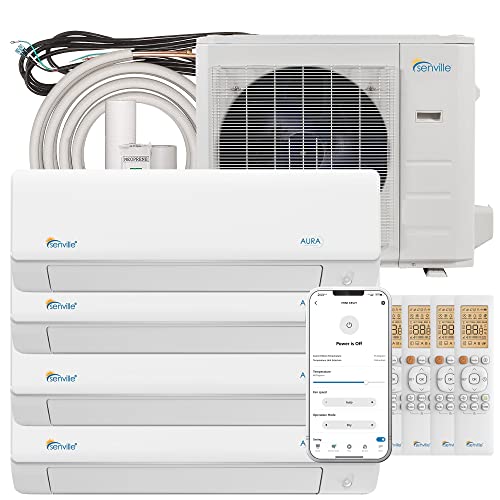
Senville Mini Split AC/Heating System, 4 Zone, White, 36000 BTU | Energy Star Certified, Works with Alexa, Ductless Inverter, 3 Ton, AHRI Certified
Check price on Amazon
YITAHOME 23 SEER2 24K BTU 3 Zone Mini Split AC/Heating System, 9000 BTU | Tri Zone Mini Split Air Conditioner, Wifi Enabled 208-230V Ductless AC Cool Up to 1200 Sq. Ft, Compatible with Alexa
Check price on Amazon
MrCool DIY Multi Zone Mini Split | 18k BTU 3 Zone 6K x3 25ft Line Sets Included
Check price on Amazon