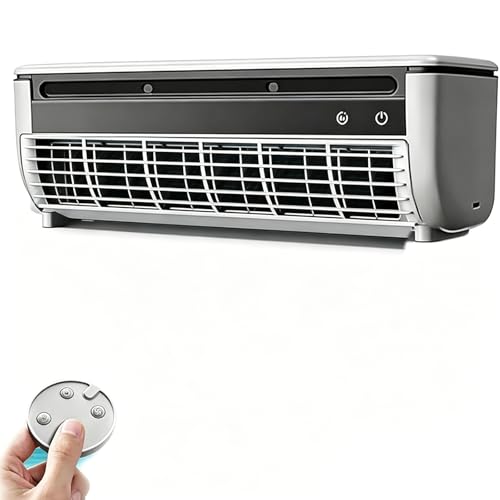
Wall Mounted Air Conditioner Without External Unit
A compact cooling solution for rooms where an outdoor condenser is not practical. Learn how self-contained wall units work, what they can and cannot do, and how to choose the right model.
START LEARNINGThe core appeal: A wall mounted air conditioner without external unit houses the compressor, condenser, and evaporator in a single chassis. There is no separate outdoor condenser to mount, no refrigerant line set to run, and no long installation footprint. It is a practical option for apartments, rentals, older buildings, and rooms where an exterior split system is not permitted.
What Is a Wall Mounted Air Conditioner Without External Unit?
This category covers self-contained wall-mounted cooling appliances in which all refrigeration components live inside the indoor chassis. Heat removed from the room is rejected through the rear or top of the unit, typically into a wall opening, exterior vent, or dedicated exhaust path. The format is related to a wall-mounted self-contained air conditioning unit and to wall AC units air conditioning in general.
It is also distinct from a split system. In a split system wall mounted air conditioner, the condenser sits outdoors and the indoor head contains only the evaporator and blower. A wall air conditioner without outdoor unit keeps everything in one housing, which simplifies installation but changes the efficiency and capacity profile.
For rooms that also need heating, combination models exist. These are covered separately under wall-mounted air conditioner and heat pump without outdoor unit and wall-mounted air conditioner without external unit product categories.
How a Self-Contained Wall Unit Works
The operating principle is the same as any vapor-compression air conditioner, just packaged differently. The evaporator coil absorbs heat from room air, the compressor raises refrigerant pressure and temperature, and the condenser coil rejects that heat. Because the condenser is inside the same chassis, the unit must exhaust hot air through a wall opening or a vent path.
Through-the-Wall Format
The most common form uses a wall sleeve. The chassis slides into the sleeve, and the rear section sits flush with the exterior wall. This format is stable, quiet relative to portable units, and does not consume floor space. It pairs naturally with a wall sleeve for through-the-wall air conditioners.
Ducted Wall-Head Format
Some self-contained wall units use a short ducted exhaust to a nearby vent. These are less common but appear in retrofits and specialized installations. The trade-off is that exhaust routing affects efficiency and installation complexity.
Spot and Evaporative Variants
A separate category of units markets itself as a wall air conditioner without outdoor unit but relies on spot cooling rather than true refrigerant-based room cooling. These are useful for personal cooling but should not be confused with a full-room air conditioner. Evaporative coolers are a further distinct category; they are covered under water pump evaporative cooler topics.
Key Features to Evaluate
Cooling Capacity
Self-contained units typically range from small-room to medium-room capacities. Match the rating to the room rather than to the wall size.
Efficiency Rating
Compare CEER or EER figures within the self-contained category. Higher ratings translate to lower energy use across the cooling season.
Wall Opening Requirements
Confirm the required sleeve dimensions and whether the unit ships with a sleeve or needs a separate accessory.
Noise Level
Because the compressor is indoors, sound ratings matter more than with split systems. Check both indoor and outdoor side noise figures.
Dehumidification
Look for a dedicated dry mode or a strong latent capacity figure if humidity control matters in your climate.
Controls and Scheduling
Programmable timers, remote controls, and smart features add convenience. A compatible thermostat for AC and heat matters if the unit is a combo model.
Market Tiers for Self-Contained Wall Units
Self-contained wall units fall into recognizable tiers. Use this table to match expectations to your room and usage pattern.
| Tier | Best For | Typical Characteristics |
|---|---|---|
| Entry-level | Small bedrooms, guest rooms, light seasonal use | Basic mechanical controls, standard filtration, straightforward cooling, solid build for the tier |
| Mid-range | Primary bedrooms, home offices, daily use | Better efficiency, quieter operation, remote control, improved airflow, programmable timer |
| Premium | Living areas, additions, comfort-focused households | Higher efficiency ratings, low noise, smart controls, enhanced filtration, refined build quality |
| Top-tier | Design-sensitive spaces, demanding climates | Flagship efficiency, advanced sensors, premium materials, sophisticated control integration |
Advantages and Limitations
Advantages
- No separate outdoor condenser to mount
- No long refrigerant line set to run
- Compact single-chassis design
- Frees up floor space compared to portable units
- Well suited to apartments and rentals
- Simpler installation than a split system
Limitations
- Requires an exterior wall opening or vent path
- Compressor noise is closer to the room
- Generally lower efficiency than split systems
- Cooling capacity is limited to a single room
- Sleeve dimensions must match the chassis
- Less flexibility for multi-room cooling
How to Size a Wall Unit Without External Unit
Sizing follows the same logic as any room air conditioner. Start with roughly 20 BTU of cooling capacity per square foot of floor area, then adjust for ceiling height, window area, sun exposure, insulation, and occupancy. Rooms with large west-facing windows or poor insulation need more capacity than the square footage alone suggests.
Oversizing is a common mistake. A unit that is too large cools quickly, cycles short, and fails to remove humidity. Undersizing leaves the room uncomfortable during peak conditions. For a rigorous approach, review what happens if AC is too big or small and consider a professional load calculation.
- Measure room length and width in feet
- Note ceiling height and number of exterior walls
- Account for window area and sun direction
- Identify heat sources such as electronics or kitchen appliances
- Confirm the electrical circuit supports the unit's requirements
- Verify the sleeve dimensions match the chassis
Installation Considerations
Installation complexity depends on the wall format. A through-the-wall unit needs a properly framed opening and a compatible sleeve, plus a dedicated electrical circuit. A vented wall-head format needs a short exhaust path and careful sealing to prevent hot air recirculation. In both cases, correct sealing and support are critical to performance and safety.
If you are comparing installation formats, the guidance in wall-mounted air conditioning unit installation and wall-mounted air conditioning unit with installation covers the general sequence. For the broader wall-mounted category, see wall-mounted air conditioner with installation.
Electrical requirements vary. Small units may run on 110–120V, while larger units need 220–240V. Verify the circuit and breaker before purchase. If the unit is a permanent installation, check local permit requirements.
How to Choose the Right Self-Contained Wall Unit
Start with the room and the wall. Then work through this decision sequence:
Step 1: Confirm the Wall and Vent Path
Identify an exterior wall with enough clearance for the chassis and rear exhaust. For tight spaces, review wall-mounted air conditioner for small room options. For apartments, see wall-mounted air conditioner for apartment guidance.
Step 2: Decide Between Cooling-Only and Combo
If heating is also needed, a combo unit is worth considering. The wall heater and air conditioner combination and wall heater and air conditioner in one unit pages cover the heating side. For cooling-only rooms, a simpler unit is often the right fit.
Step 3: Match Capacity to the Room
Use the sizing guidance above. For reference points, explore wall air conditioners and heaters and wall air conditioning and heating units in the capacity range that fits your square footage.
Step 4: Evaluate Efficiency and Controls
Compare efficiency ratings within the self-contained category and choose a control scheme that fits your routine. If the unit is a combo, confirm it works with a thermostat that automatically switches from AC to heat or a thermostat that controls heat and cool.
Step 5: Plan for Maintenance
Self-contained units need regular filter care and periodic coil cleaning. The practical steps in split AC filter replacement apply to the filter routine, and a professional wall mounted air conditioner cleaning service handles the deeper work.
Maintenance for Long-Term Performance
Clean or replace filters monthly during heavy use. Keep the indoor coil and blower wheel free of dust. Outdoors, clear debris from around the rear exhaust and confirm that airflow is not blocked. Before each cooling season, test the unit and confirm that drainage paths flow freely.
If you notice reduced airflow, unusual noises, or inconsistent temperatures, address them early. The troubleshooting principles in trouble shooting air conditioning apply here, and the symptoms described in wall unit air conditioner not blowing cold air are common starting points. Schedule professional service annually to check refrigerant charge and overall system health.
Frequently Asked Questions
What is a wall mounted air conditioner without external unit?
It is a self-contained wall-mounted cooling appliance that houses the compressor, condenser, and evaporator in a single chassis. It releases heat through a wall opening or exterior vent rather than through a separate outdoor condenser.
Does a wall air conditioner without external unit need a wall opening?
Most self-contained wall units require an exterior wall opening or vent to exhaust heat. Fully internal models exist but rely on evaporative or spot-cooling methods and have limited cooling scope.
How do I size a self-contained wall AC?
Start with roughly 20 BTU of cooling capacity per square foot of floor area, then adjust for ceiling height, sun exposure, window area, insulation, and occupancy. A professional load calculation provides the most accurate result.
Is a self-contained wall unit as efficient as a split system?
Split systems are generally more efficient because the condenser sits outside and does not compete with indoor air. Self-contained wall units are convenient and compact but typically have lower efficiency ratings.
Can a self-contained wall unit heat as well as cool?
Some models include heating. These are covered under combination and heat-pump categories. If heating is a priority, review the dedicated combo and heat-pump pages before choosing a cooling-only unit.
Ready to Compare Self-Contained Wall Units?
Review the recommended models below, compare features across tiers, and choose the unit that fits your room, wall configuration, and cooling priorities.
VIEW RECOMMENDED MODELS