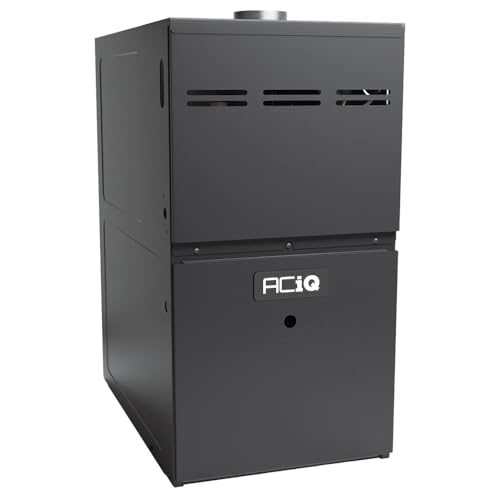
Central Air Central Heat: Complete Guide to Combined HVAC Systems
Understand how a central air and heat unit works, compare furnaces versus heat pumps, learn sizing fundamentals, and discover what to check before investing in a combined comfort system.
START LEARNINGWhy this guide matters: A central air central heat system is one of the largest comfort investments a homeowner can make. Getting the configuration, capacity, and installation right determines how comfortable your home feels for the next decade or more. This guide walks you through every decision point so you can buy with confidence.
What You Will Learn on This Page
- What a central air central heat system actually is
- Core components of a combined HVAC setup
- Furnace versus heat pump: which heating side fits your climate
- Sizing a central air and heat unit correctly
- Efficiency ratings that matter
- Installation factors and common pitfalls
- Maintenance habits that extend system life
- Buying checklist before you commit
- Frequently asked questions
What Is a Central Air Central Heat System?
A central air central heat system is a unified HVAC configuration that conditions every room connected to a shared duct network. In cooling mode, a central air conditioner or heat pump removes heat from indoor air and releases it outdoors. In heating mode, a furnace, electric heat strip, or heat pump reverses the process to warm the home. Because both functions share the same blower, ductwork, and thermostat, homeowners get consistent temperatures room to room without managing multiple units.
This arrangement is common in North American homes where a single system must handle both summer cooling and winter heating. The term often appears alongside related searches such as central air and heat unit for mobile home and central air conditioner with furnace, reflecting how the same concept adapts to different housing types.
Core Components of a Combined HVAC Setup
A well-matched central air and heat system relies on several components working in harmony. Each part affects efficiency, comfort, and long-term reliability.
Condenser and Compressor
The outdoor unit pulls heat from indoor air and releases it outside. Inverter-driven compressors in mid-range and premium systems modulate speed for steadier temperatures and quieter operation.
Evaporator Coil
Mounted indoors on the air handler or furnace, the evaporator coil absorbs heat and moisture from passing air. A clean coil is essential for efficient cooling and healthy indoor air.
Furnace or Air Handler
The furnace burns fuel to produce heat, while an air handler with electric heat strips relies on resistance heating. Either way, the blower pushes conditioned air through the ducts.
Heat Pump Reversing Valve
In a heat pump configuration, the reversing valve switches refrigerant flow so the outdoor coil can absorb heat from cold air and deliver it indoors during winter.
Ductwork
Supply and return ducts distribute conditioned air throughout the home. Leaky or undersized ducts waste capacity regardless of how capable the equipment is.
Thermostat
A programmable or smart thermostat coordinates heating and cooling cycles. Choosing the right central air conditioner thermostat improves comfort and reduces wasted runtime.
Homes without existing ductwork may consider central air conditioning ductless systems as an alternative, while homeowners comparing configurations often review central air conditioning split system layouts to understand how indoor and outdoor halves connect.
Furnace Versus Heat Pump: Which Heating Side Fits Your Climate?
The heating half of a central air central heat system is where most buyers face their biggest decision. Both furnaces and heat pumps deliver warm air through the same ducts, but they generate that warmth differently and perform best in different climates.
| Category | Gas or Oil Furnace | Heat Pump |
|---|---|---|
| Best Climate | Cold winters with sustained freezing temperatures | Mild to moderate winters; efficient in transitional seasons |
| Heating Method | Generates heat by combustion | Moves existing heat from outdoor air indoors |
| Cooling Capability | Requires a separate air conditioner | Provides both heating and cooling in one unit |
| Efficiency Profile | Steady efficiency; performance varies by fuel quality | Higher seasonal efficiency in moderate climates |
| Maintenance Focus | Heat exchanger, burners, flue, and filters | Refrigerant charge, reversing valve, coils, and filters |
| Best For | Homeowners in cold regions wanting strong heat output | Homeowners wanting year-round efficiency from one system |
Many buyers ultimately choose a heat pump paired with a furnace as backup, a hybrid setup described in guides on central air conditioning units with heat pump. Others compare central air conditioner with heat pump configurations to understand how dual-fuel systems balance efficiency and cold-weather reliability.
Sizing a Central Air and Heat Unit Correctly
Oversized equipment cycles on and off too quickly, leaving rooms clammy in summer and unevenly heated in winter. Undersized equipment runs continuously and never quite reaches the thermostat setting. Correct sizing starts with a room-by-room load calculation that accounts for square footage, insulation quality, window area, ceiling height, occupancy, and local climate data.
The table below shows how sizing recommendations scale across common home sizes. Use it as a starting reference, not a substitute for a professional load calculation.
| Home Size | Typical Capacity Range | Sizing Consideration |
|---|---|---|
| Up to 1,000 sq ft | 1.5 to 2 tons | Compact homes with average insulation and few windows |
| 1,000 to 1,500 sq ft | 2 to 2.5 tons | Common single-story layouts with standard window coverage |
| 1,500 to 2,000 sq ft | 2.5 to 3.5 tons | Two-story homes often benefit from zoning for even comfort |
| 2,000 to 2,500 sq ft | 3.5 to 4.5 tons | Larger footprints may need dual systems or advanced duct design |
| Above 2,500 sq ft | 4.5 tons and up | Multi-zone configurations usually recommended |
If you want a closer starting point for your floor plan, review resources on central AC unit for 1000 sq ft house, central AC unit for 1500 sq ft home, and central AC unit for 1800 sq ft house. For larger properties, guides on central AC unit for 2500 sq ft home explain how multi-zone systems distribute capacity more evenly.
Efficiency Ratings That Matter for Combined Systems
Efficiency ratings translate directly into long-term operating performance. A central air central heat system has two efficiency profiles: one for cooling and one for heating.
- SEER2 for cooling: Measures seasonal cooling efficiency. Higher values indicate more efficient cooling performance across a typical season.
- HSPF2 for heat pump heating: Measures seasonal heating efficiency. Relevant only when the system includes a heat pump.
- AFUE for furnaces: Measures how much fuel a furnace converts into usable heat. A higher percentage means less energy is lost through the flue.
- ENERGY STAR qualification: Indicates the system meets or exceeds federal efficiency thresholds for its category.
Variable-speed and inverter-driven compressors, often found in mid-range and premium systems, adjust output to match demand instead of cycling between full power and off. This smoother operation improves comfort and reduces wear. Homeowners researching this feature can compare options through central air conditioning units with heat pump overviews.
Installation Factors and Common Pitfalls
Even the most capable equipment underperforms when installation is rushed. A professional installation covers far more than connecting lines and wires.
Load Calculation
A proper load calculation determines exact capacity needs. Skipping it leads to oversized or undersized equipment and persistent comfort complaints.
Duct Inspection
Leaky or undersized ducts waste capacity. Sealing and balancing ducts before equipment installation protects performance for years.
Outdoor Unit Positioning
Adequate clearance, shade, and airflow around the condenser improve efficiency. Cramped placement forces the compressor to work harder.
Power Supply
Combined systems have specific amperage requirements. Confirm panel capacity and breaker sizing before installation day.
Commissioning
Refrigerant charge, airflow, and thermostat calibration should be verified with instruments, not estimated by feel.
Permits and Code
Most jurisdictions require permits for HVAC replacement. A licensed contractor handles inspections and code compliance.
Older homes often need extra planning because existing ductwork may not match modern equipment requirements. Guides on central air conditioning installation in older homes and central air set up explain how retrofits are handled without damaging finishes.
Ready to explore equipment options for a combined heating and cooling system? Compare features, capacities, and efficiency tiers in one place.
EXPLORE SYSTEM OPTIONSMaintenance Habits That Extend System Life
Regular maintenance keeps a central air central heat system running efficiently and catches small issues before they become failures. A practical routine includes:
- Replace or clean air filters every one to three months, more often during heavy use seasons.
- Schedule professional servicing twice a year, once before cooling season and once before heating season.
- Keep the outdoor condenser clear of leaves, debris, and obstructions.
- Check condensate drain lines for clogs that can cause water damage.
- Inspect ductwork for visible gaps or disconnected sections.
- Test the thermostat against a separate thermometer to confirm calibration.
- Listen for unusual sounds during startup and shutdown cycles.
Homeowners who notice reduced performance between service visits can review troubleshooting guides such as central air not cooling properly and central air running but not cooling house. For heating concerns, central air conditioner with furnace resources explain how to isolate whether the issue lies in the furnace or the distribution side.
Buying Checklist Before You Commit
Use this checklist to organize your decision process and compare contractor proposals on equal footing.
| Tier | Typical Characteristics | Best For |
|---|---|---|
| Entry-Level | Single-stage compressor, basic thermostat compatibility, standard efficiency ratings | Homeowners prioritizing straightforward replacement with minimal features |
| Mid-Range | Two-stage compressor or inverter-driven operation, improved humidity control, smart thermostat compatibility | Households wanting better comfort and efficiency without top-tier equipment |
| Premium | Variable-speed compressor, advanced zoning support, quieter operation, higher efficiency ratings | Homeowners seeking maximum comfort consistency and long-term efficiency |
| High-End Tier | Communicating systems, integrated humidity management, multi-zone capability | Large homes or owners investing in whole-home climate precision |
Before signing a contract, confirm the proposal includes a load calculation, duct assessment, equipment model numbers, warranty terms, and a commissioning report. Compare at least three bids and ask each contractor how they handle central air conditioning system maintenance after installation.
Frequently Asked Questions
What is a central air central heat system?
A central air central heat system is a combined HVAC setup that uses one duct network to distribute cooled air in summer and heated air in winter. It typically pairs a central air conditioner or heat pump with a furnace or electric heat strip, all controlled by a single thermostat.
Is a heat pump better than a furnace for central heating?
A heat pump is highly efficient in mild to moderate climates because it moves heat rather than generating it. A furnace or heat pump with electric backup is usually preferred in very cold regions where heating demand is extreme. Hybrid dual-fuel setups combine both approaches.
How do I know what size central air and heat unit I need?
Sizing should be based on a room-by-room load calculation that considers square footage, insulation, window area, ceiling height, occupancy, and local climate. A qualified HVAC contractor performs this calculation before recommending equipment.
How often should a combined system be serviced?
Professional servicing twice a year is the standard recommendation: once before cooling season and once before heating season. Between visits, replace filters every one to three months and keep the outdoor unit clear of debris.
Can I add central heat to an existing central air system?
In many cases yes, provided the ductwork can handle the airflow and the electrical panel supports the added load. A contractor will assess duct capacity, insulation, and power supply before recommending a furnace, heat pump, or electric heat strip addition.
What is the difference between a central air conditioner and a heat pump?
A central air conditioner only cools. A heat pump both cools and heats by reversing refrigerant flow. Heat pumps are more versatile but perform best in moderate climates; furnaces remain stronger in deep cold.
Top-Rated Central Air and Heat Systems to Consider
⚠️ AFFILIATE DISCLOSURE: This website contains affiliate links. As an Amazon Associate, we earn from qualifying purchases. If you make a purchase through these links, we may receive a small commission at no additional cost to you. Read our full affiliate policy.
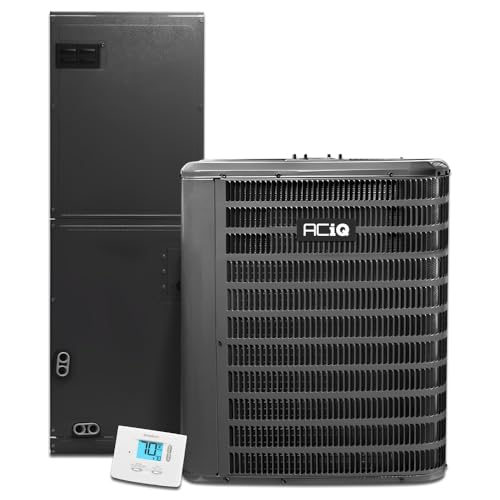
2.5 Ton 14.5 SEER2 Central Air Conditioner Heat Pump System, 5kW & Thermo | ACiQ R32 Complete Electric Heat Pump Split System, Central AC Heating HVAC Unit with Multi-Positional Air Handler, ECM Blower
Check price on Amazon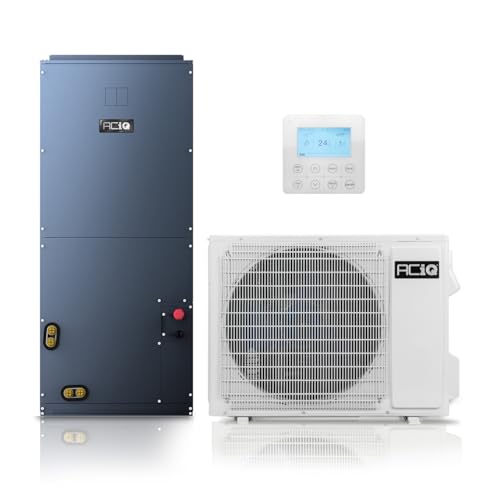
ACiQ Essentials 2 Ton 17 SEER2 Central AC Heat Pump System, 10kW, Thermo | R32 High Efficiency Inverter with Multi-Positional Air Handler Unit, Complete Central Air Conditioner Heat Pump Split System
Check price on Amazon
Senville Central Air Conditioning System, Heat Pump, 5 Ton, 20kW Aux | 55000 BTU Air Handler and Condenser Included, 208/230V, Whole House Air Conditioner
Check price on Amazon
MrCool SEER2 VERSAPRO Central Ducted Split System | 2.5 Ton 17 SEER2 Heat Pump Multiposition R454B 35ft Line Set
Check price on Amazon
MrCool SEER2 VERSAPRO Central Ducted Split System | 2 Ton 18.1 SEER2 Heat Pump Multiposition R454B 35ft Line Set
Check price on Amazon
3 Ton 15 SEER2 Central Air Conditioner Heat Pump System, 5kW & Thermo | ACiQ R32 Complete Electric Heat Pump Split System, Central AC Heating HVAC Unit with Multi-Positional Air Handler, ECM Blower
Check price on Amazon
ACE AIR 13.4 SEER2 Central Air Conditioner Package, 3 Ton - 36K BTU - 10kW | Copper tube, All Aluminum Coil, 10.6 EER2, Heat & Cooling System, Horizontal, Residential Outdoor HVAC Unit, R32 Refrigerant
Check price on Amazon