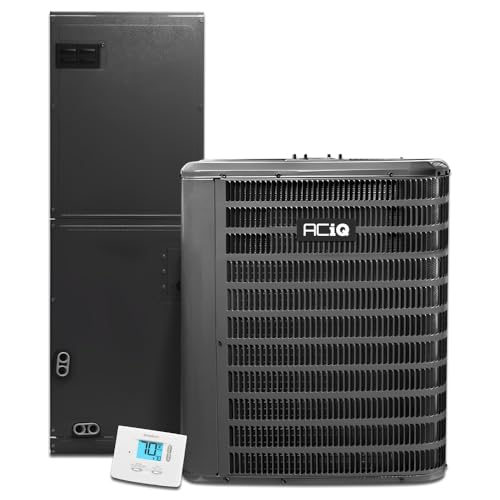
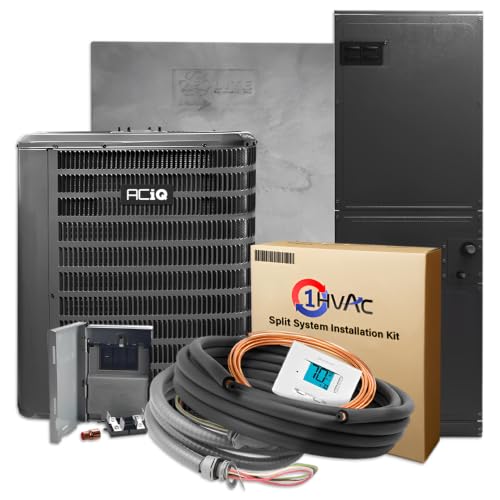
What Is a Central Air Conditioning and Heating System?
A central air conditioning and heating system is a whole-home climate control setup that produces conditioned air at a single indoor unit and distributes it through a network of supply and return ducts. Unlike room-specific units, a central system treats the entire house as one thermal zone (or multiple zones when dampers are added), keeping temperatures consistent from room to room.
The cooling side of the system uses a split configuration: an outdoor condenser unit houses the compressor and condenser coil, while an indoor evaporator coil — typically mounted on the air handler or furnace — absorbs heat from the return air. The heating side can be delivered by a gas or electric furnace, or by a heat pump that reverses the refrigeration cycle to provide both cooling and heating from a single outdoor unit.
Understanding how these components interact is the foundation of any purchase decision. If you want a deeper technical walkthrough of the cooling cycle, see how a central air conditioning system works, and for the heating counterpart review central air heating and cooling units.
Core Components of a Central HVAC System
- Outdoor condenser unit — contains the compressor, condenser coil, and fan; responsible for releasing heat to the outside air.
- Indoor air handler or furnace — moves air through the ductwork and houses the evaporator coil or heat exchanger.
- Evaporator coil — absorbs heat from indoor air during cooling mode.
- Ductwork — supply and return ducts that distribute conditioned air throughout the home.
- Thermostat — the control interface, ranging from basic programmable models to smart thermostats with zoning support.
- Refrigerant lines and electrical connections — link the indoor and outdoor units and power the system.
For guidance on the control layer specifically, read about central air conditioner thermostats, which covers compatibility and smart-control options.
Cooling + Heating Configurations: Furnace vs Heat Pump
One of the first decisions in specifying a central system is how heating will be delivered. There are two dominant approaches in the US market, and each has distinct implications for climate suitability, efficiency, and installation complexity.
Central Air Conditioner with Furnace
This is the traditional configuration: a central air conditioner handles cooling, and a separate gas or electric furnace handles heating. It is the most common setup in cold climates where winter temperatures regularly drop below freezing, because furnaces deliver strong, consistent heat output regardless of outdoor temperature.
If you are evaluating this path, review the detailed comparison in central air conditioner with furnace and the broader guide to central air and central heat combinations. Homes in colder regions often benefit from this dual-system design because it separates the heating and cooling workloads, allowing each component to be optimized for its primary job.
Central Air Conditioner with Heat Pump
A heat pump combines both functions in a single outdoor unit. In cooling mode it behaves like a standard air conditioner; in heating mode it reverses the refrigerant flow to extract heat from outdoor air. Modern cold-climate heat pumps remain effective well below freezing, making them viable in many regions that historically relied on furnaces.
For an in-depth look at this configuration, see central air conditioning units with heat pump and central air conditioner with heat pump configurations for a feature comparison. Heat pumps are generally the more energy-efficient heating option in mild-to-moderate climates, while furnaces retain an advantage in extreme cold.
Configuration Comparison at a Glance
| Configuration | Best For | Heating Performance | Efficiency Consideration | Typical Tier |
|---|---|---|---|---|
| AC + Gas Furnace | Cold climates with existing gas service | Strong output regardless of outdoor temperature | Furnace AFUE plus AC SEER2 | Balanced tier |
| AC + Electric Furnace | Mild climates, homes without gas lines | Consistent but higher electrical demand | AC SEER2 plus electric resistance efficiency | Essential tier |
| Heat Pump (standard) | Mild to moderate climates | Efficient down to moderate freezing | Combined SEER2 and HSPF2 ratings | Top-tier |
| Cold-climate heat pump | Cold climates seeking electrification | Effective at low outdoor temperatures | High HSPF2 with variable-speed compressor | Flagship tier |
| Ductless central alternative | Homes without ductwork | Zone-by-zone heating and cooling | High SEER2 per zone, no duct losses | Balanced tier |
If your home lacks ductwork entirely, a ductless approach may be worth comparing before committing to a ducted central system. See central air conditioning ductless systems for the trade-offs.
Sizing a Central System for Your Home
Correct sizing is the single most consequential decision in a central HVAC project. An oversized system cools too quickly, cycles on and off frequently, struggles to remove humidity, and wears out components prematurely. An undersized system runs continuously, fails to reach setpoint on design days, and drives up energy use. Both outcomes shorten equipment life and reduce comfort.
Professional sizing relies on a Manual J load calculation that accounts for square footage, ceiling height, window area and orientation, insulation levels, air infiltration, and local climate data. As a rough planning reference, the following guides cover common home sizes:
- Central AC unit for a 1,000 sq ft house
- Central AC unit for a 1,500 sq ft home
- Central AC unit for an 1,800 sq ft house
- Central AC unit for a 2,500 sq ft home
These references are starting points, not substitutes for a proper load calculation. Homes with large west-facing glass, poor attic insulation, or high infiltration rates may require a different tonnage than the square-footage rule of thumb suggests. For a broader explanation of the sizing process, read central air conditioning system sizing fundamentals.
Sizing Considerations Beyond Square Footage
- Ceiling height — vaulted or two-story spaces increase conditioned volume substantially.
- Window efficiency — single-pane windows add significant sensible load.
- Duct condition — leaky ducts can waste a meaningful share of conditioned air before it reaches living spaces.
- Occupancy — kitchens and home offices generate more internal heat gain.
- Climate zone — design temperature drives tonnage more than any other single variable.
Efficiency Ratings That Matter
Central systems carry several efficiency metrics, and understanding what each one measures prevents misreading marketing claims. The two you will encounter most often are SEER2 for cooling and HSPF2 for heat pump heating.
SEER2 and EER2 for Cooling
SEER2 (Seasonal Energy Efficiency Ratio 2) estimates cooling efficiency across a representative season, while EER2 measures efficiency at a specific peak-load condition. Higher numbers indicate better efficiency. Current DOE minimums for split-system central air conditioners sit around 14.3 SEER2 in most regions, with higher thresholds in the Southwest. For a foundational explanation, see what a SEER rating means and the regulatory breakdown in SEER vs SEER2 DOE standards.
HSPF2 for Heat Pump Heating
HSPF2 (Heating Seasonal Performance Factor 2) is the heating equivalent for heat pumps. Higher values indicate more efficient heating across the season. Cold-climate heat pumps carry notably higher HSPF2 ratings than standard models. Read what an HSPF rating is for the metric details.
AFUE for Furnaces
If your configuration pairs a central AC with a furnace, the furnace's annual fuel utilization efficiency (AFUE) matters for heating performance. Modern condensing furnaces achieve AFUE ratings in the mid-90s, while older units may sit in the 80s. The efficiency of the combined system is only as good as its weakest component, which is why matching tier levels across the AC and furnace is usually the sensible approach.
Efficiency Tier Reference
| Tier | Cooling Efficiency Range | Heating Efficiency Range | Best For |
|---|---|---|---|
| Essential tier | Meets federal minimum SEER2 | Standard single-stage furnace or base heat pump | Homeowners prioritizing upfront simplicity |
| Balanced tier | Moderately above minimum, single-stage or two-stage | Mid-efficiency furnace or two-stage heat pump | Typical single-family homes with average usage |
| Top-tier | High SEER2 with variable-speed compressor | High HSPF2 heat pump or condensing furnace | Homeowners planning long-term residency |
| Flagship tier | Highest SEER2 available, full inverter modulation | Cold-climate heat pump with maximum HSPF2 | Energy-conscious buyers in extreme climates |
When comparing quotes, ensure the contractor specifies SEER2 and HSPF2 rather than legacy SEER/HSPF figures, since the newer metrics reflect actual tested performance under current standards. The guide to ENERGY STAR certified air conditioners explains how certification thresholds map to these tiers.
Inverter and Variable-Speed Technology
Traditional single-stage compressors run at full capacity or not at all. That design is simple and durable, but it produces temperature swings and higher humidity during part-load conditions. Inverter-driven compressors, by contrast, modulate their speed continuously to match the actual load, holding indoor temperature within a narrow band and removing humidity more effectively.
For a system you intend to keep for 15 to 20 years, variable-speed technology is generally the more comfortable long-term choice, though entry-level single-stage systems remain a solid option for mild climates and moderate usage patterns. The explainer on how inverter AC works covers the mechanics in detail, and variable speed AC systems compares modulation strategies across tiers.
Single-Stage vs Two-Stage vs Variable-Speed
- Single-stage — full on or full off; simplest design, widest temperature swings. Entry-level tier.
- Two-stage — runs at roughly two-thirds or full capacity; better humidity control and quieter operation. Balanced tier.
- Variable-speed (inverter) — continuous modulation from low to full capacity; best comfort, quietest operation, highest efficiency at part load. Top-tier and flagship tier.
Installation Considerations
Central system performance is determined as much by installation quality as by equipment specification. A top-tier unit installed with undersized ducts, incorrect refrigerant charge, or poor airflow will underperform a balanced-tier unit installed correctly. Before signing a contract, verify the following.
Ductwork Assessment
Existing ducts in older homes are frequently undersized or leaky. A thorough contractor will perform a duct leakage test and inspect insulation, transitions, and register sizing. If you are retrofitting central air into a home without ducts, review central air conditioning installation in older homes for the specific challenges involved.
Electrical and Structural Requirements
A central air conditioner requires a dedicated 240V circuit and appropriately sized breaker. Heat pump configurations may require additional electrical capacity depending on backup heat strips. If your panel is near capacity, an upgrade may be part of the project scope. The guide to checking your home electrical panel walks through the assessment.
Placement of Indoor and Outdoor Units
Outdoor condenser placement affects efficiency, noise transmission to neighboring rooms, and service access. Indoor air handler placement determines duct routing and static pressure. See AC indoor and outdoor placement for clearance and orientation guidance.
Permits and Contractor Selection
Most jurisdictions require a permit for central HVAC replacement or new installation. Confirm that your contractor will pull the permit and that the work will be inspected. For selecting a qualified installer, read how to choose an HVAC contractor and HVAC license and insurance requirements.
Installation Process Overview
The full sequence typically includes load calculation, equipment selection, duct evaluation, line set routing, electrical work, refrigerant charging, and commissioning. The detailed walkthrough in central air conditioning system installation explains each stage and the quality checkpoints to verify. If you are replacing an existing system rather than installing new, see central air conditioner replacement for the specific considerations.
Maintenance and Long-Term Reliability
A central system represents a long-term investment in home comfort. Protecting that investment requires routine maintenance on both the homeowner and professional side.
Homeowner Maintenance Tasks
- Replace air filters every 1 to 3 months depending on filter type and household conditions. See when to replace your AC filter.
- Keep outdoor unit clear of debris, vegetation, and snow accumulation.
- Inspect condensate drain for clogs that can cause water backup and indoor leaks.
- Check thermostat schedules seasonally to align with occupancy patterns.
Professional Maintenance
Schedule professional service twice per year — spring for cooling, fall for heating. Technicians check refrigerant charge, measure airflow and static pressure, inspect electrical connections, clean coils, and verify combustion safety on furnace configurations. The overview of central air conditioning system maintenance details what each visit should include, and central air conditioning cleaning services explains when duct cleaning is actually warranted versus when it is an upsell.
Common Problems and Warning Signs
Early detection of performance issues prevents small faults from becoming compressor failures. Watch for reduced cooling output, unusual noises, ice formation on the outdoor unit, water pooling near the indoor unit, and short cycling. The troubleshooting guides on central AC not blowing cold air in the house and central air conditioner not cooling enough walk through diagnostic steps by symptom. If you observe water inside the home, see central air conditioner leaking water inside the house for likely causes.
Buying Strategy: Matching Tier to Your Situation
Not every home benefits equally from flagship-tier equipment. The sensible approach is to match the efficiency tier and feature set to how long you plan to stay, how extreme your climate is, and how much you value quiet operation and humidity control.
When Essential Tier Makes Sense
Entry-level and essential-tier single-stage systems are appropriate for mild climates, rental properties, or homes where the system is used for a limited season. They meet federal efficiency minimums and carry the lowest upfront complexity. They are not the right choice if you experience humid summers or plan to remain in the home for more than a decade, because part-load comfort and long-term efficiency both favor higher tiers.
When Balanced and Top Tiers Pay Off
For a typical single-family home in a climate with meaningful cooling demand, a balanced-tier two-stage system or a top-tier variable-speed system delivers noticeably better humidity control and quieter operation. Over a 15-year ownership horizon, the efficiency gains of top-tier equipment typically offset the higher initial investment through reduced energy consumption — a factor worth modeling during the quote comparison stage.
When Flagship Tier Is Justified
Flagship-tier cold-climate heat pumps and full-inverter central systems are justified in extreme climates, in homes with high comfort expectations, and in households pursuing electrification or significant efficiency improvements. They are also a sound choice when the home has already been upgraded with insulation and air sealing, since equipment efficiency is only realized when the building envelope supports it.
Comparing Contractor Proposals
When reviewing quotes, insist on line-item detail rather than a single lump figure. A well-structured proposal specifies equipment model numbers, SEER2 and HSPF2 ratings, furnace AFUE if applicable, tonnage from a load calculation, duct modifications, electrical work, permit responsibility, warranty terms, and commissioning procedures. Proposals that omit the load calculation or specify equipment by square footage alone should prompt follow-up questions.
For guidance on interpreting quotes, read how to get an installation quote and questions to ask your installer. Verify warranty registration requirements in AC warranty registration, and understand coverage terms in AC warranty explained.
Related Reading
Frequently Asked Questions
What is a central air conditioning and heating system?
It is a whole-home HVAC setup that distributes conditioned air through ducts. Cooling is provided by a central air conditioner, and heating by either a furnace or a heat pump, all managed through a single thermostat or zoned control system.
How long does a central system last?
A well-maintained central air conditioner lasts 15 to 20 years. Furnaces typically last 15 to 25 years, and heat pumps 12 to 20 years depending on climate and maintenance quality. Regular professional service is the strongest predictor of lifespan.
What SEER2 rating should I look for?
At minimum, meet the current DOE regional standard — typically 14.3 SEER2 for split systems in most of the country. For better long-term efficiency and comfort, balanced-tier and top-tier systems in the 16 to 20+ SEER2 range are worth evaluating against your climate and usage.
Can I add central heating to my existing central air conditioner?
In many cases yes. If ductwork is in good condition and your electrical panel has capacity, a furnace or heat pump can often be integrated. The decision depends on your climate zone, existing duct sizing, and whether your current AC is near the end of its service life.
How often should the system be serviced?
Professional service twice per year — spring for cooling, fall for heating. Homeowners should replace air filters every 1 to 3 months and keep the outdoor unit clear of debris year-round.
Is a heat pump or furnace better for my climate?
Heat pumps are generally more efficient in mild and moderate climates, while furnaces retain an advantage in regions with prolonged deep-freeze conditions. Cold-climate heat pumps now narrow that gap significantly, so the right answer depends on your specific design temperature and energy source availability.
What size central system do I need?
Sizing must be based on a Manual J load calculation, not square footage alone. Common reference points exist for 1,000, 1,500, 1,800, and 2,500 square-foot homes, but window area, insulation, ceiling height, and climate all shift the result. A qualified contractor should provide the calculation with the proposal.