
Portable Air Conditioner No Venting Required: What Actually Works
If you have searched for a cooling unit that needs no window, no hose, and no installation, this guide explains what the term really means, which units deliver comfort, and how to match a ventless or low-venting solution to your room.
Understand the Reality FirstWhat "No Venting Required" Really Means
The phrase is one of the most misunderstood labels in home cooling. A compressor-based air conditioner moves heat from inside a room to outside the room. That heat has to go somewhere. If a unit truly required no exhaust path at all, it would be circulating the same heat it just removed, and the room would never actually cool down.
So when a product page claims no venting required, it almost always refers to one of two situations:
- Evaporative coolers (swamp coolers): These are not air conditioners in the compressor sense. They pull air through a wet pad and blow cooled, humidified air into the room. No exhaust hose is needed because no refrigerant cycle is used. The trade-off is added humidity and a cooling effect that depends entirely on dry ambient air.
- Compressor units marketed loosely: Some sellers describe a model as ventless when they really mean the exhaust hose is short, flexible, or routed discreetly. The hose still exists and must lead outside or into a ventilated space.
This distinction matters because buyers in research mode often arrive at pages about a portable air conditioner with no vent required expecting a magic box. The honest answer is that you can absolutely cool a room without a traditional window installation, but you should understand which technology you are buying before you commit.
Types of Ventless and Low-Venting Cooling Units
There are several product categories that appear under the no-venting umbrella. Each solves a different problem.
Evaporative Portable Coolers
These units use a water tank, a pump, and a fan. Air passes over a saturated cooling pad and drops in temperature before entering the room. They are lightweight, need no hose, and can be moved easily. Their effectiveness is highest in hot, dry climates and drops sharply as relative humidity rises. Many models double as fans and humidifiers, which is why some listings mention a portable air conditioner, heater, and humidifier combination.
Compressor Units With Short or Flexible Exhaust
These are real air conditioners. They use refrigerant, a compressor, and an evaporator to remove heat and moisture. The exhaust hose can be routed through a window kit, a sliding door, a wall sleeve, or a drop ceiling. When a seller says "no window required," they usually mean a kit is included for alternative routing. This is the category most people actually want when they search for serious cooling.
Spot Coolers and Personal Coolers
Small personal devices cool a desk or a chair rather than a room. They are useful in offices and workshops, but they are not room air conditioners. Expect directional comfort, not whole-room temperature control.
Battery and Solar-Assisted Models
A niche segment includes units designed for outdoor events or off-grid use. If portability without a wall outlet is essential, look at a portable air conditioner that runs on batteries or a portable air conditioner with a solar panel. Cooling capacity in this segment is modest, but the format is genuinely vent-free in the evaporative sense.
How Evaporative and Compressor Units Differ
Understanding the mechanism helps you predict performance before you buy.
An evaporative cooler lowers air temperature by converting liquid water into vapor. That phase change absorbs heat from the air stream. The output is cooler but more humid air. Because the process does not concentrate heat in a separate stream, there is no exhaust hose. However, the room's humidity climbs, and in a closed space with poor ventilation the effect weakens over time.
A compressor air conditioner splits the refrigerant cycle into two sides. The indoor coil absorbs heat from the room air, and the outdoor side rejects that heat through the exhaust hose. The room becomes cooler and drier. This is why compressor units are the default choice in humid regions and why they are the only option for consistent cooling in sealed rooms.
Some buyers confuse exhaust routing with drainage. These are separate concerns. A unit can be easy to exhaust while still needing condensate management. If that is a priority, review options for a portable air conditioner with no drain required or one that uses a self-evaporating system.
Climate Check: Humidity Changes Everything
Climate is the single most important variable in this category. The same evaporative cooler that feels refreshing in a desert afternoon can feel useless in a coastal apartment.
In dry climates, evaporative cooling is efficient because the air has room to absorb moisture. The temperature drop across the pad can be noticeable, and the added humidity is often welcome. In humid climates, the air is already close to saturation, so evaporation slows and the cooling effect shrinks. Meanwhile, indoor humidity rises, which can make a room feel clammy.
If you live in a humid region, prioritize compressor-based cooling and solve the exhaust problem rather than avoiding it. Guides such as portable air conditioner for humid climates and portable air conditioner for high humidity walk through the practical setup. A unit with a dehumidifier function can also help manage moisture alongside temperature.
| Climate Condition | Evaporative Cooler | Compressor Portable AC |
|---|---|---|
| Hot and dry | Strong fit; noticeable cooling, no hose | Works well but requires exhaust routing |
| Warm and moderately humid | Moderate effect; humidity rises | Recommended; dries and cools the air |
| Hot and very humid | Weak effect; may feel uncomfortable | Essential choice for real comfort |
| Mild and dry | Good for spot cooling and airflow | Effective but may be more capacity than needed |
Cooling Rooms Without Windows
Many searches for no-venting units come from people in rooms that have no usable window: basements, internal offices, server closets, and converted storage spaces. The good news is that cooling is still possible. The solution is to find a path for exhaust air rather than pretending exhaust is unnecessary.
Practical Exhaust Routes
- Drop ceiling: Route the hose above a suspended ceiling into a plenum that connects to a ventilated area. Confirm the space is not sealed and that building codes allow it.
- Wall sleeve or vent: A small wall penetration with a weatherproof hood gives a permanent, clean exhaust path. This is common in offices and basements.
- Door gap with a sealing panel: A fabric or rigid panel can seal a doorway while letting the hose pass into a hallway that has airflow.
- Adjacent utility space: Some setups exhaust into a garage or mechanical room with continuous ventilation. Never exhaust into a sealed closet.
For rooms with no window at all, the detailed walkthrough in portable air conditioner for room without windows and portable air conditioner for windowless room covers measurement and safety considerations. If the room is small, a compact unit may be sufficient; see portable air conditioner for very small room for capacity guidance.
Server closets and home offices deserve special mention. Equipment heat is constant, so the unit must run for long stretches. A dedicated setup described in portable air conditioner for server closet and portable air conditioner for office without windows is more reliable than a general-purpose cooler.
Specs That Matter When You Shop
Once you understand the technology, the specification sheet becomes a decision tool. Focus on these values.
- Cooling capacity (BTU): Match capacity to room size. Oversizing wastes energy and cycles poorly; undersizing never satisfies. Use the BTU calculator by room size as a starting point.
- Air flow (CFM): Higher airflow distributes cool air further. Small rooms tolerate lower CFM; open spaces need more.
- Noise level (dB): Compressor units are louder than evaporative coolers. If the room is a bedroom, check the decibel rating and look for a quiet air conditioner.
- Moisture handling: A condensate pump or self-evaporating design reduces manual draining.
- Filtration: A washable filter is standard. For allergy-sensitive rooms, consider a portable air conditioner with an air purifier.
- Compressor type: An inverter compressor modulates speed for steadier temperatures and lower energy use over long sessions.
If you are still building your shortlist, the criteria in portable air conditioner: what to look for provide a structured checklist that pairs well with this guide.
Market Tiers and What Each Delivers
Ventless and low-venting cooling products sit in distinct market tiers. The descriptors below are relative positions, not numeric comparisons.
| Tier | Typical Characteristics | Best For |
|---|---|---|
| Entry-level | Evaporative coolers with basic fan speeds and a small tank. Simple controls, lightweight housing. | Dry climates, spot cooling, garages, and temporary setups |
| Mid-range | Compressor units with window kits, multiple modes, timer, and remote control. Better airflow and lower noise than starter models. | Bedrooms, home offices, and small apartments with a usable window or door route |
| High-end tier | Inverter compressors, self-evaporating systems, improved filtration, and precise thermostat control. | Long daily runtime, humid climates, and rooms where comfort consistency matters |
| Flagship tier | Dual-hose or advanced exhaust designs, premium build quality, and smart controls. Often professional-grade construction. | Large rooms, commercial use, and buyers who want the most refined experience in the category |
Use the tier as a starting filter, then compare the specific features that matter for your room. A mid-range unit with the right capacity is usually a better fit than a high-end tier model that is oversized or undersized for the space. A well-specified unit is competitive within its class; the goal is alignment, not the highest badge.
For larger spaces, review portable air conditioner for multiple rooms and portable air conditioner for commercial use to see how tier selection changes when runtime and coverage expand.
Common Mistakes to Avoid
Most disappointment in this category traces back to a handful of avoidable errors.
- Believing the label over the physics: If the product uses a compressor, it needs exhaust. Plan the route before you buy.
- Ignoring humidity: Evaporative cooling in a humid room raises moisture and underperforms. Match the technology to the climate.
- Skipping the window kit check: Casement, crank-out, and sliding windows need specific adapters. If your window is unusual, read portable air conditioner for casement windows or portable air conditioner for sliding window before ordering.
- Undersizing the unit: A small cooler in a large room runs constantly and never satisfies. Check capacity first.
- Ignoring drainage: In humid weather, condensate accumulates. A self-evaporating design or a pump saves maintenance time.
- Placing the unit poorly: Keep the exhaust hose short and straight, and avoid recirculating hot air back into the room.
For setup troubleshooting, the guides on portable air conditioner not cooling enough and portable air conditioner not blowing cold air but running cover the most frequent causes and fixes.
Frequently Asked Questions
Is there a real portable air conditioner that requires no venting at all?
True compressor-based air conditioners must reject heat somewhere. Units marketed as no venting required are usually evaporative coolers or spot coolers with a short ducting strategy. Evaporative coolers add moisture and only work well in dry climates, while compressor units still need an exhaust path. Read the specification sheet to confirm which technology you are buying.
Can an evaporative portable cooler cool a humid room?
Evaporative cooling depends on dry air. In humid climates the evaporation rate drops sharply, so the perceived cooling effect is minimal and indoor humidity rises. For humid regions a compressor-based unit with proper exhaust is the practical choice. If humidity is your main concern, look for models with a dehumidifier mode.
How do I exhaust a portable AC in a room with no window?
Options include routing the hose through a drop ceiling, a wall sleeve, a door gap with a sealing panel, or into an adjacent ventilated space. Each method must let hot air leave the room, otherwise the unit recirculates heat and efficiency collapses. Never exhaust into a sealed closet or an unventilated interior room.
Does a ventless portable AC need draining?
Evaporative coolers use water and need refilling, not draining. Compressor units with a self-evaporating system reduce condensate but may still need occasional draining in very humid conditions. Check whether the model includes a condensate pump or a drain outlet, and plan for maintenance accordingly.
What capacity do I need for a small bedroom?
Capacity depends on room size, ceiling height, insulation, sun exposure, and occupant load. As a starting point, use the BTU calculator by room size and then adjust upward for west-facing windows or poor insulation. A compact unit sized correctly outperforms an oversized unit that cycles on and off.
Best Portable Air Conditioners for No-Venting and Windowless Rooms
⚠️ AFFILIATE DISCLOSURE: This website contains affiliate links. As an Amazon Associate, we earn from qualifying purchases. If you make a purchase through these links, we may receive a small commission at no additional cost to you. Read our full affiliate policy.

DREO Portable Air Conditioner 515S, 12000 BTU ASHRAE (8000 BTU DOE) Smart AC Unit for Bedroom with Drainage-free Cooling, Fan&Dehumidifier 3 in 1, APP/Voice/Remote, Quiet Standing AC for Room Indoors
Check price on Amazon
BLACK+DECKER Portable Air Conditioner, 10,000 BTU, BPACT10WT, White | 5,500 BTU SACC for Rooms up to 450 Sq. Ft., 3-in-1 Portable AC, Fan and Dehum with Follow Me Remote Control
Check price on Amazon
Windowless Portable Air Conditioners Fan, Swamp Cooler 3 Modes & 3 Speeds, 16FT Remote,12H Timer for Smart Auto-off, No Hose Needed,2-Gal Tank for 20H Cooling 36db Evaporative Air Cooler
Check price on Amazon
14,000 BTU Portable Air Conditioner Cools Up to 700 Sq.Ft, 3-IN-1 Energy Efficient Portable AC Unit with Remote Control & Installation Kits for Large Room, Office, Temporary Space
Check price on Amazon
BLACK+DECKER Portable Air Conditioner, 9,000 BTU, BPACT08WT, White | 5,300 BTU SACC for Rooms up to 400 Sq. Ft., 3-in-1 Portable AC, Fan and Dehum with Follow Me Remote Control
Check price on Amazon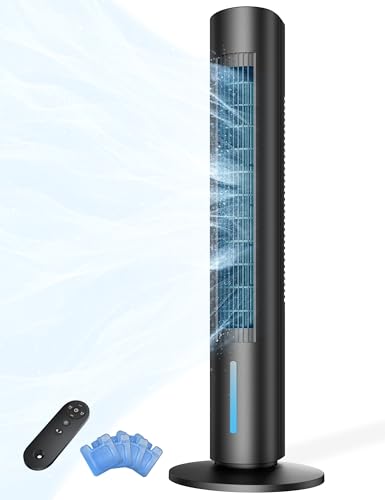
Windowless Portable Air Conditioner, 35.1" Evaporative Air Cooler for Room No Window, 7H Timer, 4 Modes, Remote Control, 140° Max Oscillating, Large Water Tank, Quiet AC Unit for Bedroom, Black
Check price on Amazon
14,000 BTU Portable Air Conditioner with WiFi & Remote Control, Cools Up to 700 Sq.Ft, Auto-Evaporation Low Noise Portable AC Unit for Large Room, Office, Garage, White
Check price on AmazonDisclaimer
Some of the content on this site uses AI assistance. Information is provided for educational purposes only. We are not responsible for any losses resulting from the use of this information. By using this site, you waive any right to bring legal claims against us arising from your use of the information provided. If you do not agree, please do not use this site. Read the full disclaimer.