
Portable Air Conditioner for Room Without Windows
Discover how to cool a windowless room effectively. Learn venting alternatives, sizing rules, humidity management, and the equipment tiers that fit your situation — all explained in plain language for US homeowners and renters.
Explore Venting SolutionsThe Core Challenge: Heat Has to Go Somewhere
A portable air conditioner is not a magical cooling box. It works by pulling heat out of the room air and dumping that heat into an exhaust stream. That exhaust must leave the room, or the heat simply cycles back into the space. In a room with a standard window, the exhaust hose connects to a window kit and the heat escapes outdoors. In a windowless room, the challenge is finding an equivalent escape path.
This is the single most important principle to understand before buying anything. A portable AC that cannot vent properly will run, blow slightly cooler air for a few minutes, and then gradually lose effectiveness as the room fills with its own rejected heat. The compressor may run continuously without ever reaching the set temperature.
If your room has no window at all, you are in good company. Basements, interior offices, server closets, storage rooms, and converted spaces frequently lack exterior windows. The solutions below cover the realistic options, from permanent wall sleeves to temporary door panels. For a broader look at the category, see our guide on a portable air conditioner for a room without windows and the closely related windowless room cooling overview.
Venting Options for Windowless Rooms
There is no single universal venting method. The right choice depends on whether you own or rent, whether the room shares a wall with the outdoors, and how permanent the installation can be. Below are the practical options, ranked roughly from most effective to least effective.
1. Wall Sleeve or Through-the-Wall Vent
This is the most effective and most permanent solution. A contractor (or a confident DIYer) cuts a circular or rectangular opening through an exterior wall and installs a sleeve or louvered vent. The exhaust hose connects to the sleeve, and heat leaves the building directly. This method works in basements, interior rooms with one exterior wall, and converted garages.
Advantages: best airflow, shortest hose run, least heat leakage back into the room. Considerations: requires structural work, may need a permit, and is not suitable for renters without landlord approval. If the wall is shared with a hallway or another interior room, this option is not available.
2. Drop-Ceiling Plenum Vent
Many basements and commercial spaces have a drop ceiling with a plenum space above it. If that plenum connects to an exterior vent or to a return-air path that leads outdoors, the exhaust hose can be routed upward into the ceiling cavity and out through an existing vent. This is common in office buildings and finished basements.
Advantages: no wall cutting, hides the hose. Considerations: you must verify that the plenum actually exhausts outdoors and is not a sealed return. Building codes and fire dampers may restrict this approach. Consult the building manager or an HVAC technician.
3. Mechanical Chase or Utility Shaft
Apartment buildings and some homes have a vertical chase for plumbing, electrical, or HVAC lines. If the chase vents to the roof or an exterior wall, it can sometimes serve as an exhaust path. This is delicate work and usually requires building cooperation.
Advantages: uses existing infrastructure. Considerations: fire code compliance, potential interference with other systems, and landlord permission. This is not a casual DIY project.
4. Door Vent Panel to an Adjacent Ventilated Space
If the windowless room is adjacent to a room that does have a window or exterior door, a vent panel can be fitted into the doorway. The exhaust hose runs through the panel into the adjacent space, which then vents outdoors through its own window or door. This is a common renter-friendly workaround.
Advantages: no structural changes, reversible. Considerations: the adjacent room absorbs some heat, so the overall cooling effect is reduced. The door must remain closed enough to hold the panel. Efficiency drops with longer hose runs and bends. For a focused look at this scenario, see the guide on a portable AC with no outside venting and the no-vent-required comparison.
5. Shared Wall to a Garage or Utility Room
If the windowless room shares a wall with a garage, utility room, or crawlspace that has exterior ventilation, a short wall penetration can route the hose into that space. The garage or utility room then needs its own vent or open door to the outdoors. This is a middle-ground option between a full wall sleeve and a door panel.
6. Temporary Hose Routing to a Window in Another Room
This is the least elegant option and should be treated as a temporary measure. The hose runs through the doorway or a gap, along a hallway, and out a distant window. Long runs and multiple bends reduce efficiency significantly, and the hose becomes a trip hazard. It is sometimes the only option in a rental with no other path.
If your room has a window but it is an awkward style, the venting challenge may be different. Our guides on casement window setups, sliding glass window kits, and vertical window configurations cover those cases in detail.
Sizing a Portable AC for a Windowless Room
Once venting is solved, sizing follows the same logic as any other room. The standard starting point is roughly 20 BTU of cooling capacity per square foot of floor area for a typical room with average insulation and ceiling height. From there, you adjust upward for heat gain factors.
Base Sizing Guideline
| Room Area | Baseline Capacity | Typical Use Case |
|---|---|---|
| Up to 150 sq ft | 5,000 – 6,000 BTU | Small interior office, storage nook, small bedroom |
| 150 – 250 sq ft | 8,000 – 10,000 BTU | Standard bedroom, small studio, home office |
| 250 – 400 sq ft | 12,000 – 14,000 BTU | Large bedroom, basement room, open living area |
| 400 – 600 sq ft | 14,000 – 18,000 BTU | Large basement, combined living-dining space |
Adjustments for Windowless Rooms
- Heat-generating equipment: Server closets, home offices with multiple monitors, and rooms with printers or lab equipment need additional capacity. A server closet may need a dedicated spot cooler rather than a consumer portable AC.
- Ceiling height: Rooms with ceilings above 8 feet have more air volume. Add roughly 10 percent capacity per extra foot of ceiling height.
- Insulation and sun exposure: A basement room with no sun exposure may need slightly less capacity than the baseline. A south-facing room with large glass (even without an operable window) may need more.
- Occupancy: Each additional person adds a small heat load. For rooms with frequent gatherings, size up one step.
- Door traffic: A windowless room with a frequently opened door loses cooled air. Consider a unit with a slightly higher capacity and a good fan setting.
For a deeper walkthrough of the BTU math, see our guide on how to size an air conditioner. If your windowless room is very small, the guidance on a portable AC for a very small room and a small bedroom setup will help you avoid oversizing.
Humidity and Condensate Management
Windowless rooms tend to trap moisture. Basements wick groundwater vapor, interior bathrooms and kitchens contribute humidity, and poor air circulation keeps damp air lingering. A portable AC removes some moisture as a byproduct of cooling, but in a humid windowless room you should plan for condensate management.
How Portable ACs Handle Water
Most portable ACs collect condensate in an internal tank or drain pan. Entry-level and mid-range models typically require manual draining when the tank fills. Some units use a self-evaporating system that recycles condensate to cool the condenser coil, reducing how often you need to drain. Premium and professional-grade models often include a condensate pump that lifts water out through a drain line.
- Manual drain: simplest, but requires attention. In a humid windowless room, the tank may fill within a few hours on peak days.
- Self-evaporating system: reduces drain frequency but does not eliminate it in high humidity. See our guide on a self-evaporating portable AC.
- Condensate pump: the most hands-off option. The pump moves water to a drain or outdoors. See the guide on a portable AC with a condensate pump.
- No-drain designs: some units are marketed as no-drain, but in genuinely humid conditions they still need periodic attention. Read the details on a no-drain-required portable AC before relying on that claim.
Dehumidification as a Co-Benefit
If the windowless room feels damp even when the temperature is moderate, a portable AC with a dedicated dehumidification mode can help. Our overview of a portable AC with a dehumidifier explains the tradeoffs. For rooms with chronic moisture, the guidance on high-humidity environments and humid climates is worth reading before you commit.
Alternatives and Complementary Solutions
A portable AC is not the only way to cool a windowless room, and in some cases it is not the best way. Understanding the alternatives helps you make a confident decision.
Ductless Mini-Split with a Remote Condenser
A ductless mini-split places the evaporator inside the room and the condenser outside. The refrigerant lines pass through a small wall penetration, which is far less invasive than a full duct system. This is often the best long-term solution for a windowless room that has one exterior wall. It is quieter and more efficient than a portable AC, but it requires professional installation.
Evaporative Cooler
Evaporative coolers add moisture to the air as they cool. In a dry climate, they can work well in a windowless room if the room has some ventilation path. In a humid climate or a damp basement, they make the room feel worse. Our guide on a portable unit with evaporative technology explains where this approach makes sense.
Spot Cooler for Server Closets and Equipment Rooms
A spot cooler is a portable AC built for continuous duty and higher heat loads. It is the right tool for a server closet or an equipment room where a consumer portable AC would struggle. Spot coolers often have more flexible ducting and can be configured for ceiling or wall exhaust.
Supplementing Central Air
If the windowless room is part of a larger home with central air, the room may simply not receive enough conditioned airflow. A portable AC can supplement the central system on hot days. The guide on a portable AC to supplement central air covers balancing and placement.
Air Purification and Circulation
Windowless rooms often feel stale. Some portable ACs include air purification features. The overview of a portable AC with an air purifier explains what those features do and do not deliver. A separate circulating fan can also help distribute cooled air without adding heat.
Equipment Tiers and What to Expect
Portable ACs for windowless rooms span several market tiers. The tier you choose should match the venting solution, the room's heat load, and how much attention you want to give to draining and maintenance. The table below uses neutral tier descriptors rather than numeric figures.
| Tier | Best For | Typical Characteristics |
|---|---|---|
| Entry-Level | Small interior rooms, occasional use, renter-friendly temporary setups | Single-hose exhaust, manual drain, basic mechanical controls, lighter build. Good value for its tier when the venting path is short. |
| Mid-Range | Standard bedrooms, home offices, basement rooms with a wall sleeve or door panel | Dual-hose or improved single-hose design, self-evaporating system, digital controls, sleep mode, quieter operation. A solid choice for the tier in most windowless rooms. |
| Premium | Larger basement rooms, rooms with heat-generating equipment, owners who want minimal maintenance | Inverter compressor, condensate pump, heat pump mode, Wi-Fi control, higher airflow, reinforced construction. Feature-rich for its class. |
| Professional-Grade | Server closets, commercial spaces, continuous-duty equipment rooms | Spot cooler design, heavy-duty components, flexible ducting, high cooling capacity, commercial-grade durability. Built for long run times. |
Two practical notes on tiers. First, the venting solution often matters more than the tier. A mid-range unit with a short, direct wall sleeve will outperform a premium unit with a long, winding hose run. Second, inverter technology is worth considering in a windowless room because it modulates compressor speed instead of cycling on and off. That means steadier temperature and less noise. Our guides on a portable AC with an inverter compressor and inverter technology in portable units explain the details.
Step-by-Step Setup Checklist
Use this checklist to plan a windowless-room installation. It is written for a typical mid-range portable AC with a single or dual hose, but the logic applies across tiers.
- Confirm the exhaust path. Identify the wall sleeve, plenum, door panel, or adjacent space that will carry heat away. Measure the distance and count the bends. Shorter and straighter is better.
- Measure the room. Calculate square footage and note ceiling height, sun exposure, and heat-generating equipment. Use the sizing table above to pick a capacity range.
- Check the electrical circuit. Most portable ACs run on a standard 110V household circuit, but larger units may draw significant current. Confirm the breaker and outlet rating. Our guide on 110V vs 240V AC units covers the basics.
- Choose the vent kit. A wall sleeve needs a compatible hose adapter. A door panel needs a panel sized to the doorway. A window in an adjacent room needs a window kit. Match the kit to the hose diameter.
- Plan the hose route. Keep the hose as short and straight as possible. Avoid sharp bends that kink the hose. Insulate the hose if it passes through a hot space. The guide on a insulated exhaust hose explains why this matters.
- Set the unit on a level surface. Portable ACs need to be upright for the compressor and condensate system to work correctly. Wait several hours after transport before turning on the unit.
- Connect the drain strategy. Decide whether you will use the internal tank, a gravity drain hose, or a condensate pump. Test the drain before running the unit for long periods.
- Seal air leaks. Gaps around a door panel or wall sleeve let hot air back in. Use weatherstripping or foam tape to close the gaps. In a windowless room, every leak works against you.
- Test and adjust. Run the unit on fan only first to confirm airflow, then switch to cool mode. Check that the exhaust air is leaving the room and not recirculating. Adjust the louver direction to avoid blowing directly on occupants.
- Monitor humidity. After the first day, check the drain tank and the room's comfort level. If the room feels cold and clammy, the unit may be oversized or the fan speed too low. If the tank fills quickly, consider a pump or a self-evaporating model.
For related setup scenarios, see the guides on a portable AC for an office without windows, a small apartment setup, and a single-room cooling plan.
Frequently Asked Questions
Can a portable air conditioner work in a room without windows?
Yes, but it requires an alternative path for the exhaust hose. Common solutions include a wall sleeve, a drop-ceiling plenum, a door vent panel, or a short run to an adjacent room that can vent outdoors. Without a proper exhaust path, the unit will not cool effectively.
How do I vent a portable AC in a windowless room?
The most effective method is a wall sleeve through an exterior wall, installed by a contractor. Renter-friendly options include a door panel to an adjacent ventilated space or a portable AC with a long hose routed to a distant window. The exhaust must ultimately reach outdoor air.
What size portable AC do I need for a windowless room?
Start with roughly 20 BTU per square foot. A 150-square-foot room typically needs 5,000 to 6,000 BTU; a 250-square-foot room needs 8,000 to 10,000 BTU. Increase capacity for high ceilings, heat-generating equipment, and frequent door traffic. Avoid oversizing in humid rooms.
Does a portable AC need to be vented outside to cool a room?
Yes. The unit removes heat from the room and must exhaust that heat somewhere. Venting into a sealed attic or wall cavity traps heat and moisture and can cause damage. The exhaust must reach an outdoor space, either directly or through a vented intermediate space.
What is a spot cooler and is it better for a windowless room?
A spot cooler is a heavy-duty portable AC built for commercial and equipment-room use. It often has more flexible ducting and higher capacity, making it a strong choice for server closets and rooms with continuous heat loads. For a standard bedroom or office, a mid-range consumer portable AC is usually sufficient.
Can I use a portable AC with no exhaust hose at all?
There are units marketed as no-exhaust or no-vent, but they are typically evaporative coolers, not refrigerated air conditioners. They add moisture to the air and do not remove heat the way a compressor-based AC does. In a humid windowless room, they are usually counterproductive. Read the details on a portable AC with no exhaust hose needed before considering one.
How often will I need to drain the unit in a windowless room?
It depends on humidity and the unit's drain system. A manual-drain entry-level unit in a humid basement may need draining several times a day on peak days. A self-evaporating mid-range unit needs less frequent attention. A premium unit with a condensate pump is the most hands-off option.
Recommended Portable Air Conditioners for Windowless Rooms
⚠️ AFFILIATE DISCLOSURE: This website contains affiliate links. As an Amazon Associate, we earn from qualifying purchases. If you make a purchase through these links, we may receive a small commission at no additional cost to you. Read our full affiliate policy.

HYUIO Portable Air Conditioner No Window Needed, Wireless Remote Control, 3 Speed Settings, Long Air Outlet for Cooling Room, Bedroom, Office
Check price on Amazon
10000 BTU Portable Air Conditioners, Air Conditioner for Room Cools Up to 450 Sq.Ft with 24H Timer, Remote Control, Dehumidifier, 3-IN-1 AC Unit with Window Kit for Bedroom, Indoor Rooms, Home Office
Check price on Amazon
BLACK+DECKER Portable Air Conditioner, 10,000 BTU, BPACT10WT, White | 5,500 BTU SACC for Rooms up to 450 Sq. Ft., 3-in-1 Portable AC, Fan and Dehum with Follow Me Remote Control
Check price on Amazon
BLACK+DECKER Portable Air Conditioner, 9,000 BTU, BPACT08WT, White | 5,300 BTU SACC for Rooms up to 400 Sq. Ft., 3-in-1 Portable AC, Fan and Dehum with Follow Me Remote Control
Check price on Amazon
16000 BTU Portable Air Conditioners with WiFi, App Control & Dehumidifier | Enjoy versatile comfort with cooling, fan, dehumidifier, sleep mode and 24H timer, plus smart app and remote operation.
Check price on Amazon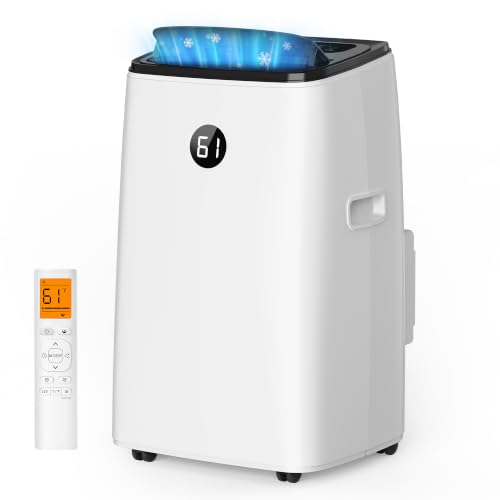
AGTANA 14000 BTU Portable Air Conditioner for Large Room up to 700 Sq. Ft, 3-in-1 Self-Evaporating AC with Fan & Dehumidifier, Floor Standing Portable AC Unit with Remote Control, Auto Swing, White
Check price on Amazon
Windowless Portable Air Conditioner, 26.4" Small Evaporative Air Cooler for Room No Window, 3-Speed Settings, 4 Modes, 7H Timer, Remote Control, 4 Ice Packs, Quiet AC Unit for Bedroom, Black
Check price on Amazon
GE Window Air Conditioner 5,000 BTU AC Unit for Small Spaces up to 150 sq ft with Manual Controls & 2 Cooling Modes, Easy Install Kit, White
Check price on AmazonDisclaimer
Some of the content on this site uses AI assistance. Information is provided for educational purposes only. We are not responsible for any losses resulting from the use of this information. By using this site, you waive any right to bring legal claims against us arising from your use of the information provided. If you do not agree, please do not use this site. Read the full disclaimer.