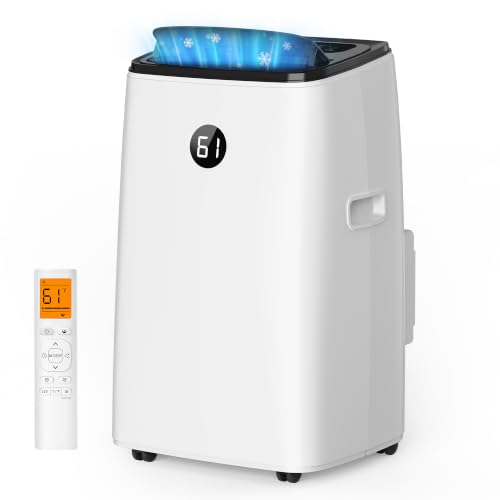
Portable Air Conditioner That You Don't Have to Drain
A practical, research-first guide to self-evaporating portable AC units — how they manage condensation, where they perform well, and what to verify before you commit to a purchase.
Why this guide exists: If you are searching for a portable air conditioner that you don't have to drain, you likely want to avoid the routine chore of emptying a water tank — especially in a bedroom, home office, or rental unit. This guide explains exactly how no-drain portable ACs work, the trade-offs involved, and the specifications that matter so you can shop with confidence.
How a No-Drain Portable AC Works
A standard portable air conditioner pulls warm, humid indoor air across an evaporator coil. Moisture condenses out of that air and collects in a tank or pan. In a conventional unit, that tank must be emptied regularly — sometimes daily in humid weather.
A self-evaporating portable air conditioner handles condensation differently. Instead of simply storing water, it routes condensate toward the hot condenser coil and uses the heat of the exhaust stream to evaporate it. The moisture leaves the unit as vapor through the exhaust hose. This is the core mechanism behind most models marketed as "no drain required."
The efficiency of this system depends on three factors: ambient humidity, compressor runtime, and unit design. In moderately humid conditions with steady operation, self-evaporation can handle nearly all the moisture produced. In very humid climates — or during short cooling cycles — the internal reservoir may still accumulate water and require occasional draining.
Some units go further and include a condensate pump that actively moves water out of the unit, or a self-evaporating system paired with a larger internal pan. Others combine cooling with moisture control, functioning as a portable AC with dehumidifier. Understanding the specific mechanism on your shortlist is essential.
What "No Drain" Really Means
The phrase "no drain" is a marketing convenience, not a guarantee. It is worth being precise about what these units actually deliver:
- Self-evaporative cooling: Most condensate is evaporated and exhausted, so the tank fills far more slowly than on a standard unit.
- Reduced maintenance: You may go weeks or a full season without emptying the tank in dry-to-moderate climates.
- Not always zero maintenance: In high humidity, the unit may still trigger a full-tank indicator and require draining.
This distinction matters for shoppers in Florida, the Gulf Coast, or other humid regions. If you live in a high-humidity environment, read our dedicated guide on a portable air conditioner for high humidity to understand how condensation load changes the equation. For general humid climates, the same principles apply — see portable AC for humid climates.
When a No-Drain Unit Makes Sense
A no-drain portable AC is a strong fit in several common scenarios:
- Bedrooms and home offices: You want uninterrupted cooling overnight or during work hours without mid-day tank emptying. A portable AC for a small bedroom is a typical starting point.
- Rentals and temporary setups: You cannot modify the space, and you want a low-maintenance cooling solution. A portable AC for a small apartment or studio apartment often fits this profile.
- Rooms with limited venting options: If your window configuration is unusual, the vent kit matters as much as the drain system. See options for casement windows, sliding glass windows, and vertical windows.
- Supplemental cooling: If you want to cool one zone without running central air, a no-drain unit can be a practical supplement. Read about a portable AC to supplement central air.
Conversely, if you need to cool a space with no window at all, a standard vented portable AC is not the answer — but there are specialized approaches. Explore portable AC for a room without windows and windowless portable AC options before assuming a vented unit will work.
Key Features to Compare
When comparing no-drain portable ACs, focus on the specifications that actually affect daily use. The table below summarizes the most decision-relevant features.
| Feature | Why It Matters | What to Look For |
|---|---|---|
| Condensate management | Determines how often you empty the tank | Self-evaporating system, condensate pump, or large internal pan |
| BTU capacity | Must match room size for effective cooling | Rated cooling capacity appropriate to your square footage |
| Exhaust and vent kit | All portable ACs need exhaust routing | Window kit compatible with your window type |
| Compressor type | Affects efficiency and temperature stability | Inverter compressor for smoother operation |
| Noise level | Critical for bedrooms and offices | Lower decibel ratings for sleeping areas |
| Additional modes | Extends usefulness beyond summer | Dehumidify, fan-only, and heat pump modes |
For a deeper walkthrough of specifications, see what to look for in a portable air conditioner. If quiet operation is a priority, compare models designed for low noise. If you want year-round flexibility, consider a portable AC heater combination or a portable AC with heat pump.
Market Tiers and What They Offer
No-drain portable ACs are available across several market tiers. The descriptors below are relative positioning terms, not absolute rankings — the right tier depends on your room, climate, and usage pattern.
Entry-Level No-Drain Units
Basic self-evaporating systems with standard compressors. Suitable for small rooms and moderate climates where cooling demand is predictable. Feature sets are simple, and vent kits are generally basic.
Mid-Range No-Drain Units
Improved condensate handling, quieter operation, and more complete window kits. A solid choice for bedrooms and home offices. Many mid-tier models add dehumidify modes and programmable timers.
High-End No-Drain Units
Inverter compressors, larger self-evaporation capacity, and refined airflow. Designed for longer runtime and more demanding spaces. Often include heat pump modes and advanced controls.
Tier positioning is a useful shorthand, but it should not replace specification comparison. A well-specified balanced-tier unit can outperform a poorly matched high-end unit in a small room. Use tier as a starting filter, then verify BTU, vent compatibility, and condensate design.
If efficiency is a priority, look at models that use inverter compressor technology or inverter technology more broadly. These designs tend to run more smoothly and maintain temperature with less cycling.
Advantages and Limitations
A no-drain portable AC is not the right fit for every household. The trade-offs are real and worth understanding before you buy.
Advantages
- Far less frequent tank emptying in normal conditions
- Lower maintenance burden for bedrooms and offices
- Often quieter than standard portable units at similar capacity
- Good fit for rentals and spaces where modifications are limited
- Many models combine cooling with dehumidification
Limitations
- High humidity can still fill the internal reservoir
- Self-evaporation is less effective during short cooling cycles
- Still requires a window vent and exhaust hose
- Cooling capacity must match room size — no-drain does not fix undersizing
- Some units need occasional manual draining even when marketed as no-drain
If your room is particularly large for the unit's rated capacity, cooling performance will suffer regardless of drain design. Learn why in our guide on portable AC not cooling enough. And if you are dealing with a unit that runs but does not cool, see portable AC not blowing cold air but running.
Pre-Purchase Checklist
Use this checklist to narrow your shortlist before you commit:
- Confirm room size and BTU match. Measure the room and compare with rated cooling capacity.
- Verify the condensate system. Look specifically for self-evaporating technology and, if humidity is high, a condensate pump option.
- Check window compatibility. Confirm the included vent kit fits your window type. For sliding windows, see sliding window kits; for crank-out windows, see portable AC for crank-out windows.
- Review noise ratings. For sleeping areas, prioritize quieter models.
- Consider additional modes. Dehumidify and fan modes add value in shoulder seasons.
- Plan for occasional draining. Even no-drain units may need manual draining in humid conditions.
If you are also considering how the unit will move between rooms, review portable AC on wheels and portable AC for multiple rooms. For specialty spaces, see server closet cooling and office without windows.
Frequently Asked Questions
It means the unit uses a self-evaporating system that recycles condensation water to cool the condenser coils. Most of the moisture evaporates through the exhaust, so manual emptying is rarely required — though humid climates may still produce some residual water.
They work, but they produce more condensation than the self-evaporation system can handle. In very humid climates, the internal tank may still fill and need occasional draining, or a condensate pump may be recommended. See our high humidity guide for details.
Yes. A no-drain portable AC still needs an exhaust hose routed to a window or vent opening. Drain-free refers to water management, not to exhaust or venting requirements.
Standard vented portable ACs require an exhaust path. For rooms without windows, explore specialized options in our guide to portable AC for a room with no window or portable AC for rooms without windows.
Recommended No-Drain Portable Air Conditioners
⚠️ AFFILIATE DISCLOSURE: This website contains affiliate links. As an Amazon Associate, we earn from qualifying purchases. If you make a purchase through these links, we may receive a small commission at no additional cost to you. Read our full affiliate policy.

BLACK+DECKER Portable Air Conditioner, 10,000 BTU, BPACT10WT, White | 5,500 BTU SACC for Rooms up to 450 Sq. Ft., 3-in-1 Portable AC, Fan and Dehum with Follow Me Remote Control
Check price on Amazon
DREO Portable Air Conditioner 319S, 10000 BTU ASHRAE (6000 BTU DOE) Smart AC Unit for Bedroom with Drainage-free Cooling, Fan&Dehumidifier 3 in 1, APP/Voice/Remote, Quiet Standing AC for Room Indoors
Check price on Amazon
16000 BTU Portable Air Conditioners for Large Room up to 730 sq.ft 5-in-1 Smart AC Unit with WiFi APP/Remote Control, Fast Cooling, Dehumidifier, Quiet Sleep Mode, Window Kit Included
Check price on Amazon
10000 BTU Portable Air Conditioners, Air Conditioner for Room Cools Up to 450 Sq.Ft with 24H Timer, Remote Control, Dehumidifier, 3-IN-1 AC Unit with Window Kit for Bedroom, Indoor Rooms, Home Office
Check price on Amazon
DREO Portable Air Conditioner 318S, 8000 BTU ASHRAE (5000 BTU DOE) Smart AC Unit for Bedroom with Drainage-free Cooling, Fan&Dehumidifier 3 in 1, APP/Voice/Remote, Quiet Standing AC for Room Indoors
Check price on Amazon
Portable Air Conditioner Fan, 4-in-1 Mini Air Cooler with 450ML Water Tank, 3 Speeds Portable Fan 7 Colors LED Ambient Light, Mini Evaporative Cooler Desktop Humidifier Fan for Bedroom Office Travel
Check price on Amazon