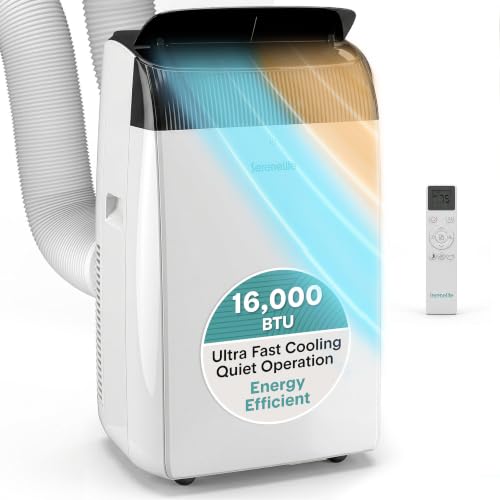
Portable Heat Pump: The Complete Year-Round Cooling and Heating Guide
A portable heat pump cools in summer and heats in cool weather using the same compressor and refrigerant circuit, which makes it one of the most versatile single-room climate solutions available. This guide explains how the reversible cycle works, where a portable heat pump performs best, how to size it for both cooling and heating, and which features matter most before you buy.
How a Portable Heat Pump Works
A portable heat pump uses the same vapor-compression refrigeration cycle as an air conditioner, but with a reversing valve that allows the direction of refrigerant flow to be swapped. In cooling mode, the indoor coil acts as an evaporator that absorbs heat from room air, while the outdoor-facing coil acts as a condenser that rejects heat through the exhaust hose. In heating mode, the roles of the two coils are reversed: the indoor coil becomes the condenser and releases heat into the room, while the outdoor-facing coil absorbs heat from outside air.
Because the unit moves heat rather than generating it from electricity, a heat pump is generally more efficient than an electric resistance heater in mild to moderate climates. As outdoor temperatures fall, the amount of heat available in the outside air decreases, and the unit's heating output declines accordingly. This is why portable heat pumps are best suited to transitional seasons and mild winters rather than severe cold.
For a broader comparison of heating options, see the overview of portable air conditioner and heater units and the related category of portable heating and air conditioning units.
The Two Modes in Simple Terms
- Cooling mode: absorbs heat from room air and rejects it through the exhaust hose.
- Heating mode: reverses the cycle to absorb heat from outside air and release it into the room.
Heat Pump vs Cooling-Only Portable AC
A cooling-only portable air conditioner and a portable heat pump share much of the same hardware. The heat pump adds a reversing valve and a control board configured for heating, which lets the same unit serve both seasons. The trade-off is a modest increase in complexity and, in some cases, a slightly higher unit weight and cost to manufacture.
| Characteristic | Cooling-Only Portable AC | Portable Heat Pump |
|---|---|---|
| Cooling capability | Yes | Yes |
| Heating capability | No (unless it includes an element) | Yes, via reversed refrigeration cycle |
| Year-round use | Seasonal | Year-round in mild climates |
| Efficiency in heating | Not applicable | Higher than resistance heating in mild weather |
| Complexity | Lower | Higher |
| Typical market tier | Entry-level and mid-range dominate | Mid-range and premium dominate |
For buyers whose only need is summer cooling, a cooling-only unit is simpler and often more economical to run for its single purpose. For buyers who need comfort in both warm and cool months without buying two appliances, the heat pump configuration is usually the more practical choice.
Readers who are specifically interested in a heating-and-cooling combo with a resistance heater backup may want to review the portable heater and air conditioner in one unit overview and the broader combination heating and air conditioning units category.
Climate Suitability and Efficiency
A portable heat pump's heating efficiency is measured by how much heat it can move per unit of electricity consumed. In mild weather, the ratio can exceed one, meaning the unit delivers more heat than the electrical energy it consumes. As the outdoor temperature drops, the unit must work harder to extract heat from colder air, and heating output falls. In severe cold, the unit may not be able to meet the room's heating load without supplement.
Where portable heat pumps perform best
- Mild winters: regions where daytime temperatures rarely drop below freezing.
- Transitional seasons: spring and autumn days when heating and cooling alternate.
- Well-insulated rooms: low heat loss allows the unit's heating output to keep pace.
- Supplemental heating: pairing the heat pump with existing heating for extra warmth in a specific room.
Where a different heating approach makes sense
- Very cold climates: a dedicated heating system or a permanent heat pump designed for cold climates is more reliable.
- Whole-home heating: portable heat pumps are for a single room, not for a whole house.
- Rapid warm-up needs: a resistance heater warms a room faster, even though it uses more energy.
For readers comparing cooling efficiency across categories, the guide to the most energy efficient room air conditioner provides context on how heat pump configurations stack up. Readers interested in inverter compressors, which modulate output smoothly across both modes, should review portable AC with inverter technology.
Sizing for Cooling and Heating
Sizing a portable heat pump requires checking two separate capacity ratings: cooling capacity (in BTU) and heating capacity (also in BTU). They often differ, and the smaller of the two determines the room size the unit can comfortably serve in the harder season.
| Room Area | Typical Cooling BTU | Common Use |
|---|---|---|
| Up to 150 sq ft | 5,000 - 6,000 BTU | Bedroom, dorm room, small office |
| 150 - 250 sq ft | 8,000 - 10,000 BTU | Studio apartment, home office |
| 250 - 400 sq ft | 12,000 - 14,000 BTU | Living room, open-plan studio |
For cooling, the 20 BTU per square foot guideline applies with the usual adjustments for sun exposure, occupancy, and appliances. For heating, compare the unit's heating capacity against the room's heat loss. A room that cools comfortably in summer may still struggle in winter if the heat pump's heating rating is modest.
For compact rooms, the guide to portable AC for a very small room covers the smallest capacity ranges. For larger rooms, see the overview of portable AC for a 500 sq ft room to understand practical limits.
Operating Modes and Features
Most portable heat pumps include more than two modes. The additional modes extend their usefulness and can improve comfort in specific conditions.
Common operating modes
- Cooling: standard air conditioning for warm weather.
- Heating: reversible cycle for warming in cooler months.
- Fan only: circulates air without heating or cooling, useful in transitional weather.
- Dehumidification: reduces moisture without substantially cooling the room.
- Auto: switches between cooling and heating as needed to maintain the set temperature.
- Sleep or eco: reduces fan speed and adjusts the set point for overnight operation.
- Timer and schedule: runs the unit only during chosen hours.
Readers who want the dehumidifier function alongside heating and cooling should review the guide to portable AC with heater and dehumidifier. The article on portable air conditioner dehumidifier heater explains the trade-offs of combining three functions in one unit.
Features worth prioritizing
- Remote control with a clear thermostat display.
- Programmable timer for off-peak use and overnight scheduling.
- Wi-Fi or smart-home control for remote operation.
- Washable filter with easy front access.
- Auto-restart after a power interruption.
- Quiet mode for bedrooms and home offices.
Buyers seeking remote scheduling should review portable AC with Wi-Fi control. Buyers comparing cooling and heating functions across product categories may find the overview of portable cooler air conditioning useful for framing their choices.
Venting and Installation
Portable heat pumps use the same venting approach as portable air conditioners. The exhaust hose carries rejected air outside in both cooling and heating modes, and the installation process is essentially identical. In heating mode, hose insulation matters more because the hose is often warm and a poorly insulated hose loses heat outdoors before it reaches the vent.
Standard installation steps
- Place the unit on a level surface near the exhaust opening.
- Assemble the window panel or wall vent kit.
- Connect the exhaust hose to the rear of the unit and to the panel.
- Seal remaining gaps with weatherstripping or foam.
- Plug in, select the mode, and allow the unit to stabilize.
Window style determines which kit is needed. Casement windows are covered in the casement window guide and the casement window kit overview. Sliding windows use the sliding window kit, and narrow openings are addressed in the small window guide.
For rooms without a conventional window, the article on portable AC without window vent explains the limited alternatives. Insulating the hose with an exhaust hose insulation sleeve is especially valuable in heating mode.
Drainage and Humidity Handling
Condensate handling varies by mode. In cooling and dehumidification modes, the unit removes moisture from room air, and that moisture is either evaporated through the exhaust stream or collected in a tank. In heating mode, condensate forms on the outdoor-facing coil and is usually drained away by the unit's internal plumbing. The result is that drainage needs are modest in heating mode and more substantial in cooling and dehumidification modes.
Readers who prefer units with minimal manual draining should review the guidance on portable AC with no drain required, units that do not need draining, and the self-evaporating system design. In very humid climates, the guides to portable AC for high humidity and humid climate operation are directly relevant.
If the unit is installed in a spot where the tank is difficult to access, plan a gravity drain hose to a nearby drain or bucket before placing the unit. In heating mode, the drain location is less critical, but access should still be possible for periodic inspection.
Pros and Cons of Portable Heat Pumps
Advantages
- Year-round usefulness: one appliance handles cooling and heating across seasons.
- Efficient heating in mild climates: moves heat rather than generating it from electricity.
- Space efficiency: replaces a portable AC and a space heater in a single footprint.
- Renter-friendly: no permanent installation and no structural modification.
- Mobility: casters allow the unit to move between rooms as the seasons change.
Limitations
- Heating output declines in cold weather: performance is best in mild to moderate climates.
- Single-room focus: not a substitute for a whole-home heat pump system.
- Venting required in both modes: the same hose must exit the room regardless of season.
- Noise: compressor and fan noise are noticeable in small rooms.
- Condensate management: cooling and dehumidification modes may require regular draining.
Best Use Cases for Portable Heat Pumps
Where portable heat pumps shine
- Apartments and rentals: year-round comfort without permanent installation. See the guide to portable air conditioning units for rent.
- Bedrooms: cooling in summer and quiet supplemental warmth in cooler months. The bedroom unit guide covers placement and noise planning.
- Home offices: a single appliance that adapts to seasonal changes without occupying extra space.
- Transitional climates: regions with mild winters and warm summers get the most value from a heat pump configuration.
- Supplemental heating: augmenting a central system in one room without installing a permanent zone.
Where a different solution makes more sense
- Severe winters: a heat pump's heating output may be insufficient; a dedicated heating appliance is more reliable.
- Whole-home comfort: a portable unit cools and heats one room, not a house. Central air or a multi-zone mini-split is the appropriate class of solution.
- Rooms without any exhaust path: see portable AC for a room with no window for the limited options.
- Off-grid use: compressor-based units need reliable power; see off-grid cooling for alternative approaches.
Readers comparing across form factors may find the overview of portable heater and air conditioner in one unit useful, along with the broader portable heating and air conditioning units category.
Buying Checklist for Portable Heat Pumps
Use this checklist to compare models on the factors that matter most across both cooling and heating modes.
| Factor | What to Look For | Why It Matters |
|---|---|---|
| Cooling capacity | BTU rating matched to room area | Prevents short cycling and continuous running |
| Heating capacity | Separate BTU rating for heating output | Determines winter comfort in the same room |
| Operating range | Minimum outdoor temperature for heating | Confirms suitability for your climate |
| Venting kit | Panel type compatible with your window | Keeps installation straightforward |
| Hose insulation | Insulated exhaust hose included or available | Reduces heat loss in heating mode |
| Drainage | Self-evaporating system or gravity drain option | Reduces manual maintenance in humid conditions |
| Noise | Decibel rating and quiet mode | Critical for bedrooms and home offices |
| Controls | Timer, remote, and optional Wi-Fi | Improves scheduling and convenience |
| Build tier | Mid-range or premium construction | Signals expected durability across two modes |
Buyers comparing features across categories should also review the guide to portable AC with heater and dehumidifier and the overview of combination heating and air conditioning units for broader context on dual-function appliances.
Maintenance and Troubleshooting
Routine maintenance
- Clean or replace the air filter every two to four weeks during heavy use.
- Empty the condensate tank before it reaches the shutoff level, especially during cooling season.
- Inspect the exhaust hose for kinks, cracks, or detached connectors before switching modes.
- Vacuum the rear intake grille to remove dust buildup.
- Store the unit upright and covered during the off-season.
- In heating mode, check for ice buildup on the outdoor-facing coil during very cold weather.
Common problems and where to read more
- Heating output feels weak: check outdoor temperature, filter condition, and hose insulation.
- Compressor not running: the troubleshooting steps in my AC compressor is not running apply to portable heat pumps as well.
- Unit runs but air is not cold: the diagnostics in my AC is off but still blowing air and my AC is turning on but not blowing air help isolate fan versus compressor issues.
- General cooling failure: the broader checklist in my AC isn't blowing cold air covers refrigerant, airflow, and thermostat causes.
- Cooling below expectations: see portable AC not cooling enough for load, airflow, and sealing checks.
If the unit shows an error code that persists after a filter clean and a full drain, or produces no heat in heating mode even in mild weather, service by a qualified technician is the appropriate next step rather than continued operation.
Ready to Choose a Portable Heat Pump?
You now understand how a portable heat pump cools and heats with the same refrigeration cycle, how to size it for both seasons, and which features matter most across the year. Compare the recommended models below and match capacity and climate suitability to your room.
Compare Recommended ModelsFrequently Asked Questions
What is a portable heat pump?
A portable heat pump is a wheel-mounted appliance that uses a reversible refrigeration cycle to both cool and heat a room. In cooling mode it absorbs heat from indoor air and rejects it outdoors through an exhaust hose. In heating mode it reverses the cycle to move heat from outdoor air into the room, which is generally more efficient than electric resistance heating in mild climates.
How does a portable heat pump differ from a portable AC?
A portable air conditioner only cools. A portable heat pump cools and heats using the same compressor and refrigerant circuit by reversing the direction of refrigerant flow. This makes a heat pump useful year-round, while a cooling-only portable AC sits idle in cool weather.
How efficient is a portable heat pump in heating mode?
In mild to moderate climates, a heat pump can move several units of heat per unit of electricity consumed, which is more efficient than an electric resistance heater. Efficiency drops as outdoor temperatures fall, and in very cold weather the heating output may be insufficient for primary heating.
What size portable heat pump do I need?
A common guideline for cooling is 20 BTU per square foot of floor area, adjusted for sun exposure, occupancy, and appliances. For heating, check the unit's heating capacity rating separately, as it may differ from the cooling capacity. A 150 square foot room typically needs around 5,000 to 8,000 BTU of cooling, with heating matched to the room's heat loss.
Does a portable heat pump need to be vented?
Yes. Both cooling and heating modes reject air through an exhaust hose, usually routed to a window, wall vent, or door panel. The same venting setup used for cooling typically works for heating, though the hose insulation matters more in cold weather to reduce heat loss.
Can a portable heat pump replace a space heater?
In mild to moderate climates, yes, a portable heat pump can replace a space heater for supplemental warmth and is usually more efficient. In very cold climates or for primary heating of a whole home, a dedicated heating system or a permanent heat pump remains the more reliable choice.