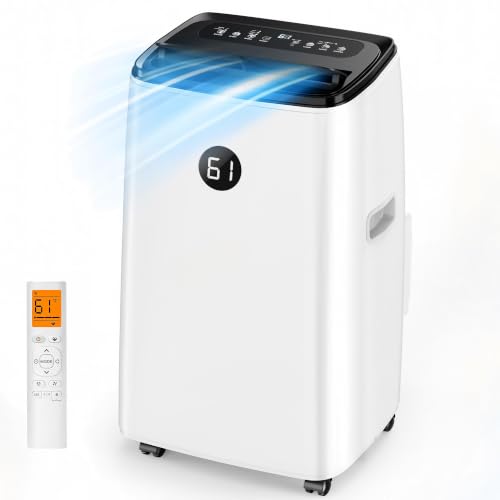
Portable Floor Air Conditioning Units
Everything about freestanding floor AC units — form factors, sizing, venting, placement, and how to choose the right model for your room.
Explore the GuideWhy this matters: "Portable floor air conditioning unit" is a broad label. It covers squat floor-standing models, tall tower-style units, and low-profile designs meant to slide under a window. Each form factor fits a different room layout, and each has different venting requirements. This guide breaks down the categories, explains how floor placement affects performance, and helps you choose a unit that will actually cool your space.
What Counts as a Portable Floor AC Unit?
A portable floor air conditioning unit is a freestanding appliance that rests on the floor and cools a single room using a compressor and refrigerant. It sits on casters, plugs into a standard outlet, and vents hot air through a hose that exits through a window or wall opening — the same principle as any portable air conditioner.
The "floor" label distinguishes these units from window air conditioners, which mount in a window frame, and from mini-splits, which mount on a wall. Floor units are the most practical choice for renters, older homes without ductwork, and rooms where a window installation is not feasible.
Within the floor category, several form factors exist. They differ mainly in height, footprint, and airflow direction, and those differences matter for how well the unit fits your room.
Floor Unit Form Factors at a Glance
The table below summarizes the main designs. It is the fastest way to narrow your shortlist before reading the detailed sections.
| Form Factor | Best For | Footprint | Airflow |
|---|---|---|---|
| Floor-standing (boxy) | Most rooms, general use | Medium | Front or top discharge |
| Tower-style (tall) | Narrow spaces, corners | Small | Front or side discharge |
| Low-profile (under-window) | Rooms with low windows | Wide but short | Top or front discharge |
| Wheeled cart-style | Garages, workshops, patios | Large | High-volume front discharge |
Floor-Standing (Boxy) Units
Floor-standing boxy units are the most common design. They sit on four casters, stand roughly knee-to-waist height, and discharge air from a front grille or the top. The boxy chassis accommodates a larger compressor and evaporator than a tower design, which generally means better cooling capacity and a more stable footprint.
These units are a good default choice for a bedroom, living room, or home office. They are easier to service than tower units and typically include a larger drain tank or a self-evaporating system for reduced maintenance. Our guide on portable AC for a very small room covers capacity matching for smaller spaces.
Tower-Style Floor Units
Tower-style units are tall and slim, designed to fit into a narrow corner or beside a piece of furniture. Their small footprint makes them attractive in tight rooms, but the compact chassis usually means a smaller compressor and evaporator, which limits cooling capacity compared to a boxy unit.
Airflow is typically front or side discharge at chest height, which can feel more comfortable than air blowing across the floor. The trade-off is noise: a small chassis often means less sound insulation around the compressor. If the unit will run in a bedroom, check the noise rating carefully — our guide on a quiet air conditioner covers what to look for.
Low-Profile Floor Units
Low-profile units are wide but short, designed to sit under a window without blocking the view or the light. They are less common than boxy or tower designs, but they are a good fit for rooms with low sill heights or where a tall unit would dominate the space.
The wide footprint means less risk of tipping, and the lower center of gravity makes the unit stable on uneven floors. The main drawback is that low-profile units are often entry-level to mid-range designs with modest cooling capacity. They are a good fit for small bedrooms and home offices, and they pair well with portable air conditioners for small rooms.
Wheeled Cart-Style Units
Cart-style units are larger and heavier, often used in garages, workshops, and patios. They prioritize airflow volume and ruggedness over compactness, and they are typically a professional-grade or commercial-grade tier of product. Many cart units are also portable commercial air conditioning units, designed for job sites and event spaces.
Because they move a lot of air, cart units often need a larger window kit or a direct vent through a wall. They are less suited to a bedroom or living room because of their size and noise level, but they are excellent for spaces where cooling is more important than aesthetics.
Why Floor Placement Matters
Cool air sinks, so a floor unit naturally delivers cooled air at the level where people sit and sleep. That is an advantage over wall-mounted units, which need to push cool air downward. The catch is that floor placement also puts the unit in the way of foot traffic, furniture, and curtains.
To get the best performance from a floor unit:
- Keep 12–18 inches of clearance around the intake and exhaust grilles. Blocking either one reduces cooling and stresses the compressor.
- Point the airflow along the room's longest dimension so cooled air travels as far as possible before mixing with warm air.
- Avoid corners. A corner traps exhaust air and reduces the unit's ability to pull in room air. Place the unit along a wall but not jammed into a corner.
- Keep curtains and furniture clear of the top and front grilles, especially on tower units where the discharge is higher.
For a bedroom, our guide on a portable air conditioning unit for bedroom covers noise, night placement, and how to angle airflow away from the bed.
How to Size a Floor AC Unit
Capacity is measured in BTU. Undersizing means the unit runs nonstop without reaching the set temperature; oversizing causes short cycling and poor dehumidification. As a starting point, match BTU to room area, then adjust upward by 10–20% for rooms with large windows, west-facing sun exposure, or a kitchen nearby.
Small bedrooms and home offices typically fall in the entry-level capacity range. Open-plan living areas need mid-range or high-end capacity. For a precise starting point, see our guide on portable AC for a 500 sq ft room, and scale up or down from there. For very large spaces, a single floor unit may not be enough — see the portable AC for 1000 square feet guide.
Room shape matters too. A long, narrow room with the unit at one end cools less evenly than a square room. Place the unit centrally and direct airflow along the longest wall.
Venting Options for Floor Units
Every compressor-based floor AC needs a vent path for the exhaust hose. The window kit included with the unit usually fits double-hung and sliding windows. Other window types need a dedicated adapter:
- Casement and crank-out windows: Use a casement window kit or a crank-out window kit.
- Side opening windows: A fabric seal or rigid panel is required. See the portable AC for side opening windows guide.
- Sliding windows: A sliding window kit ensures a proper seal.
- Small windows: Standard kits may not fit. The portable AC for small window guide covers the options.
If no window is usable, limited alternatives exist. Our guide on a portable AC without window vent covers the options, and the portable AC for room with no window guide explains what is realistically possible.
Features to Prioritize
Not every floor unit is equally capable. These specifications matter most:
Single vs Dual Hose
Dual-hose models avoid negative pressure and improve efficiency on long runs. A single-hose portable AC is simpler and lighter for occasional use.
Self-Evaporating System
A self-evaporating system handles condensate automatically in moderate humidity, reducing drain maintenance.
Inverter Compressor
An inverter compressor modulates speed instead of cycling on and off, which is quieter and more efficient for long sessions.
Wi-Fi Control
A portable AC with Wi-Fi control lets you schedule cooling and monitor the unit remotely.
Insulated Exhaust Hose
An insulated exhaust hose prevents heat from radiating back into the room through the hose wall.
Heater Function
A portable combination heating and AC unit extends the unit's usefulness into cooler months.
Installation and Setup
Floor unit setup is simple but details matter. Follow these steps for a leak-free, efficient installation:
- Choose the right location. Place the unit along a wall and near the window, with 12–18 inches of clearance around the intake and exhaust.
- Install the window kit. Follow the manufacturer's template and seal every edge with foam or tape.
- Route the exhaust hose. Keep it as short and straight as possible. Avoid sharp bends that trap heat.
- Seal the window gap. Use weatherstripping or removable caulk around the sash and hinge.
- Plug into a dedicated circuit. Most floor ACs draw significant current. Avoid sharing the outlet with high-draw appliances.
- Test and adjust. Run the unit for 30 minutes, then check that the exhaust air is clearly warmer than the room air.
If the unit runs but does not cool effectively, the vent seal is the first thing to check. Our troubleshooting guide on portable AC not cooling enough walks through the diagnostic sequence.
Maintenance Routine
- Clean the air filter every two weeks during peak season. A clogged filter reduces airflow and cooling performance.
- Empty the drain tank when the unit signals it is full, or use a drain hose for continuous operation.
- Inspect the exhaust hose at the start of each season for cracks or loose couplings.
- Clean the coils annually with a soft brush or coil cleaner.
- Vacuum the casters and floor grille periodically — floor units pick up more dust than wall-mounted units.
- Check the window seal monthly for tears or gaps, especially in high-wind areas.
When a Floor AC Unit Is Not the Right Fit
Floor units are the most flexible portable option, but they are not always the best one. Consider alternatives in these cases:
- Permanent single-room cooling: A window unit or portable ductless mini-split is more efficient and quieter.
- Whole-home or multi-room cooling: A multi-zone ductless system handles multiple rooms far more efficiently than several floor units.
- Very humid climates: A dedicated dehumidifier paired with a floor AC may be more effective than an AC alone. See the portable AC for humid climates guide.
- Off-grid setups: A portable AC with solar panel or a low-power portable cooling fan may fit better than a compressor unit.
- Commercial spaces: A portable commercial air conditioning unit is a different product category with different venting and power requirements.
For renters, floor units remain the most practical choice. The guide on portable air conditioning units for rent covers the specific considerations for rental setups.
Frequently Asked Questions
Are floor air conditioning units as effective as window ACs?
Roughly comparable in cooling capacity, but floor units are less efficient because the compressor sits inside the room and some heat radiates back in. They make up for it with flexibility: no window installation, easy portability, and no permanent modification to the home.
What is the difference between a floor-standing and a tower-style unit?
Floor-standing units are boxy and typically have a larger compressor for better cooling capacity. Tower units are tall and slim, fitting into tighter spaces but usually with smaller cooling capacity. Choose based on room size and available floor space.
Can I put a floor AC unit on carpet?
Yes, but the casters may sink and the intake may be partially blocked. Place a thin board or mat under the unit to keep it level and to protect the carpet. Keep 12–18 inches of clearance around the intake and exhaust.
Do floor units need to be vented?
Yes, if they are compressor-based. The exhaust hose must vent to a window or wall opening. Evaporative coolers are the exception for the cooling side, but their function differs and they work only in dry climates.
Why does my floor AC keep shutting off?
The most common causes are a full drain tank, a clogged filter, or an overheated compressor caused by blocked airflow. Check the filter first, then verify clearance around the unit. If the problem continues, see our troubleshooting guide on a portable AC not cooling enough.
Quick Buying Checklist
- Measure the room and choose BTU capacity accordingly.
- Decide between floor-standing, tower, low-profile, or cart-style.
- Confirm your window type and the required kit or adapter.
- Choose single-hose for simplicity, dual-hose for efficiency.
- Look for self-evaporation if you want minimal draining.
- Check noise ratings if the unit will run in a bedroom.
- Plan clearance around the unit for intake and exhaust.